GreenX Metals Secures 1,600 km² New Gold and Tungsten Licences in Greenland

GreenX Metals has expanded its Eleonore North Project with two new licences covering about 1,600 km² in East Greenland, targeting intrusion-related gold and critical minerals like tungsten. Historical data shows high gold grades up to 50 g/t, with fieldwork results due this quarter.
- Two new licences add ~1,600 km² to Eleonore North portfolio
- Historical gold assays up to 50 g/t and tungsten anomalies
- Focus on reduced intrusion-related gold systems (RIRGS)
- Fieldwork completed, assay results expected this quarter
- Shares worth A$250,000 issued to original project vendor
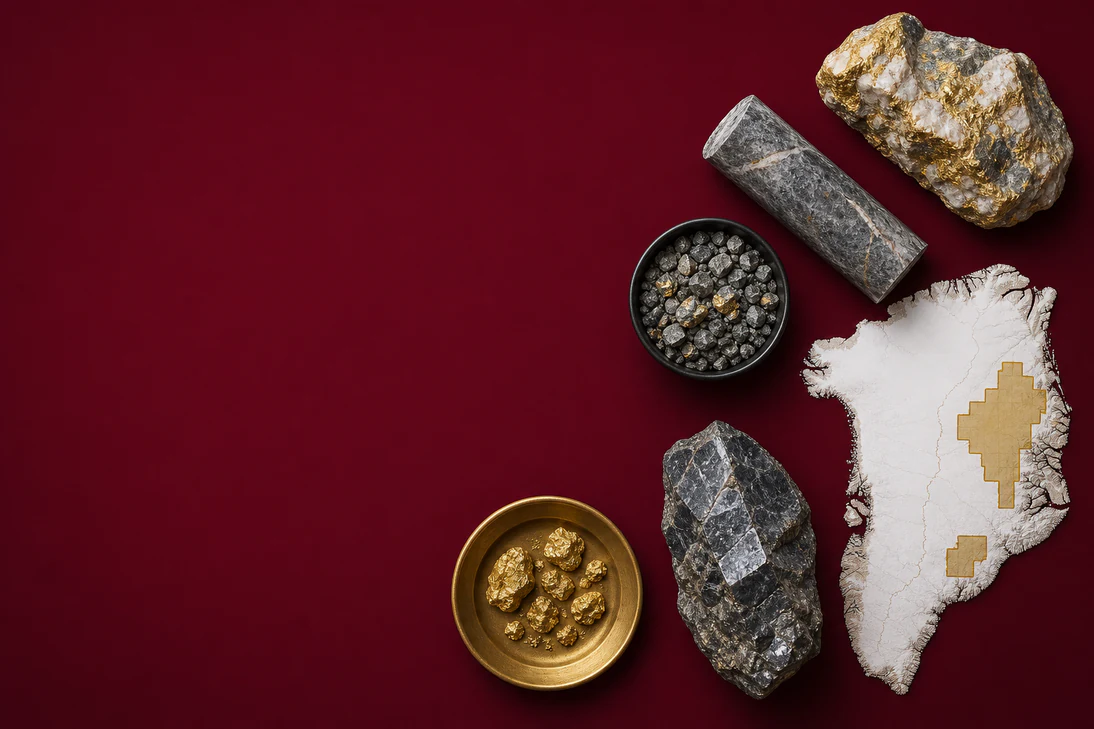

Significant Expansion of Greenland Gold Portfolio
GreenX Metals (ASX:GRX) has dramatically increased its footprint in East Greenland by securing two new exploration licences totalling approximately 1,600 square kilometres at its Eleonore North Project. This expansion brings the company’s total tenure in the region to around 2,100 km² across four licences, focused on Caledonian intrusions prospective for reduced intrusion-related gold systems (RIRGS).
These licences cover ground that has never been tested under the RIRGS model, despite historical indications of gold and critical minerals. The company’s CEO, Ben Stoikovich, highlighted that documented gold and scheelite anomalies have been on public record since the 1980s but remained unexplored until now. GreenX has completed initial field reconnaissance and sampling, with assay results expected within the current quarter.
Historical Data Reveals High-Grade Gold and Tungsten Potential
Legacy exploration by Nordisk Mineselskab A/S in the 1970s and early 1980s uncovered gold-mineralised boulders and quartz veins with assays as high as 50 grams per tonne. Follow-up stream sediment sampling detected anomalous gold, silver, tungsten, and arsenic, but no further work was undertaken after a brief site visit in 1983 recommended detailed exploration.
Notably, the presence of tungsten mineralisation, in the form of scheelite grains found in historical heavy mineral concentrates, underscores the critical minerals potential of the licences. Tungsten’s strategic importance has surged globally, especially after China’s 2025 export controls, given its critical role in defence and high-strength industrial applications.
Geological Setting and Strategic Mineral Targets
The licences lie within a major north-south thrust fault system formed during the Caledonian orogeny, providing structural conduits for mineralising fluids. The project area’s geology includes gneissic basement rocks and Proterozoic metasediments, with Caledonian granitoids intruding adjacent fault zones. This setting is favourable for RIRGS-style gold deposits, which typically associate gold with tungsten, antimony, silver, and arsenic.
The licences are also strategically positioned along a 160-kilometre mineralised structural corridor that hosts significant deposits such as the Malmbjerg molybdenum porphyry, located 60 kilometres to the southeast, and historical antimony-tungsten prospects within GreenX’s existing licences to the north.
Recent Fieldwork and Next Steps
GreenX’s 2026 field program included reconnaissance sampling and mapping across the new Caledonian intrusion targets, alongside work at existing licences such as North and South Margeries, and Noa Pluton. The company also re-logged and re-assayed archived drill core and reprocessed airborne hyperspectral data to refine targets.
Samples and bulk materials collected during the July 2026 fieldwork are currently en route to laboratories, with results anticipated soon. Positive outcomes could pave the way for extensional and infill drilling, particularly at the Margeries deposits, where preliminary metallurgical test work is underway.
Capital Impact of Licence Acquisition
As part of the licence grant for MEL 2026-124, GreenX is obliged to issue shares valued at A$250,000 to the original vendor, calculated using the volume-weighted average price prior to the announcement. This share issuance reflects revised commercial terms under the option agreement finalized in 2024.
This strategic expansion complements GreenX’s broader Greenland exploration efforts, including recent high-priority tungsten and antimony target identification at Eleonore North, and a substantial copper target at its Tannenberg Project in Germany, highlighting the company’s diversified mineral ambitions. high-priority tungsten and antimony targets
Bottom Line?
GreenX’s new licences unlock a historically overlooked gold and critical minerals district in Greenland, but upcoming assay results will be crucial to validate the exploration thesis and guide next steps.
Questions in the middle?
- Will the pending assay results confirm the historical high-grade gold anomalies?
- How might the critical minerals potential, especially tungsten, influence GreenX’s project prioritisation?
- What scale of drilling program will GreenX pursue if initial assays support the RIRGS model?