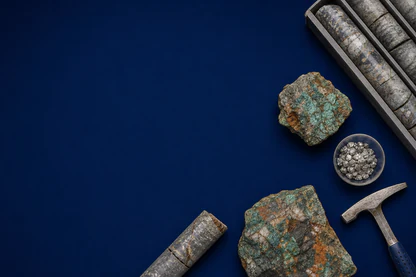
Chilwa Minerals Drills Consistent Saprolite at Mpyupyu West Prospect

Chilwa Minerals’ Phase I drilling at Mpyupyu West has confirmed a continuous, free-dig saprolite mineralisation from surface across a 17 km² target, advancing the company’s largest heavy mineral sands prospect in Malawi.
- Phase I drilling 22% complete with two sonic rigs operating
- Mineralised saprolite horizon averages 7.3 metres thick, up to 12 metres
- Deposit style refined to in-situ saprolite blanket, distinct from other licences
- Resource drilling paused at Bimbi to prioritise Mpyupyu West
- First assay results expected in October 2026
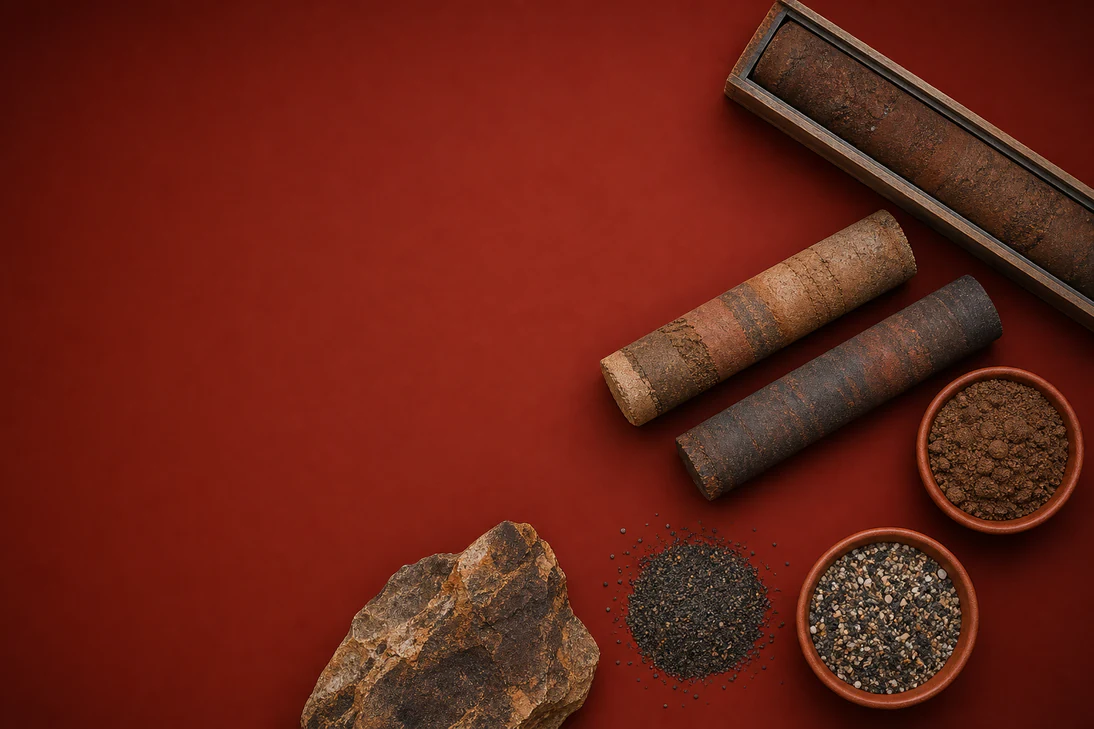

Consistent Mineralised Saprolite Intersected Across Mpyupyu West
Chilwa Minerals (ASX:CHW) has revealed that its Phase I reconnaissance sonic drilling at the Mpyupyu West heavy mineral sands (HMS) prospect continues to deliver a remarkably consistent picture. Sixty holes, representing 22% of the planned 268-hole programme, have intersected a free-dig, mineralised saprolite unit from surface across a target area exceeding 17 square kilometres. The mineralised horizon averages 7.3 metres thick and reaches up to 12 metres in places, with on-site panning and portable XRF analysis confirming moderate to strong mineralisation throughout.
Refining the Deposit Model: In-Situ Saprolite Blanket
Drilling through the full weathering profile has refined Chilwa’s understanding of the deposit style. Unlike the Quaternary lacustrine and aeolian sands seen in other parts of the licence, Mpyupyu West hosts an in-situ, residually concentrated saprolite blanket. This deeply weathered, laterally extensive layer is soft enough to free-dig and is chemically enriched in heavy minerals due to the breakdown and removal of less stable components. The deposit style aligns with other saprolite-hosted HMS deposits in Malawi, such as the Kasiya rutile project, suggesting potential for low-cost mining operations.
Operational Focus Shifts to Mpyupyu West
Both sonic rigs previously active at the Bimbi Main deposit have now been redeployed to Mpyupyu West, pausing Bimbi resource-definition drilling at 62% completion. This strategic move concentrates resources on advancing the largest HMS discovery on the licence, which adjoins the recently doubled 109.6 million tonne Mpyupyu Mineral Resource. Chilwa’s Managing Director Cadell Buss emphasised the significance of the consistent mineralisation at this early stage, noting it supports a forthcoming Phase II resource-definition programme and complements the ongoing Scoping Study for the HMS deposits expected in Q3 2026.
Surface Sampling Extends Target and Guides Drilling
Surface hand panning has expanded the target area with 227 sample points collected to date, providing visual heavy mineral estimates that inform drilling plans. While no assay results have been reported yet, laboratory sink-float assays and QEMSCAN analyses are underway to quantify total heavy mineral content and characterise mineral assemblages. Chilwa expects first assay results from Mpyupyu West in October 2026, which will be crucial to confirming the deposit’s economic potential.
Next Steps and Broader Project Progress
The Phase I drilling programme is on track for completion in late September 2026, after which a denser Phase II resource-definition grid will be designed. Bulk density studies will support volume-to-tonnage conversions, and near-surface sampling will extend toward the lee side of the Mpyupyu dunes to test continuity with adjacent deposits. Meanwhile, resource-definition drilling at Bimbi Main will resume post-Phase I. Chilwa continues to advance its critical minerals portfolio within Malawi’s Lake Chilwa licence, which includes rare earth element and niobium targets alongside its HMS projects.
Bottom Line?
Mpyupyu West’s consistent saprolite mineralisation positions Chilwa Minerals to sharpen its resource focus, but assay results due in October will be pivotal for validating economic scale.
Questions in the middle?
- Will assay results confirm the high-grade potential suggested by visual panning at Mpyupyu West?
- How will the in-situ saprolite deposit style influence mining and processing costs compared to other HMS deposits?
- Could the extension of mineralisation beyond current licence boundaries materially expand the resource base?