DroneShield Unveils RfRecon Portable RF Intelligence Solution

3 min read
8:42am on Monday 10th of August, 2026 AEST ~8am, 10th Aug, 26
Popular on LinkedIn
DroneShield launches RfRecon, a portable AI-powered RF intelligence device designed to enhance situational awareness and decision-making in counter-drone missions. Initial customer engagement has begun with potential revenue expected in the second half of 2026.
- RfRecon integrates ultra-wideband detection with AI-driven signal classification
- Designed for dismounted, vehicle-mounted, and fixed-site deployments
- Supports seamless integration into existing defence and security ecosystems
- Initial market engagement underway; revenue expected from 2H 2026
- Built on proprietary RfAI-3 architecture for enhanced operational context
 Add us as a preferred source on Google
RfRecon Brings AI-Powered RF Intelligence to the Tactical Edge
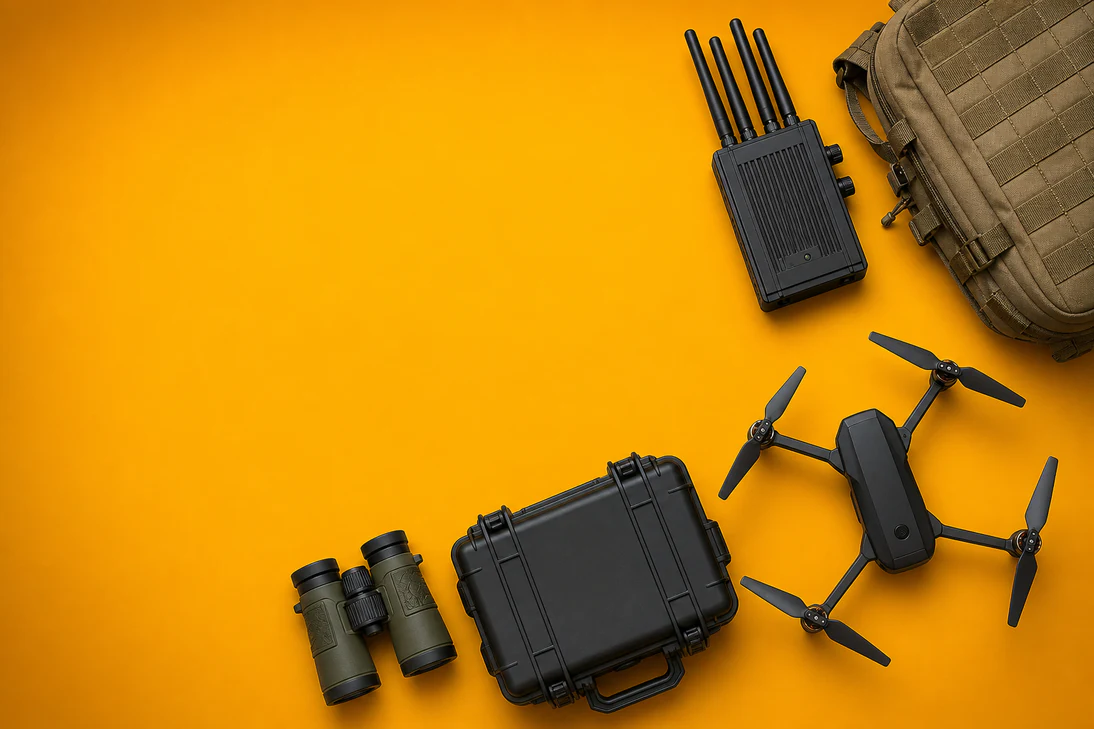
DroneShield Limited (ASX:DRO) has launched RfRecon, a portable radio frequency (RF) intelligence platform that promises to redefine how operators detect and interpret drone-related signals on the battlefield and beyond. This flagship product combines ultra-wideband spectrum awareness, precision direction finding, and advanced AI signal intelligence into a single rugged device, designed to deliver actionable insights directly to frontline users.
Unlike traditional RF detectors that merely collect spectrum data, RfRecon leverages DroneShield’s proprietary RfAI-3 architecture to classify and contextualise RF activity. This capability addresses a critical operational gap as electromagnetic environments grow increasingly complex, populated by diverse uncrewed systems, electronic warfare tools, and wireless communications. The device enables faster, more confident decisions by translating raw signals into meaningful intelligence.
Versatile Deployment Across Multiple Operational Scenarios
RfRecon is engineered for versatility, supporting dismounted infantry, vehicle-mounted convoys, expeditionary forces, and fixed-site installations. Its open architecture facilitates integration with existing command-and-control platforms such as ATAK, as well as third-party sensors and defeat systems, forming a multi-layered counter-uncrewed systems (C-UxS) ecosystem.
The device’s ultra-wideband coverage spans 100MHz to 7125MHz, enabling detection of threats operating outside common frequencies. It also incorporates integrated Remote ID, ADS-B, and AIS capabilities to provide a unified picture of aerial and maritime RF activity. This multi-domain awareness is crucial for operators requiring situational clarity in contested environments.
Market Engagement and Revenue Prospects
DroneShield has commenced initial market engagement with qualified defence, government, and security customers worldwide. While specific sales volumes remain unquantified, the company anticipates potential order flow and revenue contributions starting in the second half of 2026, aligned with customer procurement timelines. Ongoing software and services subscriptions will further enhance RfRecon’s capabilities over time, ensuring customers benefit from continuous improvements in RF intelligence.
CEO Angus Bean emphasised the strategic importance of RF intelligence on modern battlefields: “The electromagnetic spectrum has become one of the most important sources of operational intelligence on the modern battlefield, but collecting data is no longer enough. The teams that gain the greatest advantage will be those that can rapidly understand what they are seeing and confidently act on it. RfRecon reflects that shift by bringing RF intelligence directly to the tactical edge.”
Building on Momentum from Advanced RF Detection Technology
RfRecon’s launch builds on DroneShield’s recent introduction of the RfAI-3 wideband RF intelligence engine, which has already been highlighted as a key driver of the company’s upgraded FY2026 revenue guidance and contract wins. This product rollout aligns with DroneShield’s broader strategy to capitalise on rising demand for sophisticated counter-drone solutions across global defence markets.
Bottom Line?
RfRecon positions DroneShield at the forefront of RF intelligence innovation, but its commercial impact hinges on customer procurement timing and adoption across diverse operational theatres.
Questions in the middle?
- How quickly will RfRecon orders translate into meaningful revenue for DroneShield?
- What competitive advantages will RfRecon’s AI-driven classification deliver in contested electromagnetic environments?
- To what extent will integration with existing defence ecosystems accelerate RfRecon’s market penetration?