Unity Metals Maps New Gold Mineralisation Source at Rohav Mountain

3 min read
9:01am on Thursday 13th of August, 2026 AEST ~9am, 13th Aug, 26
Popular on LinkedIn
Unity Metals has pinpointed a major magnetic intrusion beneath Rohav Mountain that may drive its gold system, with new geophysical targets set for drilling in late 2026.
- UAV magnetics reveal two strong magnetic anomalies
- Central anomaly lies beneath previous gold intercepts
- DDIP survey detects high-priority epithermal vein targets
- Follow-up drilling planned for Q4 2026
- LiDAR survey enhances terrain modelling for drill planning
 Add us as a preferred source on Google
Magnetite Intrusion Identified as Gold Mineralisation Engine
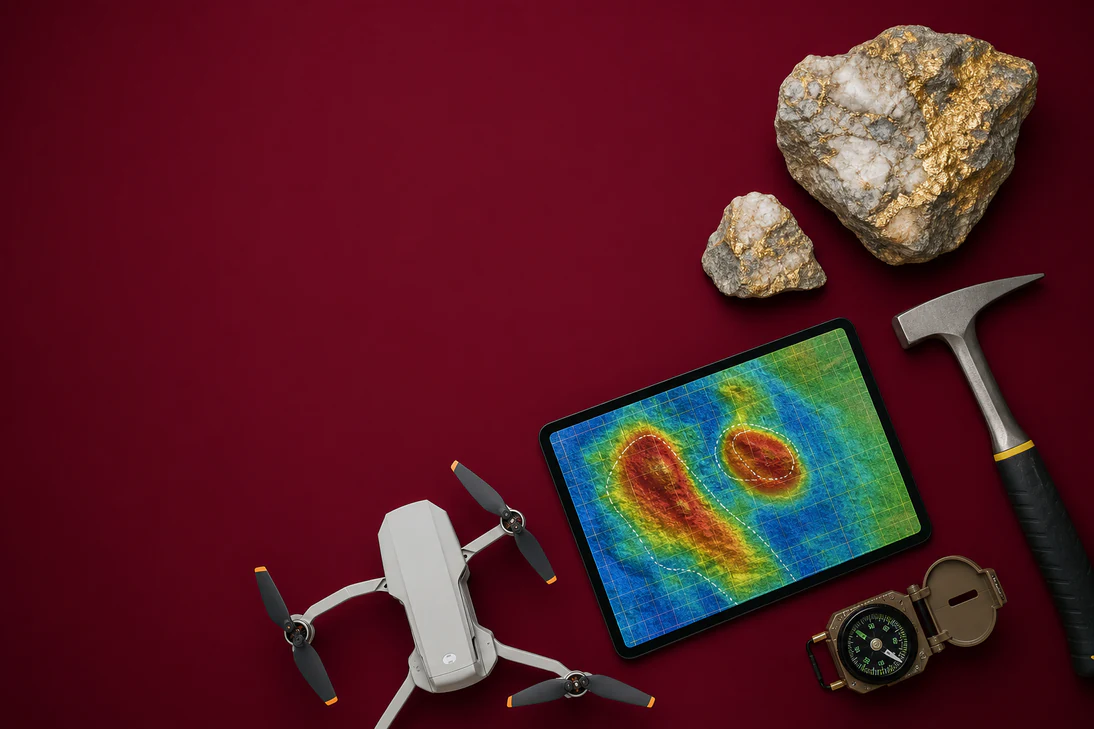
Unity Metals Limited (ASX:UM1) has unveiled compelling geophysical data from its Rohav Mountain Prospect within Cambodia’s Ngot Gold Project, pointing to a previously undetected magnetite-bearing intrusion that could be the source of its gold mineralisation. The discovery comes from a 205 line-kilometre UAV magnetic survey that detected two sizable magnetic anomalies, with a central anomaly directly beneath and north of Unity’s initial drilling zone.
This central magnetic anomaly extends significantly at depth and is interpreted as the driver behind the hydrothermal fluids responsible for altering the diorite intrusion previously drilled by Unity. Earlier drilling in this area had returned promising gold intercepts up to 7.9 grams per tonne (g/t), but crucially did not test the newly identified magnetic target.
Chargeability Highs Highlight Epithermal Vein Targets
Building on the UAV magnetics, a Dipole-Dipole Array Induced Polarisation (DDIP) survey over the central anomaly revealed discrete, finger-like zones of high chargeability and coincident resistivity anomalies encircling the interpreted intrusion. Unity believes these anomalies represent sulphide-rich, highly silicified zones, possibly quartz veins, which are typical hosts for epithermal gold mineralisation.
The eastern and northern edges of the intrusion are of particular interest, with these DDIP anomalies flagged as high-priority drill targets. The western and southern margins appear more eroded, potentially explaining artisanal gold recovery in drainages down slope.
LiDAR Survey Enhances 3D Geological Modelling
To aid in drill targeting within the steep terrain of Rohav Mountain, Unity completed an 8.55 square kilometre LiDAR survey delivering sub-5 centimetre topographic accuracy. This high-resolution 3D terrain model will improve geological interpretation and precision in planning the upcoming drill program.
Unity’s Managing Director Craig Mackay emphasised the significance of the new targets, noting the company’s excitement about testing the intrusion’s margins post-monsoon in Q4 2026 when access conditions improve.
Context Within Ongoing Exploration Success
Rohav Mountain has already demonstrated stacked zones of gold mineralisation hosted in a large diorite intrusion beneath basalt cover, with previous drilling intercepts including 23 metres at 0.9 g/t gold and 1 metre at 7.9 g/t gold. The intrusion is interpreted to be at least 700 metres long, with mineralisation linked to epithermal-style quartz vein stockworks bearing polymetallic sulphides.
Unity’s latest geophysical data not only reinforces the prospectivity of Rohav Mountain but also provides fresh, high-priority drill targets that could expand the known mineralised system. This complements the company’s broader exploration momentum in Cambodia, where it holds a large portfolio near the Okvau Gold Mine, the country’s largest gold operation.
Bottom Line?
Unity’s identification of a deep magnetite intrusion and associated epithermal targets at Rohav Mountain sets the stage for a critical drilling campaign that could materially advance its gold project.
Questions in the middle?
- Will Q4 2026 drilling confirm the interpreted intrusion as the primary gold source?
- How extensive is the mineralised system beyond the current magnetic anomalies?
- Could the high-resolution LiDAR data unlock further structural controls on mineralisation?