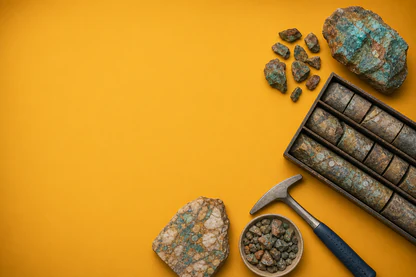
AusQuest Drilling Highlights Buried Copper Targets at Lantana Project

AusQuest’s maiden RC drilling at Lantana in Peru confirms porphyry-related alteration and anomalous copper, pointing to a concealed mineralised system beneath cover. The results set the stage for targeted geophysical surveys and follow-up drilling.
- Maiden RC drilling confirms basal lithocap alteration
- Anomalous copper, silver, bismuth, lead, and gold detected
- Priority target area identified northeast of major fault
- Multiple narrow mineralised dykes indicate strong system potential
- Geophysical surveys planned to refine next drilling phase

 Add us as a preferred source on Google
Drilling Unveils Porphyry-Related Alteration at Lantana
AusQuest Limited (ASX:AQD) has taken a significant step forward at its 100%-owned Lantana Copper-Gold Project in southern Peru, with its maiden Reverse Circulation (RC) drilling program confirming the presence of porphyry-related lithocaps. Nine drill holes totalling 2,794 metres intersected zones of Advanced Argillic Alteration (AAA), including pyrophyllite and high crystallinity white mica, which are classic markers of a basal lithocap environment indicative of a buried hydrothermal system.
The drilling targeted an area northeast of a major northwest-trending fault, a structure considered a potential conduit for mineralising fluids. The alteration signatures and anomalous copper values, including a peak of 0.4% Cu in drill hole LANRC002, suggest proximity to one or more concealed porphyry copper systems beneath alluvial cover.
Anomalous Metals in Narrow Dykes Signal Mineralisation
Beyond the alteration footprint, multiple narrow dykes and structures under 8 metres thick were intersected, carrying anomalous concentrations of copper, silver (up to 2 g/t), bismuth (up to 5 ppm), lead (up to 400 ppm), and minor gold (up to 0.07 g/t). These metal assemblages, coupled with elevated pathfinder elements like molybdenum, tin, tellurium, bismuth, and arsenic, reinforce the inference of a strongly mineralised system in the vicinity.
Altered andesite and dacite volcanics of varying thickness overlie a down-faulted monzodiorite intrusion, part of the Coastal Batholith, which is a known host rock for porphyry copper deposits. The geological setting aligns with regional porphyry systems, including the nearby Cangallo discovery about 30 kilometres west, situating Lantana within a prolific mineralised belt.
Strategic Focus Shifts to Target Optimisation and Geophysics
AusQuest’s Managing Director Graeme Drew emphasised the progress made towards pinpointing the source of the high metal inventory within the Iquipa-Clavellinas structural corridor. He highlighted that the drill results have brought the company closer to locating the basal lithocaps, which are invariably linked to porphyry intrusions.
Looking ahead, AusQuest plans to incorporate geophysical surveys to refine drill targets ahead of further exploration. These surveys will aim to delineate the extent and geometry of the concealed porphyry system, thereby optimising the next phase of drilling.
The maiden RC drilling program was designed as a reconnaissance test of geological and geochemical targets previously identified through rock-chip sampling and ground magnetic surveys. The wide-spaced holes provided initial confirmation of alteration and mineralisation but left true widths and detailed continuity to be established in subsequent campaigns.
Early Stage Exploration with Encouraging Signs
While assay data remains uncut and the drilling spacing broad, the presence of high-temperature pathfinder elements and anomalous copper in multiple holes underscores the prospectivity of the Lantana Project. The company’s methodical approach, combining geological mapping, sampling, and now drilling, is gradually unveiling the potential scale of the mineral system.
With geophysical surveys underway and further drilling planned, the next steps will be critical in defining the size and grade of any porphyry copper deposit. The Lantana results add to AusQuest’s growing copper portfolio in Peru, complementing recent discoveries and ongoing drilling at the nearby Cangallo project, and supporting the company’s longer-term strategy in the region.
Bottom Line?
AusQuest’s Lantana drilling confirms a promising porphyry target, but the scale and grade remain to be defined through geophysical surveys and focused follow-up drilling.
Questions in the middle?
- How will geophysical survey results influence the design of future drilling at Lantana?
- What is the potential size and grade of the concealed porphyry system suggested by current data?
- How might Lantana’s mineralisation compare to the nearby Cangallo discovery in terms of commercial viability?