Merino & Co. Reports $2.2 Million Loss with China Driving Majority Revenue

3 min read
6:33pm on Monday 31st of August, 2026 AEST ~6pm, 31st Aug, 26
Merino & Co. Limited reported a 36.3% revenue decline to $2.24 million for FY26, with losses narrowing 20% to $2.21 million. China now drives most of the group’s revenue and all segment profits, offsetting the Australian market’s sharp contraction.
- Revenue down 36.3% to $2.24 million
- Net loss narrowed 20% to $2.21 million
- China accounts for majority of revenue and all profit
- Australian segment revenue halved
- Operating cash outflow improved, capex at maintenance
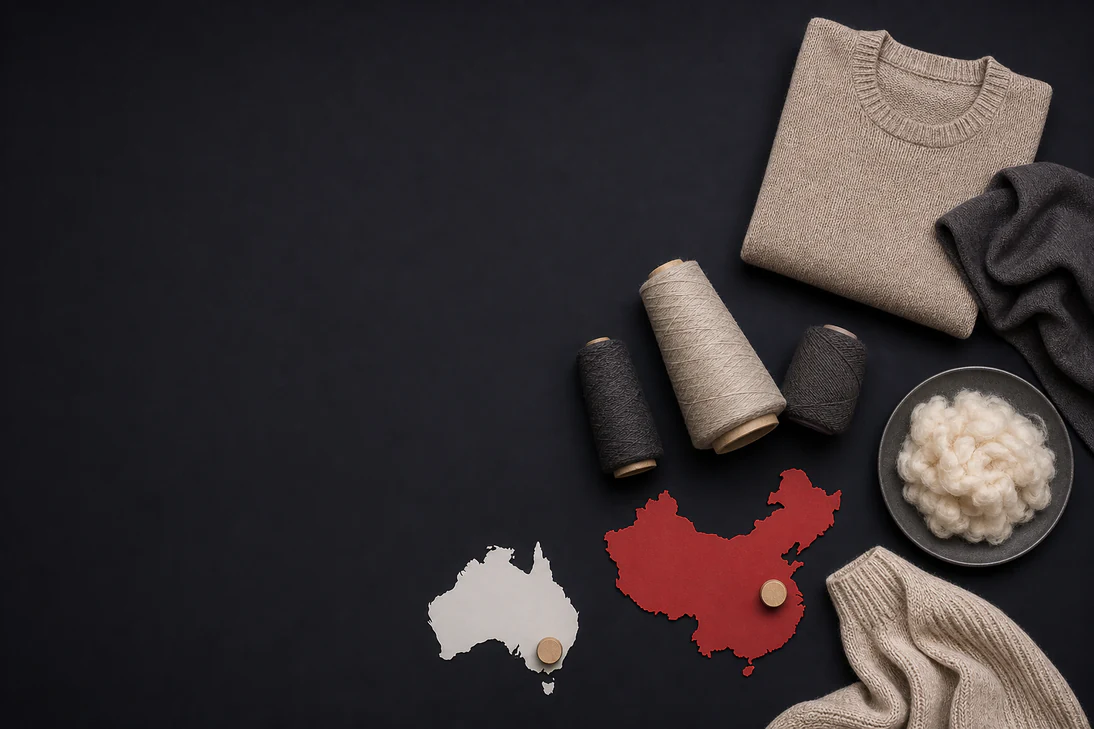

Revenue Collapse in Australia Overshadowed by China Growth
Merino & Co. Limited (ASX:MNC) reported a sharp 36.3% drop in total revenue to $2.24 million for the year ended 30 June 2026, driven by a steep decline in its Australian business. Sales in Australia plunged from $2.9 million to just $866,682, while China’s revenue more than doubled to $1.37 million, now representing the majority of group sales and the sole contributor to segment profit.
This geographic shift marks a significant change in the company’s revenue mix, with China emerging as the growth engine amid a challenging domestic market. The Australian segment’s losses deepened to $2.4 million before tax, underscoring the urgent need for strategic repositioning, which management has flagged as a key priority for FY27.
Losses Narrow Despite Revenue Slide
Despite the revenue contraction, Merino & Co. managed to reduce its net loss after tax by 20%, from $2.76 million in FY25 to $2.21 million in FY26. The company attributes this improvement partly to cost discipline and a return to maintenance-level capital expenditure following a prior year’s investment in production capacity, which came online during the period.
Operating cash outflows also improved, shrinking to $1.4 million from $1.94 million the previous year, reflecting tighter working capital management. Inventory levels remained broadly stable at $3.7 million but shifted away from finished goods towards work in progress and stock in transit, suggesting ongoing efforts to align production with demand.
Balance Sheet and Capital Structure Remain Under Pressure
Merino & Co.’s net tangible assets per share fell from 7.47 cents to 4.61 cents, reflecting accumulated losses and balance sheet pressures. Total liabilities increased slightly to $4.9 million, with borrowings of $2.27 million secured by investment properties and working capital facilities. Lease liabilities remain substantial at $1.28 million, tied to warehouse and office premises in Wangara, WA.
The company’s cash position took a hit, with cash and cash equivalents dropping from $2.97 million to $740,337 by year-end, despite proceeds from share-based payments and prior capital raises. The directors have not declared any dividends and have signalled a focus on restoring Australian revenues, converting inventory and receivables into cash, and strengthening the balance sheet in FY27.
Strategic Outlook Hinges on Australian Recovery and China Expansion
Merino & Co. is navigating a transitional year where its China operations have become the financial lifeline, offsetting the Australian market’s contraction. The company secured a multi-year exclusive distribution agreement in China earlier in FY26, guaranteeing minimum orders and targeting growth, which now underpins its segment profit.
However, the Australian market remains a significant drag, with management committed to a strategic repositioning to reverse revenue declines. The company’s ability to convert its sizeable inventory and receivables into cash will be critical, alongside managing its debt and lease obligations.
Bottom Line?
Merino & Co.’s FY26 results highlight a stark geographic revenue shift with China now central to its profitability, but the Australian market’s slump and cash constraints pose ongoing challenges.
Questions in the middle?
- Can Merino & Co. successfully revive its Australian sales in FY27 amid competitive pressures?
- Will the China segment sustain its growth trajectory and profitability beyond the current exclusive distribution deal?
- How effectively can the company convert its inventory and receivables into cash to ease balance sheet pressures?