Osteopore Posts $2 Million Loss on $1.43 Million Revenue in H1 2026

Osteopore Limited’s half-year results show an 8% revenue drop driven by currency effects, while losses widen 14% as the company invests heavily in product development and market growth.
- Revenue down 8% to $1.43 million due to currency translation
- Net loss increases 14% to $2.01 million on higher expenses
- Strong underlying sales growth in Philippines, Vietnam, Japan, US, and Singapore
- Secures multiple exclusive licenses and distribution deals across Asia, Latin America, Middle East
- Net asset deficiency narrows slightly to $1.8 million; cash balance doubles to $1.25 million
 Add us as a preferred source on Google
Revenue Dip Masks Underlying Geographic Growth
Osteopore Limited (ASX:OSX) posted a half-year revenue decline of 8% to $1.43 million for the six months ended 30 June 2026, primarily reflecting the impact of a stronger Australian dollar against key currencies such as the US dollar, Korean won, and Singapore dollar. On a constant currency basis, revenue was broadly flat compared to the prior corresponding period, with growth in markets including the Philippines, Vietnam, Japan, the United States, and Singapore offsetting weaker sales in India, Taiwan, the UAE, the Netherlands, and Thailand.
The company’s custom cranial implants in Europe faced delayed adoption due to an extended clinical outcome verification process, a typical hurdle for novel implant technologies entering new surgical centres. Distribution transitions also contributed to softer sales during the period.
Losses Widen on Increased Investment in Growth and Compliance
Osteopore’s net loss after tax widened by 14% to $2.01 million, driven by increased product development and laboratory expenses as the company ramped up regulatory compliance efforts to support its expanding product range and geographic footprint. Sales, marketing, and business development costs also rose, reflecting ongoing investments in new market entry and distribution channels. These were partially offset by lower administrative expenses.
Finance costs edged up to $301,381, and a non-cash fair value loss of $41,718 on embedded derivatives related to convertible notes was recorded. The company’s cash burn slowed compared to the prior period, with net operating cash outflows falling to $895,096 and cash reserves doubling to $1.25 million as of 30 June 2026.
Strategic Partnerships and Market Expansion Drive Forward Momentum
Despite the headline revenue decline, Osteopore advanced several key commercial and regulatory milestones. It secured an exclusive license with Accelerate Technologies Pte Ltd, part of Singapore’s A*STAR, for a technology that accelerates bone and tissue regeneration, positioning it to tap into the growing Asia Pacific market for bone growth factor therapies.
The company also inked a multi-year exclusive collaboration worth over RMB 12 million (approximately A$2.5 million) with Majeton Pte Ltd, a subsidiary of Hong Kong-listed Essex Bio-Technology, to commercialise dental, orthodontic, and maxillofacial products in China, Hong Kong, and Macau. The first milestone payment of RMB 2.5 million was received in March 2026.
Osteopore expanded its orthopaedic business in Hong Kong through an exclusive distribution agreement with MontsMed Hong Kong Company Limited, completing its first customised implant surgery in June 2026. In Latin America, a distribution partnership with Medprin Biotech GmbH extended access from Colombia to a 20-country region.
Regulatory progress included market access for orthopaedic products in Malaysia, with first dental product deliveries under a five-year distribution deal with DKSH Malaysia. The company also secured approval for clinical use of orthopaedic custom devices at Shanghai Ruijin Hospital’s Hainan branch, enabling early commercial use ahead of full mainland China approval.
Clinical Trials and Governance Updates
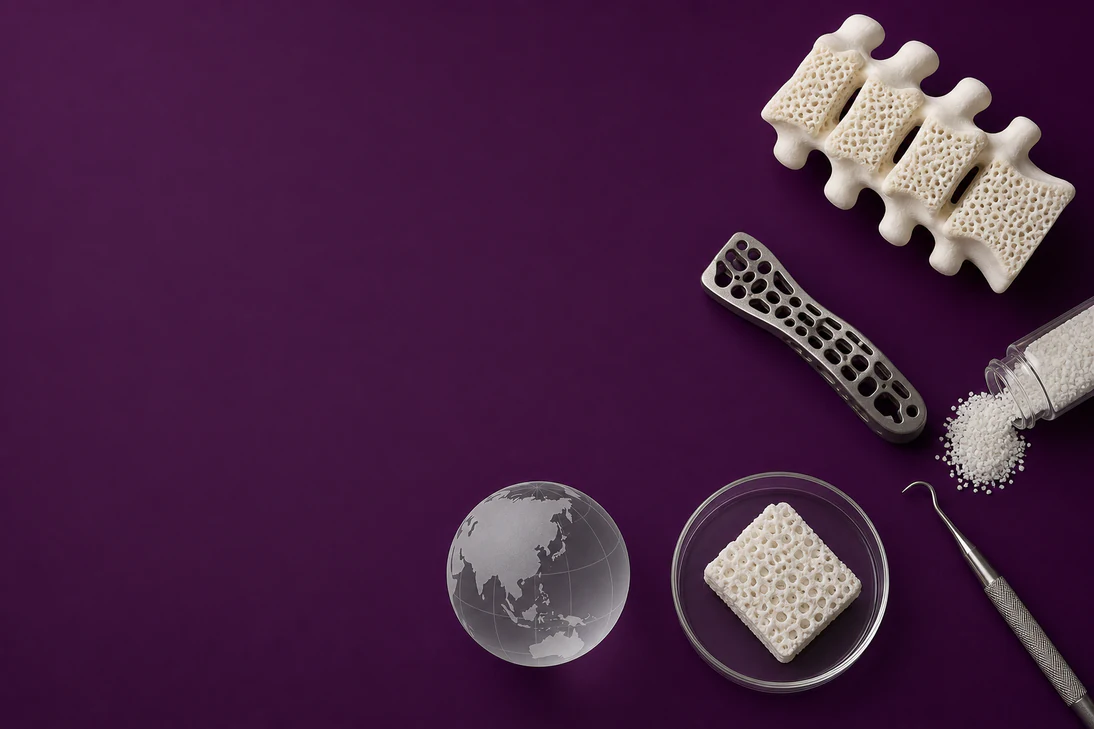
Osteopore’s cleft lip augmentation clinical trial at Queensland Children’s Hospital completed patient recruitment, with initial treatments concluded, while a jaw reconstruction trial commenced at Princess Alexandra Hospital. These trials represent important steps in validating novel applications of the company’s 3D-printed, bioresorbable bone scaffolds.
On the governance front, Osteopore appointed Pitcher Partners BA&A Pty Ltd as its new auditor following Grant Thornton’s resignation, subject to shareholder ratification at the next Annual General Meeting. The company also converted a $50,000 convertible note into ordinary shares post-reporting period and entered a three-year distribution agreement with Al-Umnia Medical LLC to distribute orthopaedic products across five Middle Eastern countries, including Saudi Arabia and the UAE, further broadening its global footprint.
Balance Sheet and Going Concern Considerations
Osteopore’s net asset deficiency narrowed slightly to $1.8 million as of 30 June 2026, reflecting continued convertible note conversions and capital raises. The company holds convertible notes with a face value of approximately $2.45 million, which can be converted to equity or redeemed, adding complexity to its capital structure.
The directors maintain the company’s going concern status based on expected revenue growth, cost management, and ongoing funding arrangements under a $20 million convertible note subscription agreement with Advance Opportunities Fund. However, the auditor’s review highlighted material uncertainty around this assumption, noting the company’s reliance on successful capital raising and operational performance to meet obligations.
Bottom Line?
Osteopore’s financials reveal the tension of scaling a medtech innovator: currency headwinds and higher costs weigh on near-term profits, but strategic partnerships and regulatory milestones lay groundwork for future growth.
Questions in the middle?
- Will Osteopore’s clinical trials yield data strong enough to accelerate adoption in key markets?
- How will the convertible note structure impact shareholder dilution and capital flexibility over the next 12 months?
- Can the company sustain revenue growth in emerging markets while managing regulatory and distribution complexities?