EV1’s Chilalo Graphite Proves Durable for Fuel Cell Separator Plates

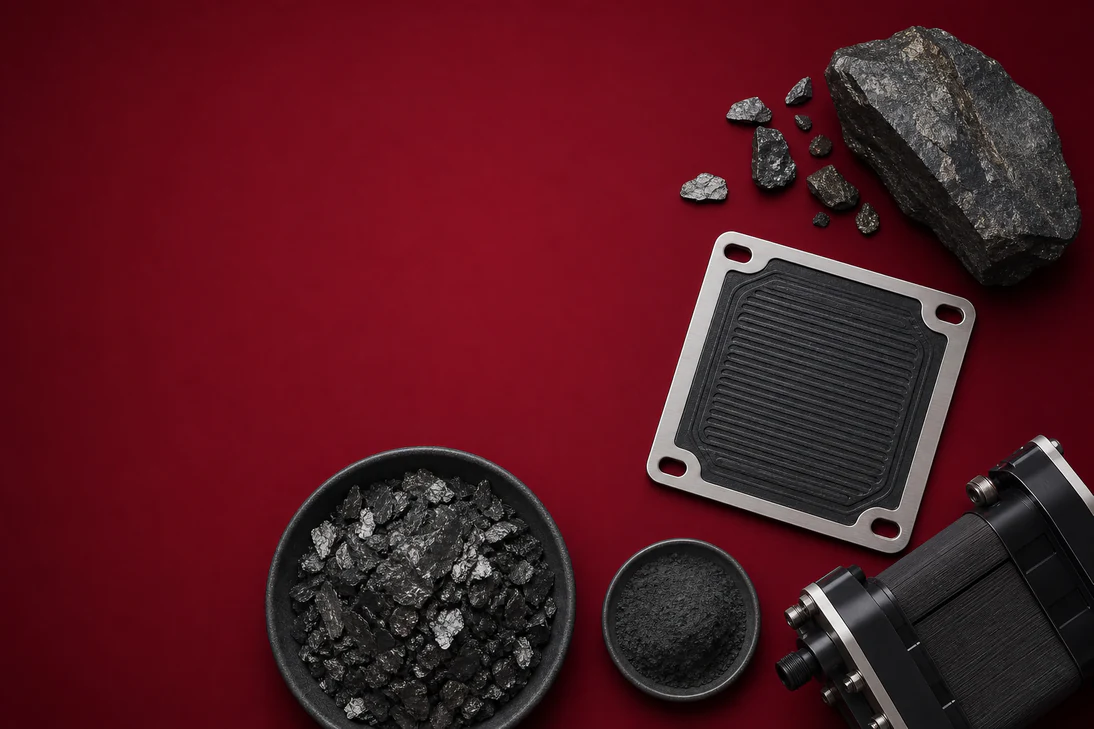
Evolution Energy Minerals has confirmed its Chilalo coarse flake graphite is well-suited for high-value fuel cell applications, including separator plates critical to data centre power and fuel-cell electric vehicles.
- Coarse flake graphite ideal for fuel cell separator plates
- 95–97% carbon concentrate meets PEM fuel cell market standards
- Thick flakes exhibit strong oxidation resistance at high temperatures
- Strategic supply potential for Japan’s fuel cell electric vehicle market
- First graphite concentrate production targeted for October 2027
 Add us as a preferred source on Google
Chilalo Graphite’s Unique Flake Profile Unlocks New Markets
Evolution Energy Minerals (ASX:EV1) has spotlighted a compelling new use for its Chilalo coarse flake graphite beyond battery anodes: fuel cell separator plates. The company’s test work, conducted in the United States, shows that 58% of the Chilalo resource’s graphite occurs as coarse flakes, with a substantial portion exceeding +50 mesh size. These flakes are not only large but unusually thick and exhibit low halogen content, ticking the boxes for durability and purity demanded by fuel cell manufacturers.
American Energy Technologies Company (AETC), EV1’s US technology partner, identified the graphite’s flake size and thickness as key factors providing exceptional oxidation resistance, withstanding temperatures up to 900°C. This is significant given that proton exchange membrane (PEM) fuel cells typically operate around 70-80°C, suggesting Chilalo graphite separator plates could offer a robust tenfold safety margin in thermal stability.
Fuel Cell Applications Span Data Centres to Electric Vehicles
Fuel cells are gaining traction in diverse sectors including advanced transportation, backup power, and defence. Notably, data centres in the US are adopting fuel cell power, with a 1 MW installation approved by the Department of Energy in 2024 involving Microsoft, Caterpillar, and Ballard Power. Ballard alone has installed 10 MW of fuel cell power since 2025, with an additional 15 MW underway.
EV1 sees a strategic opportunity in Japan’s PEM-type fuel cell electric vehicle market, where coarse flake graphite concentrate is a required input. Chilalo’s location near East Tanzanian ports offers a logistical advantage for direct supply into Tokyo, a hub for fuel cell vehicle manufacturing. The graphite concentrate from Chilalo’s planned concentrator is expected to deliver 95–97 wt.% carbon, aligning with market requirements.
Product Qualification and Industry Context
AETC’s analysis confirms Chilalo graphite’s low halogen levels, fluorine below 10 ppm and chlorine between 50–70 ppm, further enhancing its suitability for fuel cell components. The company’s recent production of 280 kg of 99.99% carbon graphite concentrate under the EU-funded STREAMS programme complements these findings, underscoring the deposit’s versatility across battery and fuel cell markets.
While industry players like Ballard highlight graphite bipolar plates’ durability and power density advantages, EV1 stresses that these developments illustrate market potential rather than existing customer contracts. The company is focused on converting Chilalo’s natural graphite qualities into commercially viable products, targeting first concentrate production in October 2027, subject to funding and approvals.
Managing Director Highlights Value Beyond Batteries
Craig Moulton, EV1’s Managing Director, emphasised that unlocking the value of Chilalo’s coarse flakes is central to the project’s economics. He noted, “Data-centre power and hydrogen transport offer compelling markets alongside our battery-materials programme.” The company’s staged development approach aims to capitalise on these natural advantages by delivering products that meet customer needs.
Bottom Line?
EV1’s Chilalo graphite demonstrates promising attributes for fuel cell markets, but commercialisation hinges on successful concentrator construction and customer qualification ahead of 2027 production.
Questions in the middle?
- How will EV1 navigate customer qualification pathways for fuel cell graphite products?
- What funding and permitting milestones must be met to maintain the October 2027 production target?
- Could Chilalo graphite’s oxidation resistance open further specialty market opportunities beyond fuel cells?