AuKing targets Tundulu depth with major 1,000m diamond hole

AuKing Mining has approved planning for an approximately 1,000-metre diamond hole at its Tundulu Rare Earths Project in Malawi. The hole will test the depth of the carbonatite system at Nathace Hill after strong initial RC results and two deep diamond intersections.
- Approximately 1,000m diamond hole planned at Nathace Hill
- Two existing diamond holes intersected carbonatite to 510.6m and 400.4m
- Initial RC assays described as exceptional, with detailed figures not disclosed in this update
- Drilling forms part of the current budgeted exploration program
- No mineral resource estimate or economic study has yet been reported
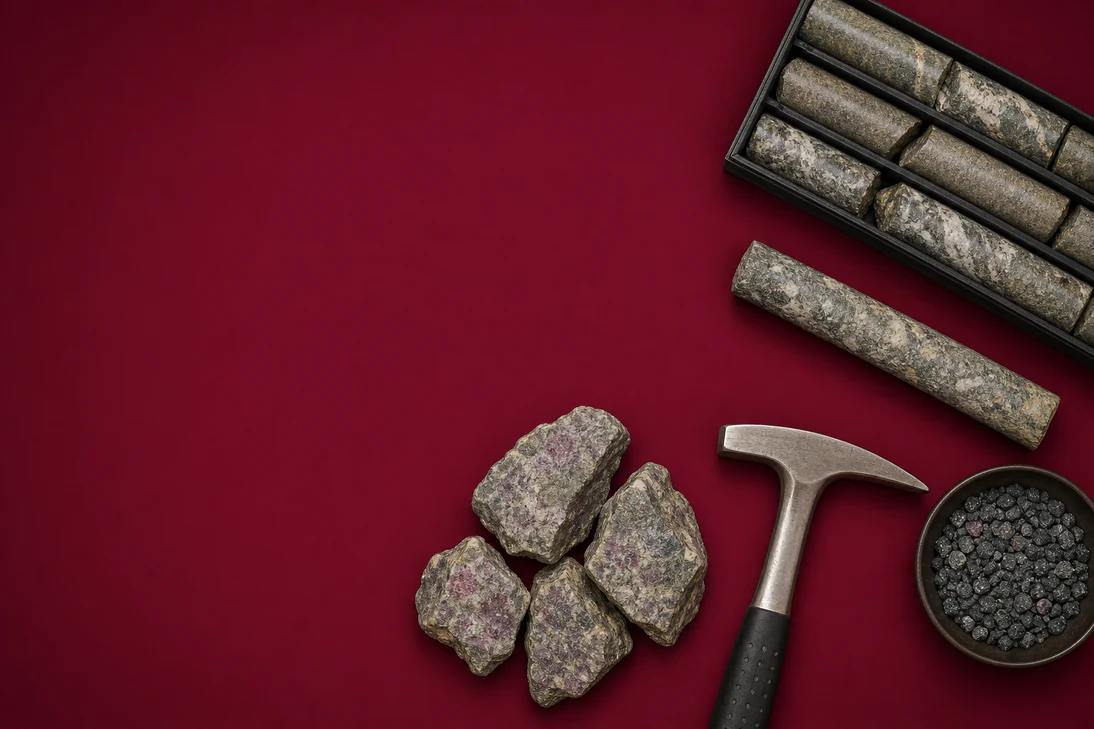

AuKing Mining Limited (ASX:AKN) is preparing to drill deeper into what it believes could be a substantial rare earths system at Tundulu in southern Malawi, with the board approving planning for an approximately 1,000-metre diamond hole at Nathace Hill.
The proposed hole is not a resource estimate or a development milestone. It is a test of geological scale. AuKing says strong initial assay results from its maiden reverse-circulation program, combined with carbonatite encountered in two diamond holes, have strengthened its interpretation of a mineralised system continuing well below the surface.
Deep Carbonatite Intersections Set Up the 1,000m Test
The first two diamond holes reached 510.6 metres and 400.4 metres respectively, with both intersecting carbonatite lithologies through to end-of-hole. Carbonatite is the host rock associated with many rare earth deposits, but its presence alone does not establish an economic mineral resource.
AuKing has described the initial RC assay results as “exceptional”, although this announcement does not repeat the individual grades, widths or rare earth oxide proportions reported previously. That omission matters: the new hole is being justified by the combination of assay performance and deep geology, but investors will still need the detailed results and geological interpretation to judge continuity and grade at depth.
Tundulu Moves From Reconnaissance to Systematic Exploration
The company places Tundulu alongside Malawi’s other better-known rare earth carbonatite prospects, Kangankunde and Songwe Hill. AuKing says historical work by the Japan International Cooperation Agency identified all three areas as potentially economic indications, while later exploration at Kangankunde and Songwe Hill led to substantial rare earth resources. Tundulu, by comparison, has remained comparatively underexplored.
The planned hole is part of AuKing’s current budgeted program, and the company says its funding position supports systematic exploration at this scale. The announcement does not provide a separate cost estimate or drilling start date, leaving the next practical markers as mobilisation, completion of the hole, assays and any resulting resource work.
Assays and Resource Work Remain the Key Tests
The deeper hole could help determine whether the carbonatite body and its rare earth mineralisation persist at depth, but it also introduces the usual exploration risk: geological continuity does not guarantee consistent grades, recoveries or economic viability. AuKing has not disclosed a mineral resource estimate, feasibility study or confirmed economic mineralisation for Tundulu in this update.
Bottom Line?
The 1,000-metre hole raises the geological stakes at Tundulu, but its value will depend on whether depth brings continuous, economic-grade rare earth mineralisation rather than carbonatite alone.
Questions in the middle?
- When will the approximately 1,000-metre hole begin, and will it reach the planned depth?
- What grades, widths and rare earth composition will the deeper carbonatite return?
- Can the combined RC and diamond results support a maiden mineral resource estimate before the end of 2026?