CSIRO Selection Gives LU7 Solar Recycling Plan a Research Lift

Lithium Universe has secured selection for a proposed four-year Industry PhD project with Macquarie University and CSIRO to develop microwave-assisted recycling of end-of-life solar panels. The collaboration could strengthen the company’s technology pathway, but its grant, agreement and commercial outcomes remain unconfirmed.
- Proposed four-year LU7, Macquarie University and CSIRO research program
- Microwave delamination designed to separate panel layers without crushing
- Research targets higher-quality recovery of glass, silicon, silver and other metals
- LU7 expected to contribute approximately A$51,710 to the scholarship
- Definitive agreement, grant award and student recruitment still pending

CSIRO Selects LU7 Solar Recycling Proposal
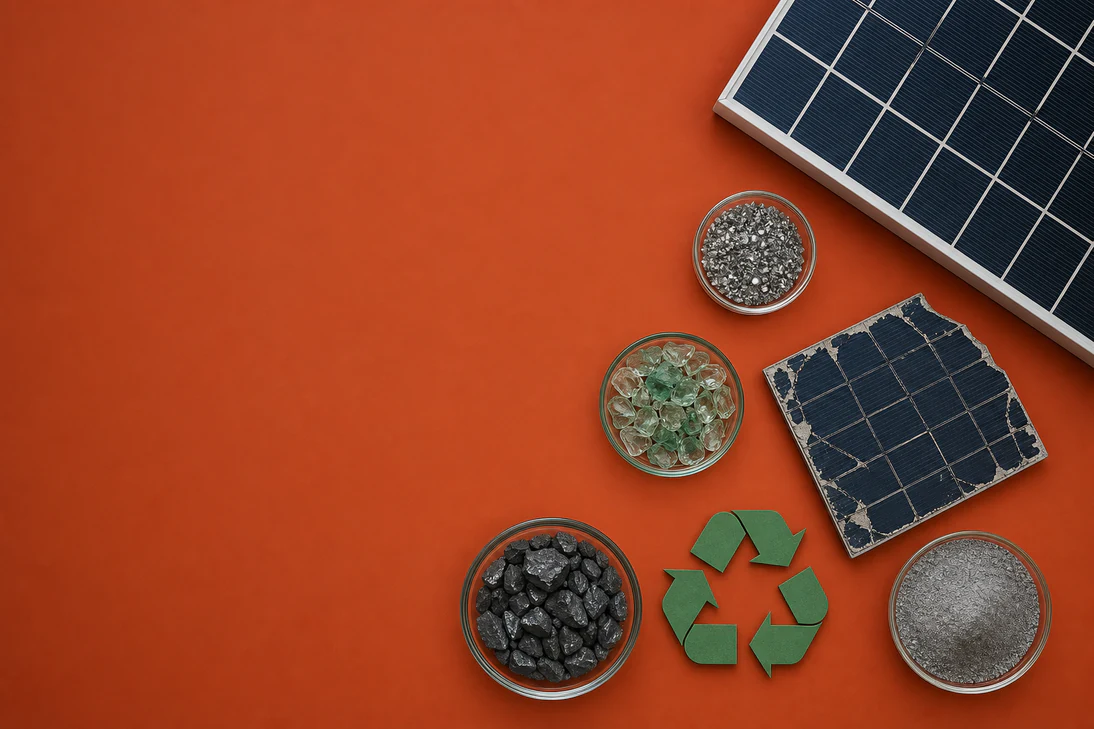
Lithium Universe Limited (ASX:LU7) has won selection for a proposed four-year research project with Macquarie University and CSIRO, giving its solar-panel recycling strategy an external scientific partner and a dedicated research program. The project, titled “Microwave-Assisted Recycling of End-of-Life Silicon Photovoltaic Modules”, will investigate whether microwave energy can separate photovoltaic layers without crushing or contaminating them.
That distinction matters because intact separation could preserve the quality of recovered glass, silicon, silver and other metals. The work is intended to advance LU7’s Silver Extraction PV Recycling Project from laboratory proof-of-concept towards pilot-scale design, technical validation and commercial modelling. Those are stated objectives, not yet demonstrated commercial outcomes.
Microwave Delamination Targets Cleaner Recovery
The research will focus on selectively heating the encapsulant inside silicon photovoltaic modules, allowing the layers to be delaminated while remaining largely intact. Researchers will examine microwave-system design, operating parameters, differences between module types, recovered-material quality, lifecycle impacts and the requirements for scaling the process.
Performance will be assessed against recovery yield, purity, energy efficiency and commercial-viability thresholds. A PhD student is expected to spend at least 60 days with LU7, working on pilot testing, feedstock assessment, end-user engagement, lifecycle assessment, techno-economic modelling and the design and costing of scaled trials.
Four-Year Program Carries Limited Near-Term Cost
For a student commencing in 2027, the scholarship is estimated at approximately A$207,143 over four years. CSIRO is expected to fund A$155,433, while LU7’s industry-funded top-up would be about A$51,710. The program also includes approximately A$56,019 for project expenses and professional development, with Macquarie University committing a further A$6,000 towards project expenses.
That structure offers LU7 access to university and CSIRO expertise and facilities without bearing the full cost of a standalone research program. The company says the collaboration may also create intellectual property and commercialisation opportunities, although ownership and confidentiality terms will be settled in the definitive collaboration agreement.
Agreement and Grant Still Need to Be Finalised
CSIRO is preparing a draft Industry PhD collaboration agreement, which is expected to be issued for review before the end of October 2026. Negotiation and execution of the agreement, alongside the grant award, are expected to take about 10 to 12 weeks from the draft’s issue, according to CSIRO. Project commencement is not expected until roughly six months after the EOI round closes and remains subject to agreement execution, student recruitment, background checks and enrolment.
The announcement therefore marks a research-selection milestone rather than a completed funding or commercial partnership. The more consequential evidence will come later: whether the agreement is signed, whether a candidate is appointed and whether the process can meet its stated recovery, purity, energy and economic thresholds at pilot scale.
Bottom Line?
CSIRO’s involvement strengthens the credibility and resourcing of LU7’s recycling program, but the investment case still depends on a signed agreement and measurable pilot results.
Questions in the middle?
- Will the definitive collaboration agreement and grant award be completed on the proposed timetable?
- Can microwave delamination deliver consistently high-purity material recovery across different panel types?
- What intellectual property, licensing or commercial model will emerge from the four-year research program?