MRG Expands Adriano Heavy Mineral Footprint to 1.6 Square Kilometres

MRG Metals says grid hand-auger drilling has outlined a visually mineralised 1.6 square kilometre footprint at its Adriano rare earths project in Mozambique. The result expands the exploration picture, but laboratory assays are still pending and no Mineral Resource has yet been established.
- 1.6 square kilometre footprint outlined at Adriano Target Area 2
- 99 holes drilled across 20 metre and 200 metre grids
- All holes visually mineralised to well mineralised, according to MRG
- Laboratory THM assays remain outstanding
- Further drilling, mineralogy and preliminary metallurgy planned
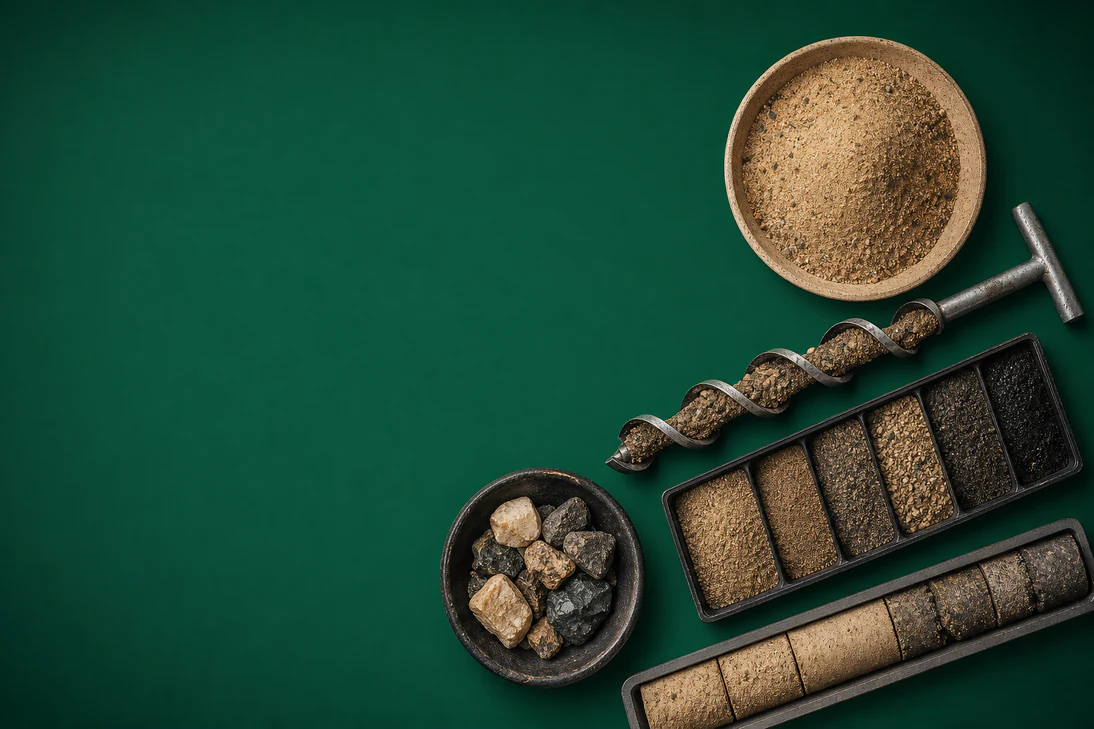

Adriano Footprint Reaches 1.6 Square Kilometres
MRG Metals Limited (ASX:MRQ) has extended the visible mineralised footprint at its Adriano rare earth elements project in Mozambique to about 1.6 square kilometres, giving the company a larger target for follow-up drilling and resource definition.
The footprint at Adriano Target Area 2 was outlined through 99 hand-auger holes, comprising 48 holes on an initial 20 metre grid and 51 holes on a broader 200 metre grid. MRG said every hole was visually mineralised to well mineralised, with the drilling averaging about 2 metres on the closer grid and 1.8 metres on the wider grid.
Visual Mineralisation Still Awaits Assay Confirmation
The encouraging headline comes with an important qualification: the reported grades from this grid program are visual estimates, not laboratory results. MRG said the samples have not yet been delivered for analytical work, with testing planned at MAK Analytical in South Africa to determine total heavy mineral content, silt, oversize and the -1 millimetre plus 45 micron fraction.
About 25% of the holes did not reach subcrop because of the water table. Coarse gravel and drilling refusal also limit what the shallow hand-auger program can establish. The company therefore has evidence of a broad mineralised surface expression, but not yet a confirmed grade distribution, thickness model or demonstrated continuity suitable for a Mineral Resource Estimate.
Earlier High-Grade Holes Set the Exploration Target
The grid work followed earlier target-generation drilling and pitting at Area 2. Previously reported laboratory results included 6.41% total heavy minerals over 3 metres in hole AAG25015, 5.71% over 3.5 metres in AAG25017, 6.20% over 3 metres in AAG25021 and 6.94% over 3 metres in AAG25024.
A bulk-sample mineralogical study associated with the alluvial material recorded 32.2% total valuable heavy minerals in the heavy mineral concentrate, including 24.4% ilmenite, 2.3% rutile, 1.9% monazite, 1.9% zircon and 1.8% leucoxene. Those figures relate to the earlier composite sample and should not be read as assays for the newly drilled grid holes.
A 13-Kilometre Corridor Remains in Play
MRG says the Adriano and Fotinho licences contain additional targets along a combined 13 kilometre strike length. The northern, western and southern edges of the 200 metre grid continued to show significant visual mineralisation, according to the company, leaving room for step-out work beyond the current footprint.
The next phase is expected to combine laboratory THM assays with further infill and step-out drilling. MRG also plans mineralogical studies across different lithologies and preliminary metallurgy intended to assess concentrate processing and value. The stated objective is ultimately to build the geological and grade information needed for a JORC Mineral Resource Estimate.
Bottom Line?
The footprint is large enough to matter, but the next catalyst is quantitative: assay results must show whether the visual mineralisation is continuous, sufficiently graded and recoverable at scale.
Questions in the middle?
- Will laboratory assays broadly support the visual heavy-mineral estimates across the 1.6 square kilometre grid?
- How much of the 13 kilometre Adriano-Fotinho corridor can be converted into continuous, drill-supported mineralisation?
- Can mineralogical and preliminary metallurgical work demonstrate a commercially attractive concentrate beyond the earlier bulk-sample results?