King River’s Mindoolah pivot puts historic gold stockpiles under the microscope

King River Resources has shifted its operational centre of gravity to the Mindoolah Gold Project, where it identified 467,659 cubic metres of historical stockpile and waste material for evaluation. The company’s $15.9 million annual profit was driven mainly by gains on Tivan securities rather than mining revenue, leaving drilling results and funding capacity as the next tests.
- Mindoolah acquisition completed for $825,000 in cash plus future royalties
- 467,659 cubic metres of historical surface material identified
- Phase 1 stockpile drilling completed with assays pending
- $15.9 million profit largely generated by Tivan investment gains
- Cash declined to $3.68 million as exploration spending increased
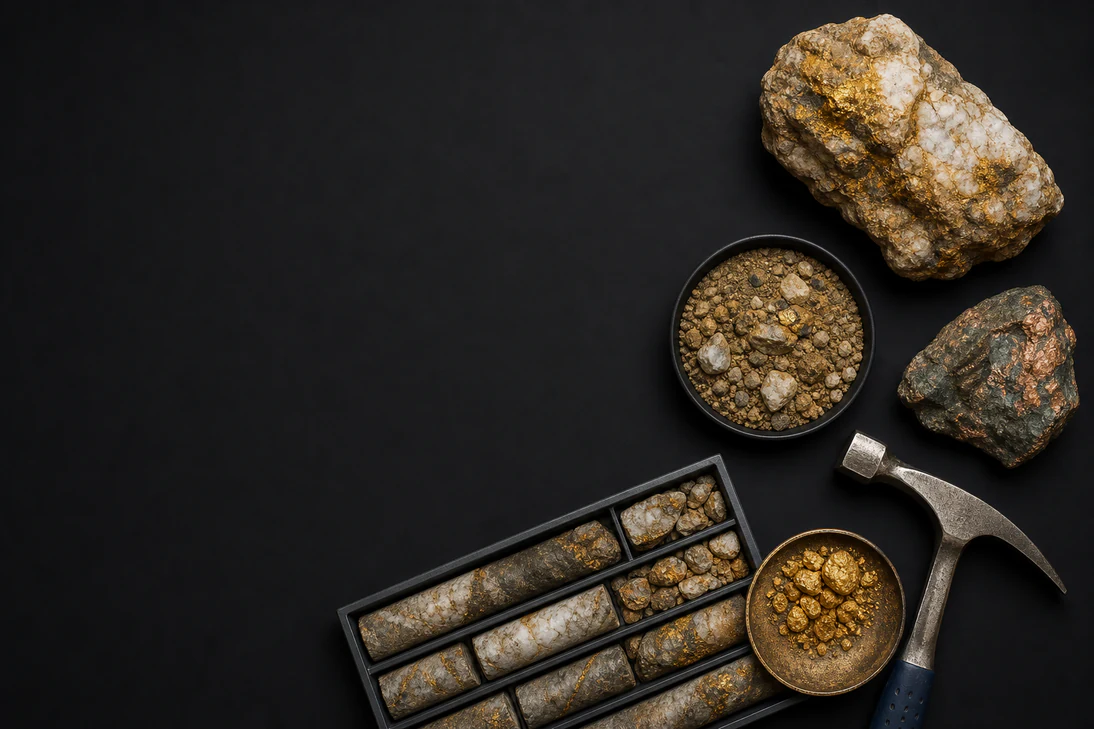
Mindoolah becomes King River’s operational centre
King River Resources Limited (ASX:KRR) has used its 2026 annual report to formalise a sharp change in direction: Mindoolah, a historically mined gold project in Western Australia’s Murchison Province, is now the company’s principal exploration focus. The acquisition was completed in March for $600,000 in cash, after a $225,000 option fee, with the vendor also retaining a 1% net smelter return royalty on production more than seven metres below surface and an uncapped 10% gross-revenue royalty on shallower production.
The early work has produced a large target, but not yet a resource. LiDAR and photogrammetric surveys identified about 467,659 cubic metres of historical waste-dump and stockpile material across Excelsior, Cundy, Mindoolah Main Reef, Le Soleil and nearby areas. The company also modelled roughly 595,729 cubic metres of historical open-pit excavation, although it said a material reconciliation difference between surveyed volumes and historical production records could not be explained from the available data.
Drilling moves from stockpiles to hard rock
King River planned 1,690 metres of RC drilling across 167 holes to test grade distribution, density and variability within the Excelsior, Cundy and Mindoolah Main Reef stockpiles. The report says that program was completed ahead of schedule after year end, with samples sent for laboratory analysis. The rig then moved into shallow hard-rock targets beneath and beside historical pits, shafts and interpreted mineralised structures, with approximately 1,000 metres planned.
That sequence matters because the company is pursuing two different propositions at Mindoolah: potential value in previously mined surface material and extensions to structurally controlled gold mineralisation below or alongside old workings. Historical results provide encouragement, including several unmined Excelsior intersections above 6 grams per tonne gold, but those historical intersections do not establish the scale, continuity or economics of a deposit.
Profit came from investments, not exploration
King River reported a net profit after tax of $15.899 million, reversing a $6.143 million loss a year earlier. The headline number is unusually disconnected from the company’s operating activity: it included an $18.330 million unrealised fair-value gain on Tivan Ltd (ASX:TVN) securities and a $2.429 million realised gain from securities sold during the year.
Mining revenue was not the source of the result. King River remains an exploration-stage business, and its cash balance fell from $4.216 million to $3.678 million while operating activities consumed $1.253 million. Exploration and evaluation assets rose to $10.233 million, including the Mindoolah acquisition and $1.803 million of exploration expenditure, while the company impaired $220,950 of capitalised exploration expenditure. The remaining Tivan investment was valued at $26.55 million at year end, making its market price an important variable in future reported earnings and equity.
Dilution and funding remain live issues
The balance sheet had a $3.476 million net current asset surplus, and directors said they had reasonable grounds to prepare the accounts on a going-concern basis. But the report also states that future project development may require additional funding and that any capital raising could dilute shareholders. That caution sits alongside a growing performance-rights overhang: 168 million rights were reported as outstanding at the date of the report, while 121 million vested rights were converted into shares after year end.
Tennant Creek remains part of the portfolio, although the results were mixed. Kurundi drilling returned a best new-structure intersection of 4 metres at 1.43 grams per tonne gold, including 2 metres at 2.79 grams per tonne, while six Kuiper RC holes returned no significant gold or base-metal assays despite intersecting faults, iron alteration and hydrothermal ironstones. For now, Mindoolah carries the narrative and the exploration budget. Its pending stockpile assays, hard-rock drilling results and any subsequent resource or processing work will determine whether the project can convert an impressive historical footprint into something more tangible.
Bottom Line?
The annual profit flatters the operating picture; the more consequential test is whether Mindoolah’s pending assays justify continued spending before the company needs fresh capital.
Questions in the middle?
- Will stockpile assays establish grades and recoverable volumes sufficient to support further evaluation?
- Can shallow hard-rock drilling demonstrate continuity beyond Mindoolah’s historical workings?
- How much of the remaining cash and Tivan investment will be available to fund exploration before dilution becomes necessary?