Epiminder builds momentum as DETECT study reaches 75 patients

Epiminder has enrolled the 75th patient in its DETECT study, meeting its September target as the US site network expands to 21 centres. The company expects to reach 100 enrolments in November and remains focused on completing the 210-patient study by the end of the first half of calendar 2027.
- 75th DETECT patient enrolled in September
- US site network expands to 21 centres
- 100th enrolment expected in November
- 210-patient target remains set for 1H CY2027
- No efficacy or safety results reported
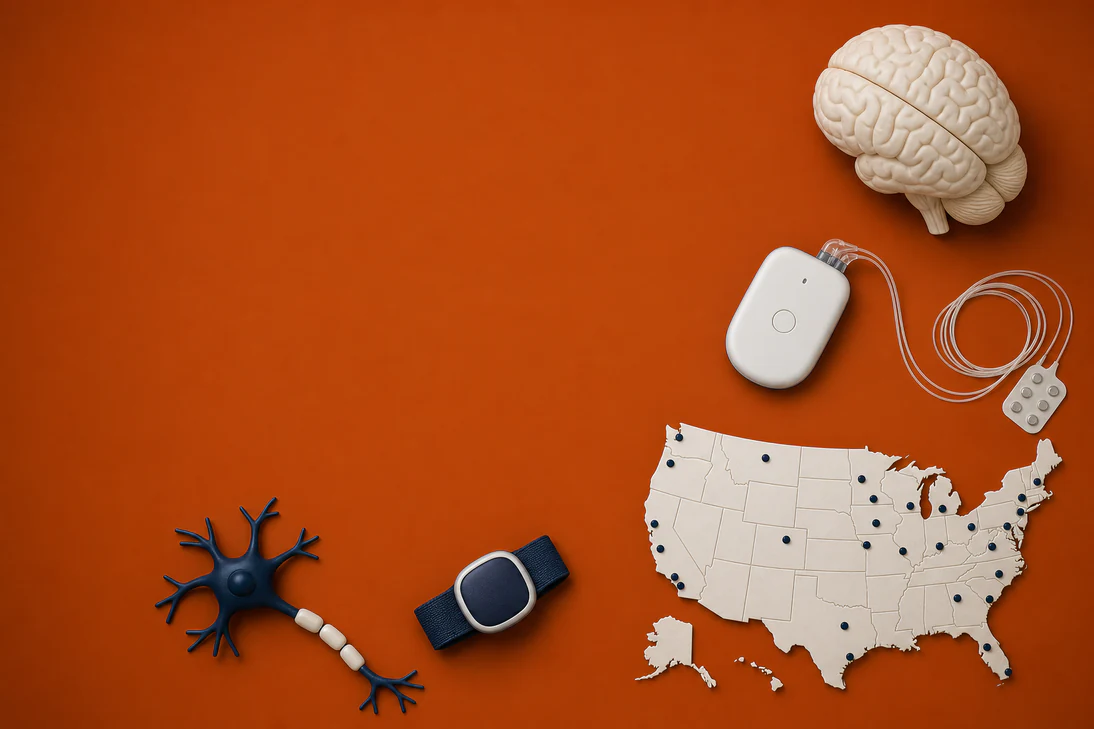

DETECT reaches its September recruitment milestone
Epiminder Limited (ASX:EPI) has reached the 75-patient mark in its DETECT clinical study, keeping recruitment on the timetable set by management and giving the company another operational milestone in its US rollout.
The prospective, randomised, controlled and blinded study is evaluating the Minder System in patients with epilepsy whose prolonged inpatient EEG monitoring produced inconclusive results. Epiminder expects the 100th enrolment in November and is targeting 210 participants by the end of the first half of calendar 2027.
Twenty-one US sites now recruiting
Recruitment is now spread across 21 US clinical sites, including Mayo Clinic, Harvard, Stanford, Yale, Duke and the University of Pennsylvania. The company said clinicians across the network are identifying patients for whom long-term monitoring could help resolve unanswered questions about diagnosis, seizure type or treatment options.
Chief executive Rohan Hoare said the 75th enrolment was reached early in September and during the US summer holiday period. He described the pace as evidence that US neurologists are seeking options for complex epilepsy cases, although that interpretation remains company commentary rather than a clinical finding from the study.
Study targets patients missed by short EEG assessments
DETECT is aimed at a difficult part of the epilepsy diagnostic pathway. Epiminder says between 30% and 50% of US inpatient epilepsy monitoring unit stays, equivalent to roughly 25,000 to 45,000 stays, are inconclusive. For some patients, that can delay a confirmed diagnosis, seizure characterisation or assessment for therapies such as epilepsy surgery.
The Minder System provides continuous bilateral subscalp EEG monitoring while patients go about their daily lives, with data transmitted through an external wearable and smartphone application to a secure cloud platform. The device has been authorised by the FDA through the De Novo pathway and is being used in DETECT as a marketed device in a post-market study.
Enrolment is not yet clinical proof
The study is designed to enrol up to 210 participants across as many as 25 US sites, with a six-month primary follow-up period. Its primary endpoint is the proportion of participants who achieve an actionable clinical event, such as a confirmed diagnosis, seizure characterisation, surgery evaluation, event classification or determination of psychogenic nonepileptic seizures.
The latest announcement reports recruitment progress, not efficacy, safety or commercial revenue. The next meaningful tests will be whether Epiminder converts the growing enrolment base into completed follow-up and positive primary-endpoint evidence, and whether that evidence supports broader clinical use of Minder.
Bottom Line?
The 75-patient milestone reduces recruitment uncertainty, but the investment case still turns on the evidence DETECT produces after follow-up rather than on enrolment alone.
Questions in the middle?
- Can Epiminder reach 100 enrolments in November and sustain the pace towards 210 participants by 1H CY2027?
- What proportion of DETECT participants will achieve an actionable clinical event during the six-month follow-up?
- Will the study results translate into broader adoption of the FDA-authorised Minder System among US epilepsy centres?