Neu Horizon builds a new Swedish uranium dataset ahead of drilling

Neu Horizon has completed the main phase of its Swedish uranium exploration campaign, collecting more than 12,000 line kilometres of airborne geophysical data across its portfolio. The company is now integrating the results and refining targets for a maiden drilling programme planned for early 2027, subject to permitting.
- More than 12,000 line kilometres of airborne data collected
- 2,934 RadonX detector cups deployed across five priority permits
- 62 rock chip samples submitted for assay
- Remaining drone radiometric work due in September and October
- Maiden drilling planned for early 2027, subject to approval
Neu Horizon Uranium Limited (ASX:NHU) has finished the most substantial phase of its Swedish exploration campaign with a large new dataset, but the harder question is still ahead: whether the signals now being processed can be converted into drill targets and, eventually, a mineral resource.
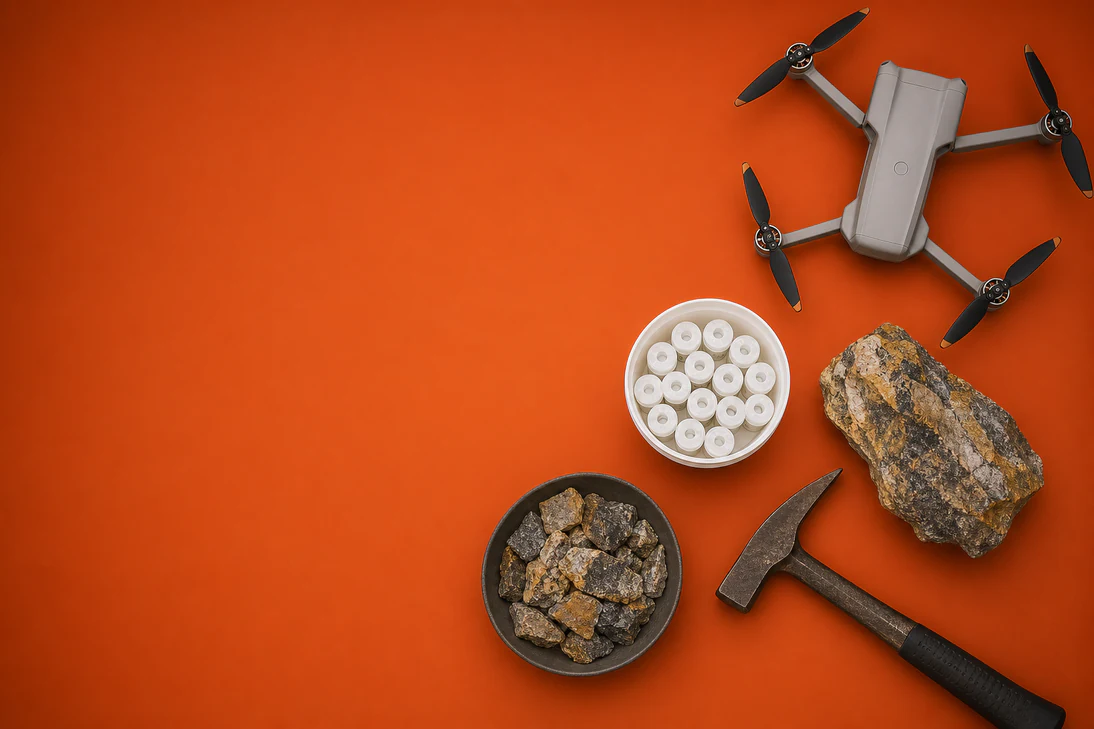
The company collected more than 12,000 line kilometres of new airborne magnetic, radiometric and electromagnetic data across its Arvidsjaur, Krokom and Vilhelmina projects. It also deployed 2,934 RadonX radon detector cups, completed more than 100 line kilometres of ground radiometrics, submitted 62 rock chip samples for analysis and re-logged more than 10 historical drill holes.
Swedish Exploration Campaign Exceeds Several Targets
Neu Horizon said its drone magnetic programme delivered 8,511 line kilometres, or 113% of the announced scope, while the heliborne electromagnetic and magnetic survey covered 3,397 line kilometres, equivalent to 106% of plan. The work spans a 110,000-hectare Swedish position in a jurisdiction that only lifted its uranium mining ban on 1 January 2026.
The campaign is not entirely finished. Drone radiometric coverage remains to be completed over parts of Kälen and Hamborg at Krokom, followed by Ravenberget, Suddesjaur and Arresåive at Arvidsjaur. That work is scheduled for late September and October, while final processed datasets from the contractors are still being received.
At Arvidsjaur, the company is investigating uranium occurrences associated with altered felsic volcanic rocks and granites near major shear zones. At Krokom and Vilhelmina, the focus is uranium-bearing graphitic black shale. Those geological comparisons may help shape the search strategy, but the company’s announcement makes clear that deposits cited elsewhere are geological context only and are not evidence of mineralisation on Neu Horizon’s permits.
Data Integration Sets Up Maiden Drill Programme
Technical Director Adam Woolridge is leading the integration of the magnetic, electromagnetic, radiometric and radon datasets with historical Geological Survey of Sweden information, field mapping, sampling and re-logged drill core. Rock chip assays are pending, and the processed survey results are expected to be reported as they are received and interpreted.
The next major operational milestone is a ranked drill target inventory, followed by final collar positions, permitting and contractor arrangements. Neu Horizon has planned its maiden drilling campaign for January 2027, pending final work plan approval from Sweden’s Mining Inspectorate. The company said its A$12.0 million IPO at A$0.20 a share leaves it fully funded for the planned two-year Swedish exploration programme.
Bottom Line?
The campaign has delivered scale and coverage, but shareholder value now depends on whether the pending datasets identify compelling targets and whether Sweden grants approval for drilling in early 2027.
Questions in the middle?
- Will the integrated geophysical and radon results produce a small number of high-priority drill targets or a broader, less conclusive target inventory?
- What will the 62 rock chip assays and re-logged historical holes add to the geological model?
- Can Neu Horizon secure final work plan approval in time to begin its planned January 2027 drilling campaign?