RareX copper signal adds a new dimension to Khaleesi

RareX has identified a 74-metre zone of anomalous copper in drill hole KRC012 at the Niobe Prospect, with portable XRF readings peaking at 5,724ppm. The result broadens the Khaleesi exploration story, but laboratory assays are still four to six weeks away.
- 74m of anomalous copper from 77m downhole in KRC012
- Portable XRF readings averaged 940ppm Cu and peaked at 5,724ppm
- Results are preliminary field readings, not certified assays
- Copper adds to Niobe’s gallium, niobium and rare earth potential
- Follow-up drilling and geological interpretation are being planned
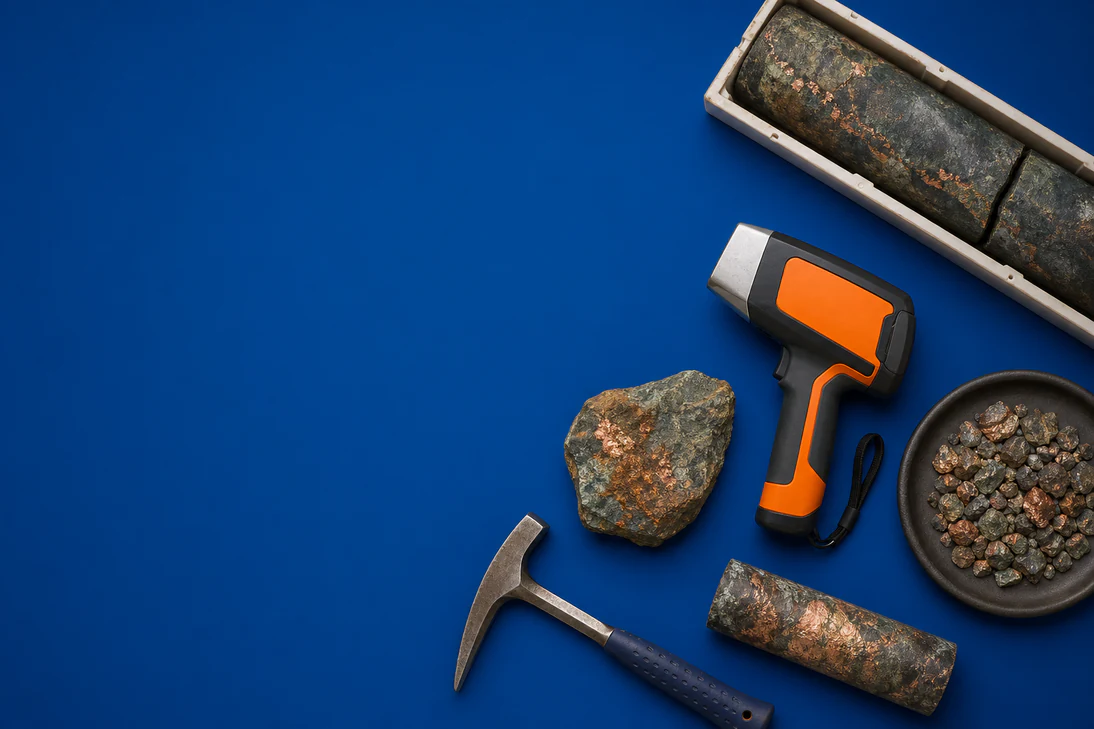

Copper expands the Niobe exploration thesis
RareX Limited (ASX:REE, REEO) has found a 74-metre zone of anomalous copper in drill hole KRC012 at the Niobe Prospect, adding a new commodity thread to its Khaleesi Project in Western Australia. Portable XRF readings from approximately 77 metres to 151 metres downhole averaged 940ppm copper, included multiple readings above 1,500ppm and reached a peak of 5,724ppm, or 0.57%.
That is an encouraging exploration signal, particularly because the readings remain elevated across much of the interval rather than being confined to a single isolated hit. But it is not yet a copper assay result. RareX says the pXRF numbers are preliminary field values and cannot be treated as a substitute for certified laboratory analysis.
KRC012 intersects altered pyroxenite
The copper readings occur in hydrothermally altered pyroxenite, with sulphides typically present as fine disseminated pyrite and trace chalcopyrite. In places, the company observed semi-massive sulphides with up to 20% disseminated pyrite and chalcopyrite. The reported 74 metres is a downhole length; the true width and geometry of the mineralisation have not been established.
RareX says the alteration minerals and sulphide textures appear typical of propylitic alteration, which it interprets as an outer halo of the system. Managing director and chief executive James Durrant said alteration vectors suggested “the hotter part of the systems is yet to be found”. That is a geological interpretation still awaiting confirmation through assays, thin sections and further drilling, rather than evidence of a higher-grade core already identified.
Six-hole program provides an early signal
RareX drilled six reverse-circulation holes totalling 805 metres across two lines at a coincident gravity and magnetic anomaly, 400 metres apart. KRC012 was the westernmost hole on the southern line. A second hole, KRC007, located 900 metres to the north-east, also returned elevated copper, including 8 metres at 960ppm based on portable XRF readings.
The broader Niobe target remains lightly tested. The six-hole maiden program was designed to improve understanding of a large gravity anomaly with magnetic and non-magnetic components, while most historical aircore drilling across the Khaleesi Alkaline Intrusive Complex stopped when it reached basement. RareX is evaluating copper alongside the gallium, niobium and rare earth potential already associated with the system.
Laboratory assays become the key catalyst
Samples from the KRC012 interval are being submitted for independent laboratory analysis, with results expected in four to six weeks. RareX says the full assay suite will include gold, both to establish the actual copper grades and to help identify the style of mineralisation and vector towards any potential source.
Until those results arrive, the headline number is best viewed as an exploration lead rather than a defined copper discovery. The next test will be whether laboratory assays confirm the strength and continuity suggested by the pXRF readings, and whether follow-up work can demonstrate meaningful width, geometry and extension beyond a single hole.
Bottom Line?
The pXRF signal gives RareX a credible new exploration target, but the laboratory assays will determine whether the copper story is substantial or merely intriguing.
Questions in the middle?
- Will certified assays support the 940ppm average and 5,724ppm peak reported by portable XRF?
- Does the 74-metre downhole interval represent a meaningful true width or a narrower mineralised structure?
- Can follow-up drilling locate the higher-grade source suggested by the alteration pattern?