Saturn finds new gold frontier north of Apollo Hill

Saturn Metals has extended the Apollo Hill gold system up to 1km north of its existing 2.83Moz Mineral Resource, with several high-grade intersections among the latest results. A 50-hole, 10,000m RC program is now underway to test continuity and support a planned resource update.
- Gold mineralisation identified up to 1km north of the current resource
- 5m at 11.26g/t Au returned from 49m in RC hole AHRC1698
- Visible gold accompanied a 0.4m at 14.25g/t Au diamond intercept
- 50-hole, 10,000m RC infill program now underway
- Results are not yet incorporated into a formal Mineral Resource estimate
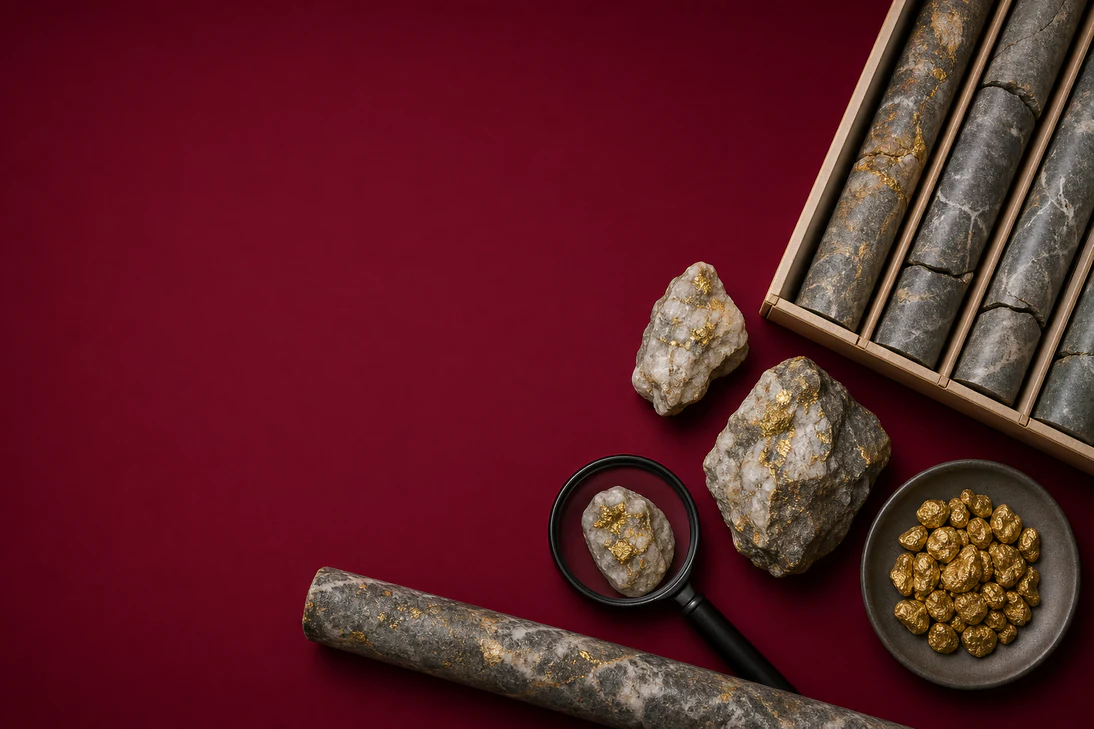

Northern drilling opens a new Apollo Hill growth front
Saturn Metals Limited (ASX:STN) has found gold-bearing structures extending up to 1km beyond the northern edge of Apollo Hill’s 2.83 million ounce Mineral Resource, turning what was a wide-spaced exploration test into a potentially important new drilling front. The company says the Apollo Hill gold system now extends across roughly 4km of strike, compared with the approximately 3km footprint represented by the June 2026 resource.
The first-pass program combined 103 aircore holes, 33 reverse circulation holes and 13 diamond holes, covering 10,029m, 8,272m and 2,455.7m respectively. Among the standout results were 5m at 11.26g/t gold from 49m in RC hole AHRC1698, 6m at 3.23g/t from 324m in AHRC1676 and 11m at 1.05g/t from 297m in AHRC1670.
High-grade hits come with geological questions
The most eye-catching RC result, AHRC1698, included a 1m interval grading 53.90g/t gold from 52m. Saturn cautions that the broader 5m intersection was logged in alluvial gravels at the interface with bedrock, meaning it could reflect mineralisation in the underlying rock or a separate deep-lead style of alluvial gold. That distinction matters: the company has not yet established how the interval fits into the primary mineralised system.
Diamond drilling supplied another high-grade signal. Hole AHDD0145 returned 0.4m at 14.25g/t from 97.75m alongside visible gold in a quartz vein, while AHDD0103 produced 7.5m at 3.41g/t from 30.5m, including 1.5m at 16.48g/t. The latter sits at the northern end of the Apollo Hill main lode. These are narrow intervals, and all reported widths are downhole measurements, with true widths estimated at about 60% of the downhole lengths.
10,000m RC program targets resource conversion
Saturn has moved quickly from reconnaissance to follow-up, with a 50-hole, 10,000m RC infill program already underway. The stated objective is to test the shallow, near-surface mineralised footprint and provide data for a Mineral Resource update planned in the coming months. That work will need to demonstrate continuity, geometry and sufficient grade distribution before the northern results can contribute to a formal estimate.
The existing Apollo Hill resource stands at 174 million tonnes grading 0.51g/t gold for 2.83Moz, while the project’s reported Ore Reserve is 104.6Mt at 0.47g/t for 1.586Moz. The new drilling sits outside that resource base, so the immediate significance is exploration upside rather than a confirmed increase in reported ounces. Results from the infill campaign, and the treatment of the ambiguous alluvial intersection, are likely to determine how much of the apparent extension survives the resource modelling process.
Bottom Line?
The drilling has expanded the geological footprint, but the next test is whether the northern mineralisation forms continuous, mineable zones that can be estimated with confidence.
Questions in the middle?
- Will follow-up RC drilling confirm continuity between the northern intercepts and the existing Apollo Hill resource?
- How much of the 5m at 11.26g/t result represents primary bedrock mineralisation rather than alluvial gold?
- When the resource update arrives, how much of the 1km extension will qualify for inclusion?