$110,027 cash remains as Southern Hemisphere advances 218.2Mt Llahuin resource

Southern Hemisphere Mining has reported its strongest Llahuin drilling results yet, but the copper explorer ended FY26 with just $110,027 in cash and a material going-concern uncertainty. The company is relying on further funding, related-party borrowings, asset sales and a possible Chilean VAT refund to keep exploration moving.
- Broad Llahuin intercepts support a growing multi-centre porphyry system
- 218.2Mt resource remains unchanged while an upgrade is prepared
- FY26 loss narrowed to $1.75 million
- Cash fell to $110,027 and net liabilities reached $461,776
- Related-party borrowings rose to $886,972 after year-end
Llahuin drilling delivers scale, but not yet a resource upgrade
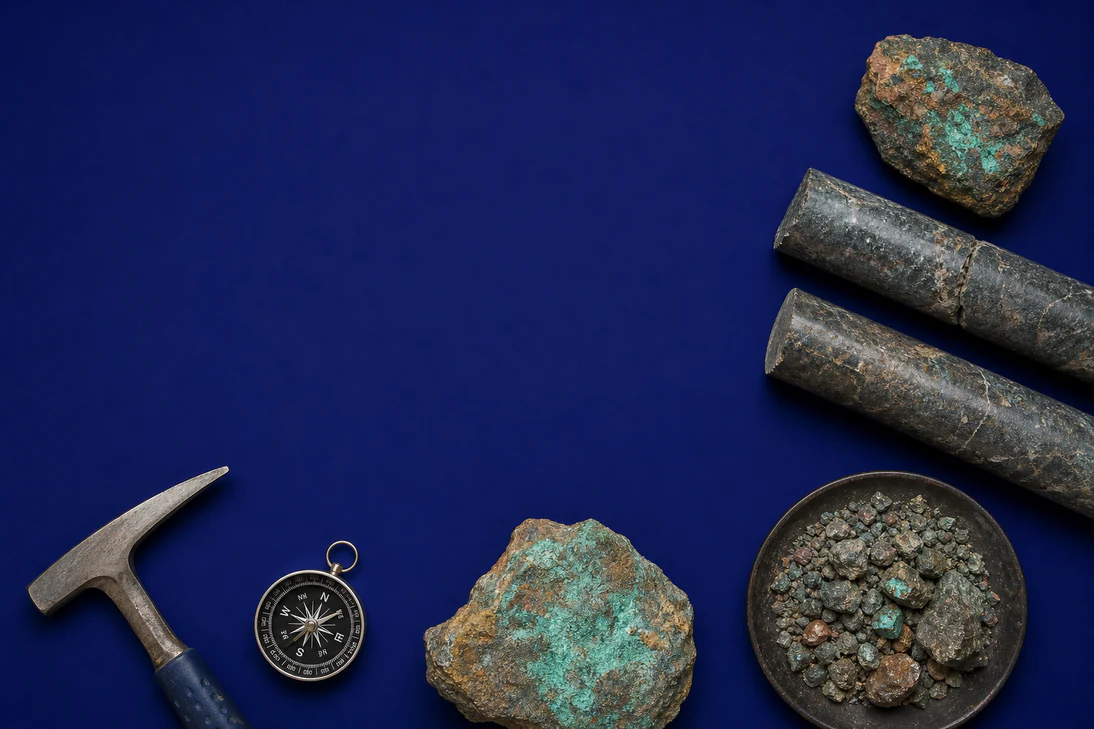
Southern Hemisphere Mining Limited (ASX:SUH) is presenting FY26 as a breakthrough exploration year, led by broad copper-gold-molybdenum intersections at its Llahuin project in Chile. The headline results include 154 metres at 0.66% CuEq from surface, 156 metres at 0.43% CuEq from 2 metres and 241 metres at 0.42% CuEq from 18 metres.
The company says nine diamond tails, totalling about 2,251 metres, extended reverse-circulation holes that had ended in mineralisation after groundwater ingress. The results support its interpretation of a vertically extensive porphyry system across the Cerro, Ferro Central and Ferro South areas, with Ferro South described as a newly identified porphyry centre. That is an exploration interpretation, not a declaration that the project has moved closer to production.
The existing JORC resource remains 218.2 million tonnes at 0.38% CuEq, containing 496,600 tonnes of copper, 654,900 ounces of gold and 12,500 tonnes of molybdenum. An exploration target of 260 million to 340 million tonnes provides a larger envelope, but it remains an exploration target and cannot be treated as a mineral resource. The company is preparing a resource upgrade after further drilling and assays.
The latest drilling builds on the company’s earlier reporting of broad copper sulphide zones at Llahuin, but the annual report still leaves the key value question unresolved: whether additional tonnes can be converted into a materially larger resource at grades and recoveries that support a viable development case. The CuEq resource calculation assumes 100% recovery for comparison purposes, while preliminary flotation work reported copper recoveries of 84% to 91%, gold recoveries of 41% to 57% and molybdenum recoveries of about 14% to 56%.
Southern Porphyry adds a second exploration catalyst
At the Curiosity-Southern Porphyry target, joint-venture partner FMR Resources Limited (ASX:FMR) completed more than 5,000 metres of Phase I deep diamond drilling. Reported intervals included 124 metres at 0.31% CuEq from 258 metres and 104 metres at 0.16% CuEq from 522 metres.
Southern Hemisphere says geological, geochemical and geophysical data point towards a concealed porphyry core, while the drilling to date has intersected peripheral intrusive phases. Phase II targeting is under way for the fourth quarter of 2026. FMR had contributed $4.18 million to the earn-in by 30 June, while Southern Hemisphere retained 377,500 FMR shares valued at $122,688 after selling part of its holding during the year.
Cash position puts exploration momentum under pressure
The financial statements provide a less comfortable counterpoint to the technical narrative. Southern Hemisphere’s loss before tax narrowed to $1.75 million from $2.83 million, but operating cash outflow was still $1.90 million. Cash fell from $1.26 million to $110,027, current liabilities rose to $1.05 million and the group moved from net assets of $1.20 million to a net deficiency of $461,776.
Elderton Audit issued an unmodified opinion but highlighted a material uncertainty related to going concern. The directors point to available borrowing facilities, the potential realisation of the FMR investment, a possible Chilean VAT refund of about $4.4 million and the prospect of future capital raisings. The VAT amount has not been recognised as an asset and remains subject to government approval and other conditions.
Funding dependence has already become more visible. Borrowings from Merchant Holdings, a company controlled by chairman Mark Stowell, stood at $452,344 at year-end and increased to $886,972 after subsequent drawdowns and accrued interest, according to the report. The facilities carry interest of 7.65% and a default rate of 20% if not repaid within 12 months. That related-party support provides liquidity, but it also underscores how little room the company has to fund an exploration program solely from cash on hand.
FY27 therefore opens with two competing clocks: assays, resource modelling and Phase II drilling may strengthen the Llahuin story, while cash consumption and debt obligations demand near-term funding decisions. The next resource estimate and Southern Porphyry program will matter, but so will the source, cost and timing of the money needed to reach them.
Bottom Line?
Llahuin’s exploration case is gaining breadth, but the next catalyst must arrive alongside a credible funding plan.
Questions in the middle?
- Can the pending Llahuin resource upgrade materially expand the reported resource without weakening grade or recovery assumptions?
- Will FMR complete its remaining earn-in drilling and continue funding the Southern Porphyry program on the disclosed terms?
- How will Southern Hemisphere meet near-term obligations once existing cash, related-party facilities and marketable investments are taken into account?