ASQ Elevates White Swan Kaolin as Its Next Development Driver

Australian Silica Quartz Group is shifting its centre of gravity from exploration to development after adding the 47.3Mt White Swan Kaolin Project. The project has an approved 250,000-tonne-per-year mining concept, but commercial offtake and feasibility work remain ahead.
- 47.3Mt inferred White Swan kaolin resource added after year end
- Approved 250,000tpa direct shipping ore mining concept
- $750,000 placement supports project development
- FY2026 net loss narrows to $1.06 million
- Company holds no ore reserves
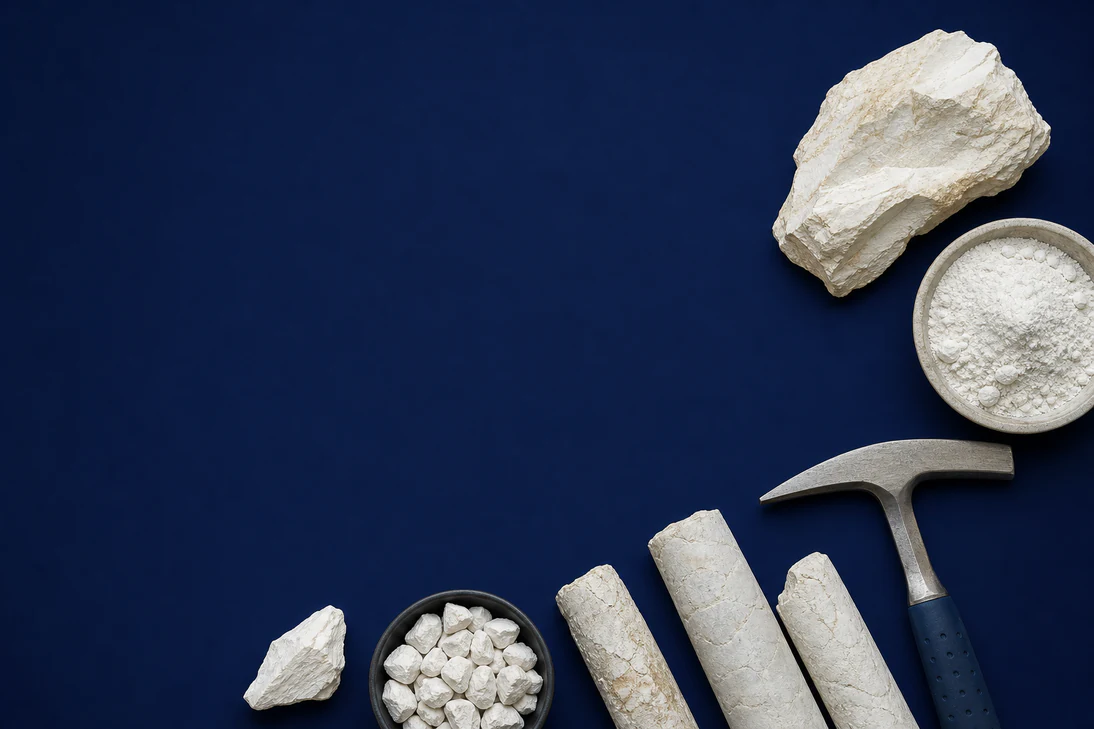

Australian Silica Quartz Group Ltd (ASX:ASQ) has found a new centre of gravity: kaolin. The company’s FY2026 annual report places the 47.3 million-tonne inferred White Swan resource at the heart of its next phase, with customer testing, offtake discussions and a feasibility study now taking precedence over its broader exploration portfolio.
White Swan Moves from Acquisition to Development
White Swan, near Esperance in Western Australia, sits 35 kilometres by sealed road from the port and is covered by a granted mining lease. ASQ says the Department of Mines, Petroleum and Exploration has approved a Mining Development and Closure Proposal supporting a free-dig, near-surface open-pit operation targeting 250,000 tonnes per year of direct shipping ore.
The acquisition of Australian Kaolin Pty Ltd, the project owner, completed on 1 July 2026, after the reporting date. ASQ issued 100 million shares for the acquisition and raised $750,000 through a placement of 37.5 million shares at 2 cents each. The funding is intended to move White Swan towards first export revenues, although the company still needs commercial test results, an offtake agreement and a feasibility study before production becomes a more defined proposition.
Early Testwork Supports Customer Discussions
Initial testing of bulk samples sent to China found approximately 47% kaolinite and 50% quartz in the raw material. A single dry-separation stage increased kaolinite content to 83%, while alumina rose from 19.05% in the raw ore to 33.68% in the upgraded product. Preliminary ceramic firing tests produced discs with 85.3% brightness at 1,200°C.
Those figures are preliminary rather than a commercial product specification. ASQ says potential customers, processors and equipment suppliers have received samples, with further commercial results pending. The company is also pursuing strategic partnerships with customers that could add value to the material in China, alongside direct shipping ore offtake discussions.
Lower Loss, Limited Revenue and a Thin Development Cushion
The financial statements show a net loss of $1.06 million for FY2026, down from $1.92 million a year earlier, while revenue fell to $357,083 from $566,685. A $354,234 gain on the sale of rural property helped the result, and operating cash outflow narrowed to $1.22 million from $1.56 million.
Cash stood at $1.33 million at 30 June 2026, with no dividends declared. ASQ’s wider resource inventory comprises 78.4Mt of inferred bauxite, 17.3Mt of metallurgical-grade silica quartz and 10.7Mt of silica sand, but the company has no ore reserves. That distinction matters: the headline resource base is substantial, yet none of it has been converted into a reserve supporting an economically demonstrated mine plan.
Quartz and Bauxite Remain Secondary Options
ASQ continues to advance its other assets. Rock-chip sampling at the Gilbert Ranges Project in Queensland returned results of up to 99.85% SiO2, while purification trials at the Lake Seabrook high-purity quartz project produced samples assaying 99.993% SiO2 after treatment. At Koolyanobbing, the company is seeking a joint venture partner to help fund further gold exploration.
For FY2026/27, however, the critical test is whether White Swan can progress from an inferred resource and encouraging laboratory work to customer-backed economics. The next meaningful markers are commercial test results, an offtake agreement and the feasibility study that will determine how much of the project’s apparent scale can translate into a financeable export operation.
Bottom Line?
White Swan gives ASQ a clearer development story, but the investment case still depends on converting preliminary testwork into offtake, economics and funding capacity.
Questions in the middle?
- Will customer testing in China lead to a binding kaolin offtake agreement?
- What economics will the planned feasibility study assign to the 250,000tpa operation?
- How long can ASQ fund White Swan development and its wider exploration portfolio before another capital raising is needed?