$4.87 million loss and 70% commissioning progress define Latrobe Magnesium’s next test

Latrobe Magnesium has moved its demonstration plant into the final installation stage for magnesium metal, but its annual report flags a material uncertainty over whether the loss-making group can continue as a going concern. The company had $1.09 million in cash at 30 June and has since secured an $8.5 million equity raising to fund commissioning and corporate costs.
- Approximately 20 tonnes of high-grade MgO produced during a two-week campaign
- Phase 1B magnesium metal circuit was 33% complete at 30 June and 70% complete by September
- FY2026 net loss widened to $4.87 million
- Auditor highlighted material uncertainty related to going concern
- $8.5 million post-year-end equity raising supports commissioning and near-term operations
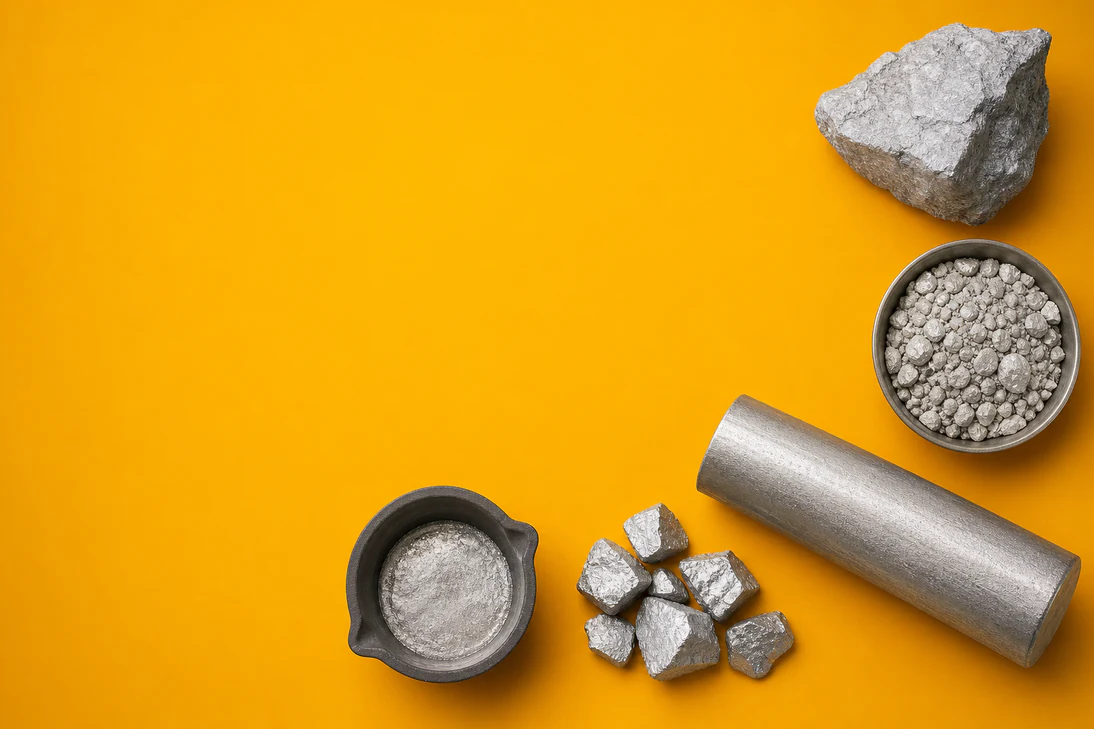

Metal production is now the critical test
Latrobe Magnesium Limited (ASX:LMG) has reached the point where its investment case depends less on whether its process can produce magnesium compounds and more on whether the company can finish the equipment needed to produce magnesium metal. The company says its Phase 1B installation and commissioning program was 33% complete at 30 June 2026, while a subsequent September update lifted reported progress to 70%.
The first phase produced approximately 20 tonnes of high-grade magnesium oxide during a two-week continuous campaign after operations restarted in February. X-ray diffraction testing by Monash University found approximately 90% magnesium compounds, with residual calcium oxide and calcium chloride at levels the company says are suitable for downstream metal production. First magnesium metal remains targeted for the second half of calendar 2026.
The achievement came with an interruption. A coating adhesion defect on a spray roaster gas transport fan disrupted the first half of the year, although Latrobe Magnesium says the root cause was investigated with the relevant suppliers and a solution found. The plant was then placed into a planned shutdown so the briquetting and thermal-reduction equipment could be installed rather than continuing to produce MgO alone at a monthly operating loss.
Losses and liquidity keep the project under pressure
The operational progress sits against a difficult financial backdrop. The group reported a net loss of $4.87 million for FY2026, compared with $2.66 million a year earlier, and ended the period with $1.09 million in cash. Total liabilities rose to $65.5 million, including a $13.6 million lease liability, while the demonstration plant was carried at $90.4 million.
Nexia Sydney Audit drew attention to a material uncertainty related to going concern. The directors have nevertheless prepared the accounts on a going-concern basis, relying on available facilities, an expected research and development rebate of approximately $11.8 million, planned asset sales, potential government support and further funding options. The report states that failure to realise those plans could cast significant doubt on the group’s ability to continue operating and leave it unable to realise assets or discharge liabilities in the normal course.
The company subsequently secured firm commitments for an $8.5 million equity raising, comprising a $5.1 million institutional placement and an approximately $3.4 million fully underwritten entitlement offer. The funds are intended to complete and commission the 500-tonne-per-annum pyrometallurgical circuit, as well as cover site-running and corporate costs. That gives the commissioning program a clearer near-term funding path, but it does not remove the need to convert the demonstration plant into an operating source of revenue.
Commercial projects remain conditional
Latrobe Magnesium is also pursuing larger development options, though each remains subject to substantial conditions. Its 10,000-tonne-per-annum Victorian proposal has non-binding financing interest from the US Export-Import Bank for up to US$122 million and conditional, non-binding support from Export Finance Australia. The Victorian project is delayed by a state regulatory amendment affecting the transfer of the mining licence needed to secure long-term ash feedstock.
The company’s newer South Carolina proposal targets a 50,000-tonne-per-annum magnesium plant, with first production indicated for April 2030. The project remains conditional on finance, site acquisition, feasibility work and binding infrastructure arrangements. In the meantime, the immediate valuation question is much narrower: whether Phase 1B can be commissioned on schedule, whether magnesium metal can be produced at commercial specification, and how quickly Latrobe Magnesium can move beyond a capital-intensive demonstration phase.
Bottom Line?
The next decisive milestone is first magnesium metal production, but the company must reach it while relying on fresh equity, an expected R&D rebate and other funding plans to manage a balance sheet already marked by going-concern uncertainty.
Questions in the middle?
- Will Phase 1B reach first magnesium metal production in the targeted second-half 2026 window?
- How much of the expected $11.8 million R&D rebate will be available for debt and lease reduction, and when will it arrive?
- Can Latrobe Magnesium secure durable project finance and feedstock approvals for its larger Victorian and US development plans?