Lindian starts mining at Kangankunde as rare earths strategy expands

Lindian Resources has crossed a significant operational threshold, moving Kangankunde in Malawi from construction into active mining while targeting first production in Q4 2026. The transition was funded by A$191.5 million in placements, but the company still faces the harder test of commissioning, downstream integration and cash discipline.
- First production blast completed at Kangankunde on 1 July 2026
- Stage 1 first production remains targeted for Q4 2026
- A$107.9 million cash balance at 30 June 2026
- SARECO processing facility in Kazakhstan now 100% owned
- A$31.8 million net loss included major non-cash expenses

Kangankunde crosses into active mining
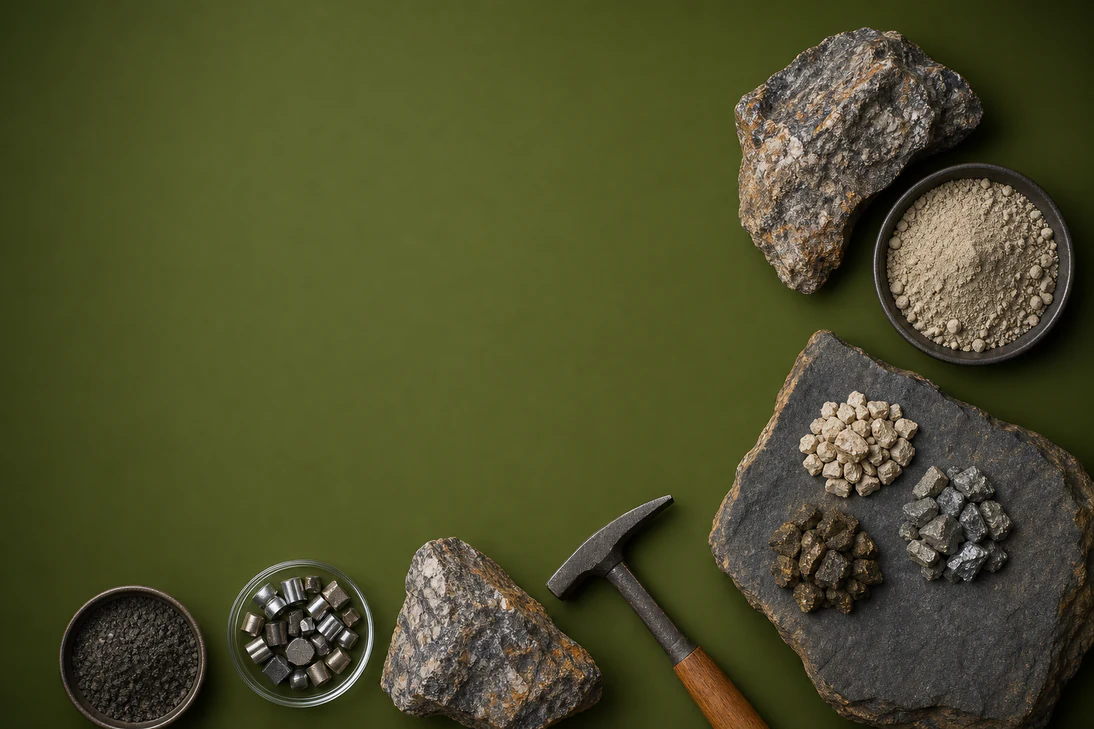
Lindian Resources Ltd (ASX:LIN) is no longer just building a rare earths project on paper. Its Kangankunde operation in Malawi completed its first production blast on 1 July 2026, with 206 blast holes breaking about 13,100 tonnes of material, including an estimated 5,500 tonnes of ore. First production remains targeted for the December quarter of 2026.
That milestone came after a year of heavy construction. By 30 June, about 27,000 tonnes of ore had been placed on the run-of-mine pad, the 27-kilometre power corridor was complete, all 17 planned boreholes had been drilled and the tailings storage facility was about 50% complete. Lindian also moved to an owner-operated mining model and reported 873,003 injury-free work hours during FY2026.
Capital has bought Lindian time, not production
The balance sheet is materially stronger than it was a year earlier. Lindian raised A$91.5 million in August 2025 and a further A$100 million in April 2026, ending the financial year with A$107.9 million in cash and access to about US$11.6 million in undrawn NBS Bank facilities. Capital expenditure was substantial: A$63.7 million went into plant and equipment during the year, while investing cash outflows reached A$80.5 million.
The accounts nevertheless show the cost of remaining pre-revenue. Lindian recorded a net loss of A$31.8 million, compared with A$9.3 million the previous year. The result included A$6.5 million in share-based payments and a A$16.5 million non-cash expense for issuing shares to Gerald Metals after terminating their concentrate sale agreement. The termination gives Lindian greater control over product allocation and pricing, while also allowing potential feedstock to be directed to its Kazakhstan strategy.
SARECO turns the project into a supply-chain bet
Lindian has expanded the proposition beyond mining. After year-end, it completed the acquisition of 100% of the SARECO MREC processing facility in Kazakhstan. The transaction carries an asset purchase price of up to US$20 million plus up to US$22 million in Lindian equity for RA Group, with the higher price reflecting additional warehouses, buildings and land identified during due diligence.
The downstream case is supported by ANSTO testwork, which achieved 98% neodymium-praseodymium extraction and 96% total rare earth yttrium extraction in the largest acid-bake test reported. Those results are technical testwork, not commercial production, and SARECO’s operating performance remains to be demonstrated. Lindian is also progressing a proposed 8,000-tonne-per-year oxide separation facility with Carester, which has agreed to take 70% of SEGH production subject to an annual cap of 8,750 dry metric tonnes.
Stage 2 keeps the valuation story alive
The immediate operational test is Stage 1, but the larger growth narrative rests on Stage 2. Lindian’s feasibility study is assessing a 4.0 million-tonne-per-year development pathway with an objective of lifting total monazite concentrate capacity to approximately 120,000 tonnes per year. That figure remains conditional on completing the study and securing a future final investment decision.
The company’s existing Kangankunde resource stands at 261 million tonnes at 2.14% total rare earth oxide, including 61 million tonnes in the indicated category. Its 23.7-million-tonne probable ore reserve grades 2.9% total rare earth oxide. A further exploration target of 400 million to 800 million tonnes is explicitly conceptual and cannot yet be treated as a mineral resource or reserve.
For shareholders, the next few months should be less about promotional milestones and more about conversion: construction completion, commissioning, first concentrate, SARECO integration and the Stage 2 feasibility study targeted for December 2026. Lindian has assembled the funding and assets for that sequence; the unanswered question is whether the operating business can now catch up with the ambition.
Bottom Line?
Lindian has funded and begun the mine-building phase, but the investment case now turns on commissioning Kangankunde and proving that SARECO can operate as an integrated downstream business without rapidly consuming the cash buffer.
Questions in the middle?
- Can Kangankunde achieve first production in Q4 2026 without materially exceeding the current funding platform?
- How quickly can SARECO be integrated and converted into reliable MREC production?
- What production, capital and financing assumptions will underpin the Stage 2 feasibility study?