Octava Finds New Fluorspar Platform in Argentina’s Historic Sierra Grande District

Octava Minerals is pursuing a staged acquisition of a 400km2 fluorspar project in Argentina’s historic Sierra Grande district, backed by an approximately A$1.8 million placement. The opportunity comes with substantial verification risk: the reported grades are historical, non-JORC compliant and have not been independently validated.
- 400km2 Argentine fluorspar project with four historical mines
- Reported historical grades of 58% to 70% CaF2 are non-JORC
- Approximately A$1.8 million placement at A$0.018 per share
- Proposed SPP could raise up to an additional A$500,000
- Full acquisition depends on a 500kt JORC resource milestone
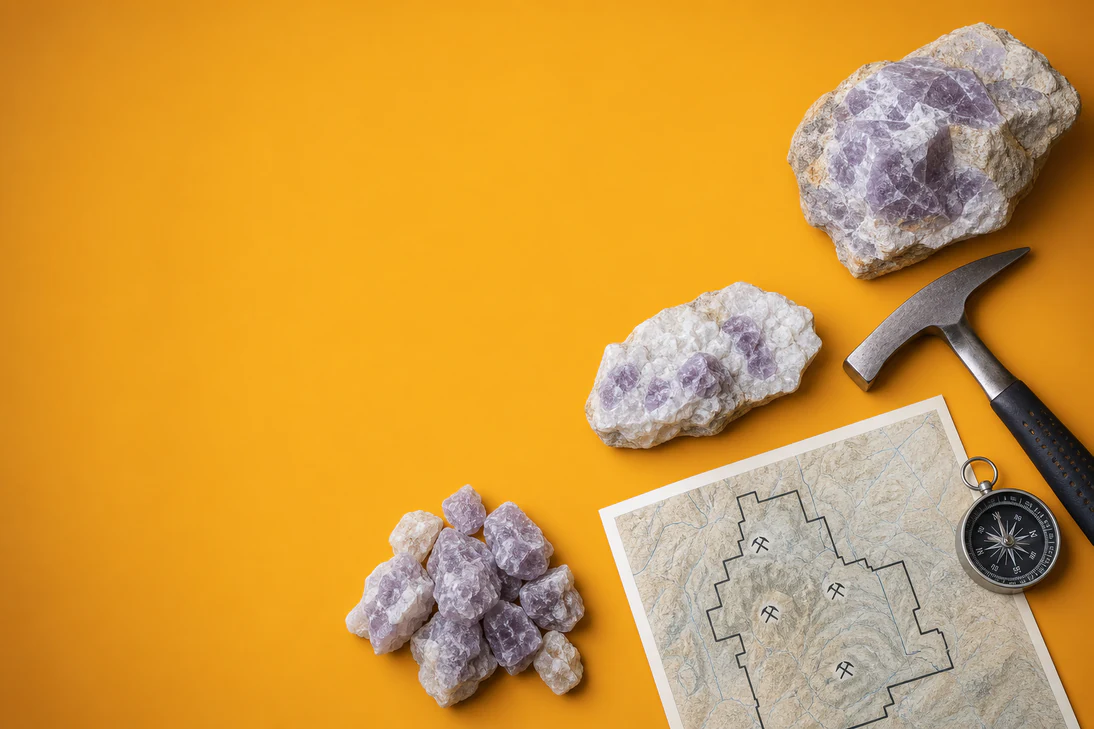

400km2 Fluorspar Project Anchors Argentine Expansion
Octava Minerals Ltd (ASX:OCT) is moving into Argentina’s historic Sierra Grande fluorspar district through an option to acquire up to 100% of Aybull S.A., the private company that holds the West Sierra Grande Fluorspar Project. The tenement package covers 400km2 in Rio Negro Province and includes four historical mines: Navidad 65, Viareggio, Victor and Escondida.
The project sits 17km west of Sierra Grande, beside paved National Route 3 and 47km from the export port of Punta Colorada. Octava says the region has a long production history, with mining beginning around 1964 and approximately 400,000 tonnes of fluorite reportedly produced across Rio Negro Province before activity declined in the late 1980s.
Historical Grades Provide Opportunity but Not a Resource
Historical reports cited by Octava indicate grades generally ranging from 58% to 70% calcium fluoride, or CaF2, with locally higher grades in clean vein material. At individual workings, the company reports vein exposures of up to 350 metres and thicknesses of up to 6.5 metres, while the Navidad 65 and Viareggio workings were mined only to shallow depths.
Those figures are geological leads, not a current mineral resource. The historical results were not reported under the JORC Code 2012, and the source material does not disclose the sampling, assaying or quality-control procedures behind the grades. Octava says it has not independently validated the data and cautions that confidence could fall materially when the mineralisation is tested under modern reporting standards.
Staged Acquisition Sets a High Bar for 100% Ownership
The proposed transaction is structured as an option rather than a completed acquisition. Subject to due diligence, approvals and the tenements remaining in good standing, Octava would pay US$100,000 in cash and US$200,000 in shares for the option, which would run for 12 months.
Octava could then acquire 70% of Aybull for a further US$100,000 in cash and US$250,000 in cash or shares. The remaining 30% is conditional on announcing an indicated JORC-compliant mineral resource of at least 500,000 tonnes grading a minimum 30% CaF2 within 24 months of acquiring the first-stage interest. That second-stage consideration comprises US$300,000 in cash and US$550,000 in cash or shares.
A$1.8 Million Placement Funds Due Diligence and Exploration
To fund the proposed expansion, Octava has secured commitments for approximately A$1.8 million through a placement of about 99 million shares at A$0.018 each, a 10% discount to the 23 September closing price. Investors are also due one unlisted option for every two shares, subject to shareholder approval, with a three-year life and a A$0.035 exercise price.
The company is proposing a further security purchase plan of up to A$500,000 for eligible Australian and New Zealand shareholders on the same terms. The funds are earmarked for West Sierra Grande due diligence and exploration, ongoing metallurgical testwork and resource drilling at Byro, as well as working capital and offer costs. The placement’s second tranche, the SPP and the associated options require shareholder approval.
Field Verification Planned for Q4 2026
Octava says it intends to begin geological mapping and systematic rock-chip and channel sampling in the fourth quarter of 2026, subject to the option being granted and due diligence being satisfactory. Drilling would follow if results and approvals justify it. Those programmes will determine whether the old mine workings represent a coherent, economically relevant mineral system or simply a collection of isolated historical occurrences.
The immediate investment tension is therefore clear. Octava has secured a large land position in a district with infrastructure, past production and apparently attractive historical grades, but it has yet to establish a JORC resource, validate the grades or complete the acquisition pathway. The next meaningful test is not the size of the map; it is whether modern sampling can convert historical evidence into a resource capable of meeting the 500,000-tonne milestone.
Bottom Line?
Octava has bought exposure to a sizeable fluorspar story, but the project’s value will turn on verification, shareholder approvals and whether drilling can support the staged 500,000-tonne resource test.
Questions in the middle?
- Can Octava validate the historical 58% to 70% CaF2 grades under JORC-compliant sampling and assaying?
- Will the company complete due diligence and secure approvals before the option conditions expire?
- Can initial fieldwork and drilling establish the 500,000-tonne resource required for the remaining 30% acquisition?
- headlineOptions:[