Asara’s Guinea drilling unlocks a 2.08Moz Kada resource

4 min read
6:14pm on Monday 28th of September, 2026 AEST ~6pm, 28th Sept, 26
Popular on LinkedIn
Asara Resources has emerged from FY2026 with a substantially larger Kada gold resource, strong cash backing and a more concentrated Guinea strategy. The headline resource update came after year-end and remains a Mineral Resource, not an Ore Reserve or economic mine plan.
- Kada resource rises to 2.08Moz after 72,648m of additional drilling
- $85 million raised during FY2026, leaving $59.75 million in cash
- Massan drilling expands across 3.5km of strike and beyond 250m depth
- FY2026 loss widens to $3.66 million as exploration activity accelerates
- Paguanta divestment and Arafura acquisition remain subject to completion conditions
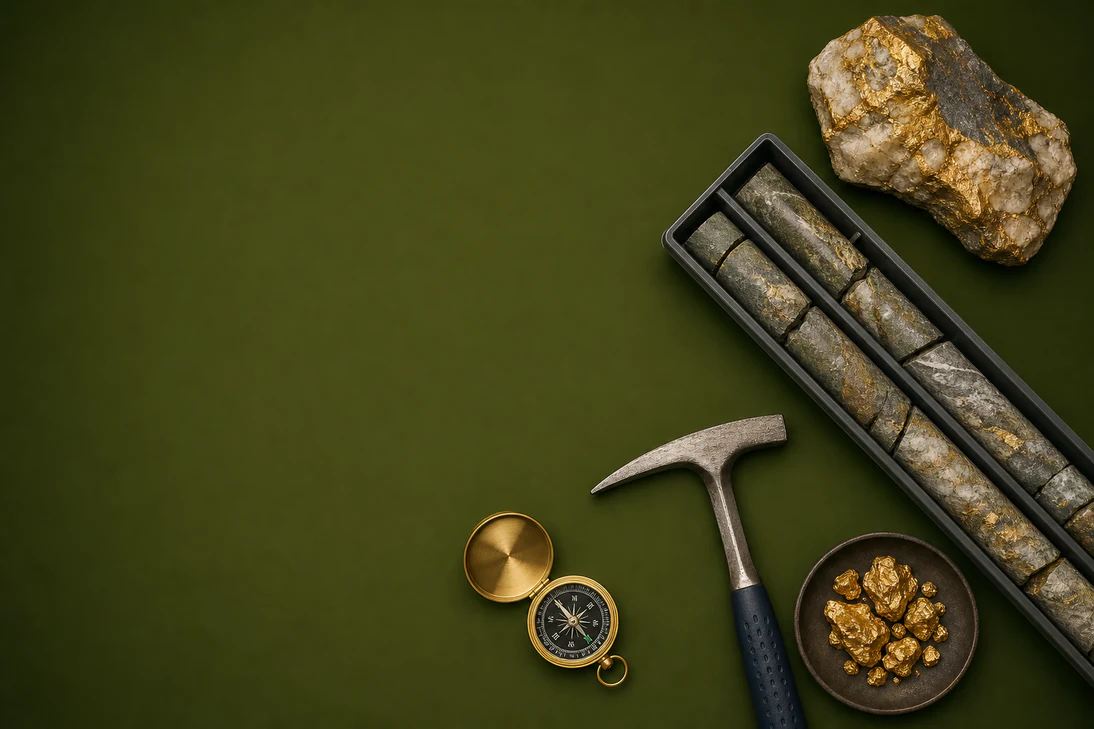

Asara Resources Limited (ASX:AS1) has more than doubled the reported gold inventory at its flagship Kada project in Guinea, with an interim update taking the resource to 2.08 million ounces. The 125% increase was announced on 31 August, after the 30 June financial year-end, so it is a subsequent event rather than part of the formal FY2026 year-end resource statement.
Kada resource expands to 2.08 million ounces
The updated estimate covers 92.88 million tonnes at 0.70 grams per tonne gold, including 1.27 million ounces in the Indicated category and 0.77 million ounces Inferred. Massan accounts for 2.04 million ounces, while Bereko contributes a further 0.04 million ounces.
The increase followed 72,648 metres of additional drilling and a tighter classification approach, with Indicated material generally based on approximately 35-metre by 35-metre spacing. The estimate also uses a lower 0.32g/t cut-off and a US$3,500 per ounce pit shell, compared with 0.50g/t and US$1,800 per ounce in the 2023 estimate. On a like-for-like 0.50g/t basis, Asara says the resource still rose 92% to 1.77 million ounces.
Drilling has turned Kada into a large-scale campaign
During FY2026, Asara completed 408 holes for 57,360 metres at Massan, taking drilling since May 2025 to about 59,600 metres across roughly 430 holes. Six rigs were active at 30 June, and the company plans to continue drilling into FY2027 ahead of another resource update.
The work was not confined to resource conversion. Phase 1 drilling tested deeper and more closely spaced areas across about 1.3km of strike, while Phase 2 extended the shallower resource envelope to more than 3.5km. Regional auger and soil programs also outlined an approximately 18km gold anomaly at Bamféle and a roughly 1km anomaly at the adjacent Damissa Koura permit.
Capital raising funds exploration, but losses are rising
Two placements generated a combined $85 million before costs during the year, helping lift cash to $59.75 million at 30 June from $3.20 million a year earlier. Financing inflows reached $76.67 million, while exploration-led investing outflows rose to $17.52 million. Management said its forecast showed funding in place for the planned work program through September 2027.
That liquidity came with a familiar exploration-company trade-off. Asara reported a $3.66 million net loss, versus $1.52 million in FY2025, while administration expenses rose to $3.58 million. Capitalised exploration expenditure increased to $42.58 million, and the company ended the year with $101.09 million in net assets but no operating revenue from a producing mine.
Portfolio reshaping adds Guinea exposure
After year-end, Asara agreed to acquire Arafura Ouest, which holds the Damissa Koura and Kankan West permits, for SGD100 plus five million Asara shares, subject to settlement. It also signed an agreement to divest the non-core Paguanta copper, silver and lead-zinc project in Chile for total consideration of US$1.4 million, comprising upfront cash, Ajax Resources shares and milestone payments. Both transactions remain conditional.
The strategic direction is clear enough: concentrate capital and management attention on Kada while retaining optionality across a larger Guinea land position. But the resource is still an exploration estimate. The annual report explicitly states that Mineral Resources are not Ore Reserves and that economic viability has not been demonstrated.
Next test is conversion from resource to project
Asara holds a 51% interest in Kada and can earn a further 24% by funding a Definitive Feasibility Study, with no prescribed timeframe for completing it. The immediate task is therefore not simply to add ounces, but to establish how much of the enlarged inventory can support a viable development case under more conventional cost, recovery and gold-price assumptions.
Investors also face the usual funding and dilution questions. The company has 24 million performance rights on issue, and the annual report records a proposed 24 million options award for chairman Jeffrey Quartermaine subject to shareholder approval, alongside share-based bonuses for senior personnel. Kada now has scale on paper; the next updates must show whether that scale can survive the harder tests of metallurgy, mine design, ownership and financing.
Bottom Line?
The 2.08Moz resource gives Asara a stronger platform, but the next value inflection depends on converting exploration scale into a credible, funded development pathway without excessive dilution.
Questions in the middle?
- How much of the enlarged Kada resource can ultimately be converted into Ore Reserves?
- What will the next resource update show after drilling continues beyond the current 92.9Mt estimate?
- Can Asara advance a feasibility study and earn to 75% without materially increasing its equity funding needs?