Li-S Energy’s Power Cell gives defence battery ambitions a sharper edge

4 min read
9:50am on Tuesday 29th of September, 2026 AEST ~9am, 29th Sept, 26
Li-S Energy has narrowed its FY26 loss and reached several commercialisation milestones, including a 2C Power Cell, international shipping approvals and its first lithium foil sale. But the ASX battery developer still needs customer offtake and fresh funding before its proposed 1 GWh manufacturing expansion can become reality.
- FY26 net loss narrowed 24.3% to $4.9 million
- 10Ah Power Cell achieved continuous 2C discharge rates
- $7.8 million ARENA grant supports 1 GWh scale-up study
- First commercial sale of Australian-made lithium foil
- $15.0 million cash and cash equivalents with no fixed debt

Power Cell broadens Li-S Energy’s defence opportunity
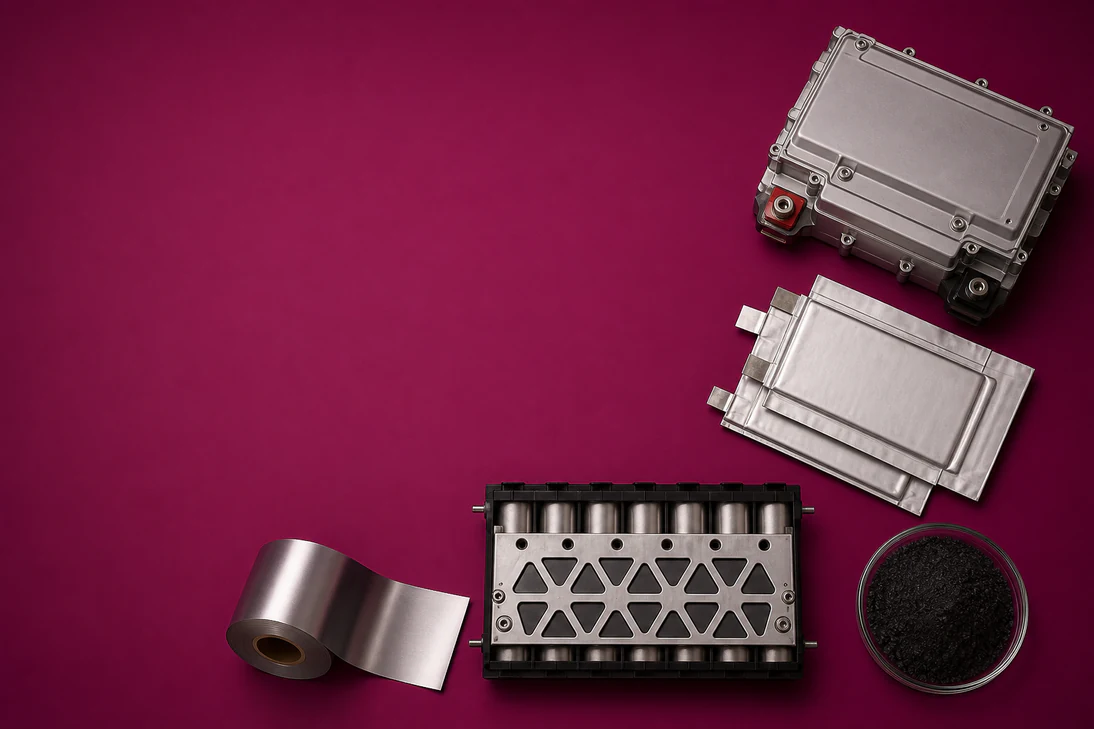
Li-S Energy Limited (ASX:LIS) is moving beyond the laboratory, but not yet into meaningful battery revenue. The company says its new commercial-sized 10Ah Power Cell achieved continuous discharge rates of 2C while retaining the energy-density advantages of lithium-sulfur chemistry, opening potential applications across multi-rotor drones, robotics and communications alongside its existing fixed-wing and underwater programs.
The technical milestone arrived alongside a string of commercialisation steps in FY26. Li-S Energy incorporated the Power Cell into partner battery packs, delivered packs to V-TOL Aerospace under the Federal Government’s Emerging Aviation Technology Partnership and began testing with underwater systems specialist MSubs at simulated depths of up to 1,000 metres. A separate collaboration with Praetorian Aeronautics is assessing the cells for Dagger counter-UAV interceptors, with Praetorian targeting production of up to 10,000 units a year.
Scale-up backed by $7.8 million ARENA grant
The company has also cleared key hurdles to getting prototype cells into international testing programs. AUKUS authorisation, CASA approval and PHMSA and FAA approvals completed the pathway to airfreight cells to the United States, while UN38.3 testing remains under way for larger shipment volumes. Li-S Energy says the approvals followed more than 18 months of work and support evaluation by international defence, government and commercial partners.
Manufacturing scale remains the larger test. The company’s existing automated Geelong line has annual capacity of about 2 MWh, while the proposed Phase 4 facility is being planned for up to 1 GWh a year. A $7.8 million matched ARENA grant is funding manufacturing optimisation, feasibility work and front-end engineering design, with Hatch’s FEL-1 study on track for completion in the third quarter of calendar 2026. Li-S Energy says material construction commitments would depend on customer demand and binding or conditional offtake agreements.
Loss narrows as revenue remains immaterial
Financially, the year was better than FY25 but still characteristic of an early-stage technology company. The net loss after tax narrowed 24.3% to $4.9 million, while net cash used in operating activities fell to $2.4 million from $3.3 million. Government grant funding received rose to $6.4 million, and the company recorded its first product revenue from a modest commercial sale of Australian-made lithium foil.
Li-S Energy finished June with $15.0 million in cash and cash equivalents, or $15.6 million when short-term investments and loans receivable are included, and no fixed debt. That balance supports the company’s stated plans over the next 12 months, according to the annual report, but the proposed Phase 4 build will require additional capital. Possible funding routes identified by the company include strategic partnerships, technology licensing, project finance, further government support or additional equity.
Customer conversion is the next commercial hurdle
The annual report’s central tension is straightforward: Li-S Energy has built more capability, but the commercial proof is still ahead. The company reports high-energy cells reaching up to 456 Wh/kg and says its facilities can produce matched 10Ah and 20Ah pouch cells, yet commercial revenue remains immaterial and current partner arrangements are principally collaborations, testing programs and development work rather than confirmed offtake.
The next markers are therefore practical rather than promotional: completion of the FEL-1 study, finalisation of commercial Power and Energy Cell specifications, continued undersea and flight testing, completion of relevant transport testing, and conversion of partner interest into conditional or binding orders. Until those steps occur, the 1 GWh ambition remains a funded planning exercise rather than a production commitment.
Bottom Line?
Li-S Energy has strengthened its technology, regulatory position and balance sheet, but the investment case now turns on whether testing converts into offtake before scale-up consumes its cash.
Questions in the middle?
- Can partner testing convert into binding or conditional offtake agreements before Phase 4 construction decisions are made?
- How much additional equity, project finance or strategic funding will be required for a facility targeting up to 1 GWh of annual capacity?
- Will the Power Cell maintain its energy-density and discharge performance as production moves beyond partner packs and into larger-volume trials?