Sulista South discovery gives BRE a larger rare earth system to chase

Brazilian Rare Earths has identified a new high-grade rare earth system at Sulista South, with mineralisation traced across about 500 metres and grades reaching 13.3% TREO. Step-out and infill drilling at Sulista East has also extended the known footprint and strengthened the case for a larger year-end resource estimate.
- Sulista South mineralisation spans about 500 metres of strike and remains open
- Reported intersections reach up to 13.3% TREO and 18 metres true thickness
- Sulista East mineralisation extended 430 metres beyond the current resource footprint
- More than 4.5 km of southern corridor remains untested
- Updated Sulista Mineral Resource Estimate targeted for end-2026

Sulista South opens a new high-grade drilling front
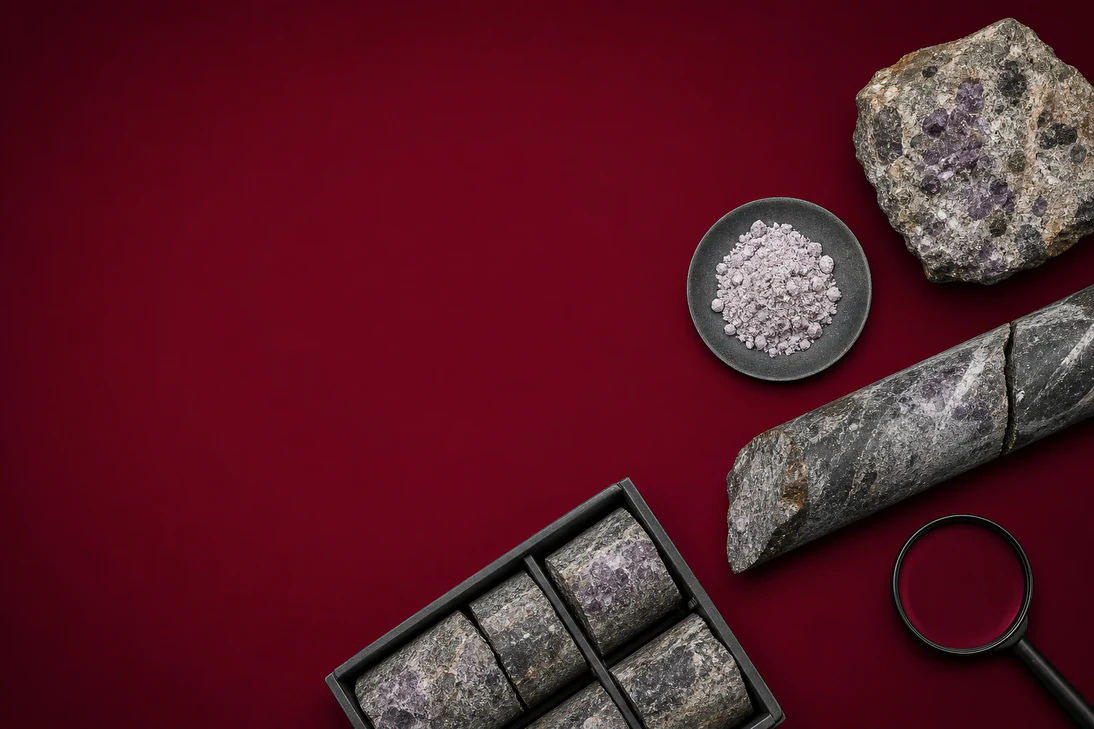
Brazilian Rare Earths Limited (ASX:BRE) has uncovered a new rare earth system south of its Sulista East deposit, with Stage 1 diamond drilling intersecting multiple stacked seams across roughly 500 metres of strike. The mineralisation reaches interpreted true thicknesses of about 4 to 18 metres, remains open along strike and at depth, and includes a reported peak assay of 13.3% total rare earth oxides in a one-metre interval.
The result is still an exploration discovery rather than a resource addition. BRE drilled 13 holes for 1,674 metres at Sulista South, but assays had been returned for only eight holes at the time of the announcement, with five still pending. Reported intersections included 9 metres at 4.6% TREO, 8 metres at 4.4% TREO and 5.5 metres at 4.3% TREO, while hole VR3DD0036 included a one-metre interval grading 13.3% TREO within a broader mineralised zone.
Sulista East footprint expands beyond the resource
The existing Sulista East system is moving in parallel from discovery towards definition. Step-out drilling has extended drill-defined mineralisation by about 350 metres to the north and 80 metres to the south, taking the combined extension beyond the current Mineral Resource footprint to approximately 430 metres.
Infill drilling has also supported the continuity of the deposit’s main upper mineralised horizon and a substantial underlying footwall zone. Among the reported results were 11.2 metres at 2.8% TREO, 11.9 metres at 2.2% TREO and 26.7 metres at 1.7% TREO. One footwall intercept ran 43.4 metres at 1.4% TREO, including higher-grade internal intervals. BRE says the tighter drilling has improved confidence in areas currently classified as Inferred and may support conversion to Indicated resources.
The results sit outside the current estimate. Sulista East presently contains 2.1 million tonnes of Indicated Mineral Resources at 2.6% TREO and 6.1 million tonnes of Inferred Mineral Resources at 2.0% TREO, but none of the drilling reported in this announcement has been incorporated into those figures. Since the existing resource cut-off, BRE says it has completed a further 38 holes totalling about 7,970 metres, with results reported for 21 holes and additional assays pending.
Resource update remains the next value test
The scale of the exploration runway is notable: more than 4.5 kilometres of the southern Sulista corridor has yet to be tested by diamond drilling. BRE has a broader programme exceeding 10,000 metres underway, including a further 2,000 metres of follow-up drilling at Sulista South and 5,000 metres of additional infill and step-out work at Sulista East.
BRE is targeting an updated Sulista JORC Mineral Resource Estimate by the end of 2026. The project was excluded from the published Monte Alto and Camaçari Scoping Study, so Sulista currently contributes no production, revenue, cash flow or economic value to that development case. Any role as additional feed for the planned Camaçari processing hub remains conditional on resource definition and subsequent technical studies.
Bottom Line?
The drilling has expanded Sulista’s geological potential, but the important conversion from promising intersections to a larger, higher-confidence resource still lies ahead.
Questions in the middle?
- How much of the 4.5-kilometre untested corridor will deliver comparable grades and thicknesses?
- Will pending assays support a meaningful increase in Sulista’s tonnes and Indicated resource classification?
- Can Sulista ultimately justify inclusion in a technical and economic study for the Camaçari hub?