A$3.79 million loss and 661.5 million shares frame Hawk’s exploration push

Hawk Resources has reported broad near-surface copper mineralisation at its Cactus project, while its FY2026 loss widened and the company flagged a continuing need for fresh funding. The explorer ended June with A$4.52 million in cash after substantial equity raisings and has since secured an 80% Olympus scandium interest for A$1.36 million.
- A$3.79 million FY2026 net loss, including A$2.26 million exploration impairment
- Cactus drilling returned broad near-surface copper intersections with assays pending from 11 follow-up holes
- Cash rose to A$4.52 million after A$8.68 million of net equity funding
- Olympus scandium option exercised post year-end for an 80% interest
- Directors identify additional funding as central to going-concern assessment
Cactus delivers the operational headline
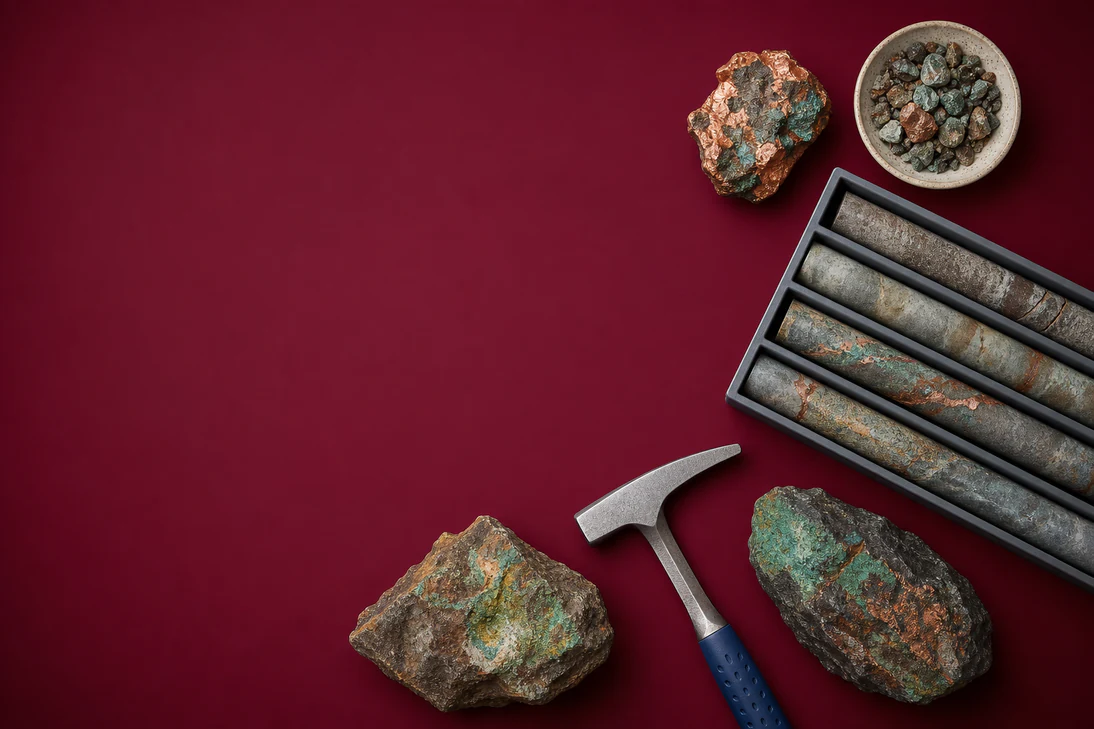
Hawk Resources Limited (ASX:HWK) has put its most investable-looking results at Cactus ahead of a difficult financial backdrop: three diamond holes at the Utah copper-gold project intersected broad, near-surface copper mineralisation, and nine of 11 subsequent holes reportedly showed visible copper while laboratory assays remained outstanding.
The strongest of the three reported holes, DD26CT003, returned 80.0 metres at 0.48% copper from surface, including 19.6 metres at 1.25% copper and a narrower 4.9-metre interval at 3.97% copper. DD26CT004 intersected 72.9 metres at 0.36% copper, while DD26CT005 returned 71.7 metres at 0.45% copper, including separate higher-grade zones. Hawk interprets the near-surface zone as roughly 35 to 50 metres thick, extending along the broader Cactus Corridor between the historical Comet, Cactus and New Years workings.
The results sit alongside a sequence of earlier high-grade historical and post-mining intersections, but they do not establish a mineral resource or economic deposit. The next meaningful test is the laboratory data from the follow-up programme, with Hawk targeting a decision on further drilling in the fourth quarter of 2026 and resource-focused drilling in the first half of 2027. The company’s recent drilling campaign, including reports of unusually high spot pXRF readings, is reflected in its Cactus Corridor exploration story only as background; the annual report itself relies on laboratory assays for the reported intervals.
Loss widens as exploration portfolio expands
Hawk’s loss after tax increased to A$3.79 million from A$2.73 million in FY2025. The largest contributor was a A$2.26 million impairment of capitalised exploration and evaluation assets, chiefly relating to the Detroit project, where the carrying value was reduced based on expected future payments under Infield Minerals’ option.
The balance sheet looks stronger than the income statement at first glance. Cash and cash equivalents rose to A$4.52 million from A$949,652, while net assets increased to A$10.44 million. That improvement was funded rather than earned: net proceeds from share issues reached A$8.68 million, and ordinary shares on issue climbed to 661.5 million from 270.9 million over the year. The capital structure therefore carries a clear dilution dimension alongside the larger exploration budget.
Hawk spent A$3.68 million on investing activities, while operating activities consumed a further A$1.42 million. The directors state that continuing as a going concern depends primarily on securing additional funding, potentially through equity placements or joint-venture arrangements, and acknowledge that activities may need to be reduced if capital is unavailable. That disclosure is not unusual for an exploration company, but it gives the pending assays a financial importance beyond their geological interest.
Olympus becomes the second major test
After year-end, Hawk paid A$1.36 million to exercise its option for an 80% interest in the Olympus scandium project in Western Australia. The company has begun a campaign of about 1,350 lag and soil samples across historical scandium anomalies, but the project’s most eye-catching figures are based on earlier pXRF work rather than compliant laboratory assays. Hawk expressly cautions that those readings are not a proxy for laboratory results.
Meerkat adds another US copper option, with Hawk’s proposed earn-in still subject to due diligence, tenure and approval conditions. The portfolio now offers several potential catalysts, but each remains dependent on exploration results, project milestones or further capital. For shareholders, the immediate question is whether Cactus assays and Olympus laboratory results can convert a busy project pipeline into evidence strong enough to justify the next funding round.
Bottom Line?
Cactus assays and Olympus laboratory results must now do more than improve the exploration story: they need to help determine how much capital Hawk requires next and on what terms.
Questions in the middle?
- Will the 11-hole Cactus follow-up programme confirm continuity and grade across the Corridor?
- Can Olympus laboratory assays validate the historical pXRF scandium anomalies before drilling expands?
- How much additional equity or joint-venture funding will Hawk need after exercising Olympus and advancing Meerkat?