Aldoro’s Kameelburg advances from giant resource to development test

Aldoro Resources has expanded its Kameelburg rare earths, strontium and niobium resource in Namibia to 804.5 million tonnes, including a maiden 162.1Mt Indicated category. The technical progress is substantial, but the annual report also flags a $15.7 million loss, just $78,561 in year-end cash and material uncertainty over ongoing funding.
- 804.5Mt Kameelburg TREO-equivalent resource
- Maiden 162.1Mt Indicated Resource
- 99% strontium and 72% REE extraction
- A$4.3m convertible note funding after year end
- Auditor flags material going concern uncertainty
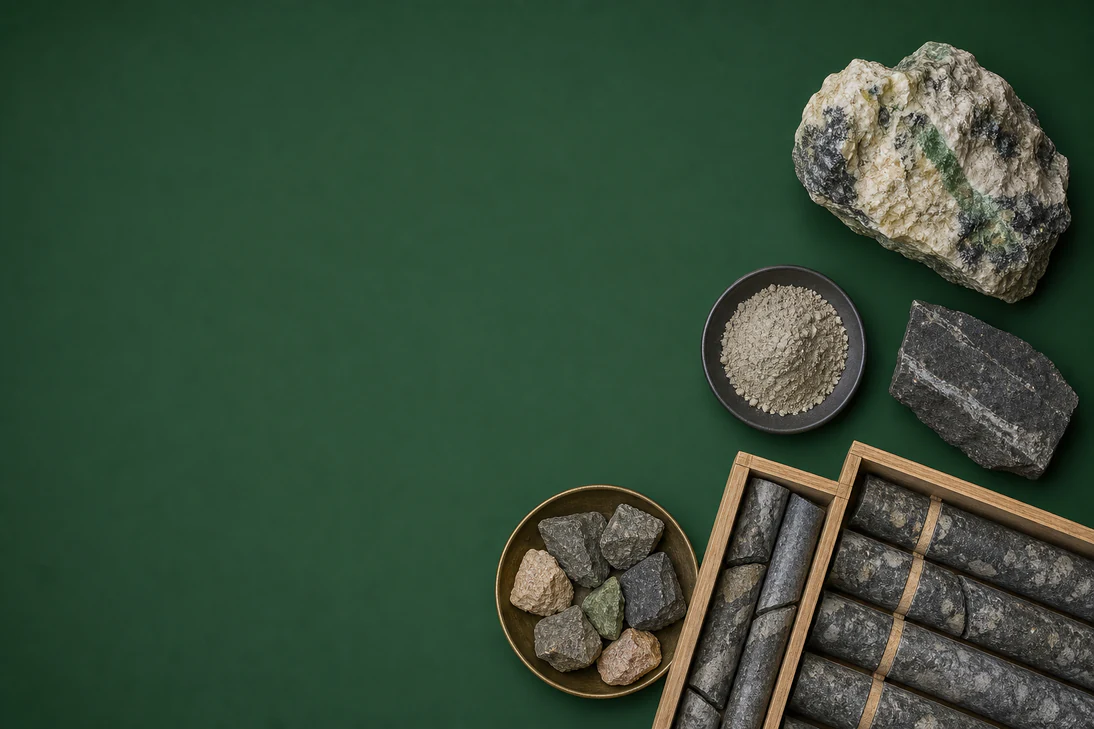

Kameelburg Scale Meets a Thin Cash Buffer
Aldoro Resources Limited (ASX:ARN) has reached a more advanced point at its flagship Kameelburg project, but the annual report makes clear that geological scale and financial capacity remain two very different things. The Namibia project now carries an 804.5 million tonne Mineral Resource at 2.90% TREO-equivalent, while Aldoro ended the financial year with only $78,561 in cash and net current liabilities of $1.20 million.
Kameelburg is 85%-owned by Aldoro and sits at the centre of the company’s shift away from a diversified exploration portfolio. The resource statement at 30 June 2026 included 162.1Mt in the Indicated category and 642.4Mt Inferred, with the updated figures incorporating 39 diamond holes for 16,904 metres. The company says the resource also contains substantial niobium and strontium mineralisation, with the strontium inventory reported at 802.1Mt grading 2.11% Sr, inclusive of the rare earth resource rather than additional to it.
Drilling and Metallurgy Move Kameelburg Towards Studies
Phase II drilling added 15 holes and 7,190 metres, testing lateral limits, depth continuity and higher-grade internal zones. Among the reported results, DD008G intersected 318.3 metres at 1.51% TREO, 4.90% SrCO₃ and 0.21% Nb₂O₅, while DD008D returned 504 metres at 2.39% TREO. These are exploration intercepts, not production results, but they helped support the subsequent resource upgrade.
Early processing work supplied another positive data point: hydrometallurgical testing achieved 98.96% strontium extraction after 120 minutes and a 72% total rare earth extraction rate. Aldoro has started a Scoping Study and is running upgraded testwork aimed at improving recoveries, removing impurities, precipitating strontium carbonate and selecting a lower-capital-intensity flowsheet. The study is expected to rely partly on Inferred Resources, so any future production target or economic forecast will remain sensitive to further drilling and engineering assumptions.
Funding Has Bought Time, Not Removed Risk
The financial statements are the less forgiving half of the story. Aldoro reported a net loss of A$15.66 million for the year, including A$14.40 million in share-based payment expense, and used A$3.66 million across operating and investing activities. The company also had a A$1.30 million interest-free loan from director Dr Minlu Fu at year end, which was repaid after the reporting date when the company secured A$4.3 million through unsecured convertible notes on 20 July 2026.
That funding helped underpin the directors’ decision to prepare the accounts on a going-concern basis, but the auditor still highlighted a material uncertainty that may cast significant doubt on Aldoro’s ability to continue operating. The report says the company can raise further equity or reduce expenditure if required. Neither option is costless: the first may dilute shareholders, while the second could slow the drilling and development programme that Kameelburg now requires.
Share-Based Funding Adds to the Capital Overhang
Aldoro’s ordinary share count rose from 183.2 million to 236.7 million during the year through option exercises, performance-right conversions and shares issued for plant, equipment and exploration services. The company also recorded 40 million new director and related-party options with milestone prices of $1.00, $1.50 and $2.00, alongside further performance rights issued to contractors. Those instruments are not immediate cash costs in the same way as exploration expenditure, but they are part of the dilution and incentive structure investors must track as the project advances.
Phase III Drilling Sets the Next Decision Point
The next operational marker is a planned Phase III drilling programme in the third quarter of 2026, focused on converting Inferred material into the Indicated category, extending the deposit and collecting variability samples for metallurgy. Aldoro is also continuing to assess a potential Hong Kong listing, although that proposal remains subject to approvals, due diligence, market conditions and Board discretion.
The central question is no longer whether Kameelburg is large enough to attract attention. It is whether Aldoro can convert that scale into a credible development case before the next financing decision arrives, with the Scoping Study, metallurgical results and resource conversion now carrying more weight than another headline tonnage increase.
Bottom Line?
Kameelburg has moved into development studies, but the next resource conversion and metallurgical results must arrive alongside a clearer funding path.
Questions in the middle?
- How much of the 642.4Mt Inferred Resource can Phase III drilling convert into Indicated material?
- What recovery rates, capital costs and product specifications will emerge from the Scoping Study?
- How much additional equity or convertible funding will Aldoro need before Kameelburg can reach a definitive development decision?