Auditor Flags Going Concern Uncertainty at Rubix Resources

Rubix Resources ended FY2026 with a $1.283 million loss, only $95,001 in cash and a net asset deficit, prompting its auditor to flag a material uncertainty over going concern. The company’s Paperbark drilling produced an encouraging copper signal, but further exploration depends on fresh funding.
- Cash fell from $1.148 million to $95,001
- Auditor flags material uncertainty over going concern
- $751,500 in minimum exploration commitments
- Paperbark drilling identifies copper-rich units at depth
- No mineral resource or reserve has been declared
Cash Position Drives Going Concern Warning
Rubix Resources Limited (ASX:RB6) finished the financial year with just $95,001 in cash, down from $1.148 million a year earlier, leaving the explorer with a $293,354 net liability position. Hall Chadwick WA Audit gave the accounts an unmodified opinion but separately highlighted a material uncertainty that may cast significant doubt on Rubix’s ability to continue as a going concern.
The company reported a $1.283 million net loss for the year, compared with a $1.217 million loss in FY2025, while operating cash outflows came to $1.053 million. Rubix had no financing inflows during the year and issued no shares, leaving its continued exploration program dependent on raising equity and managing cash flow.
Exploration Commitments Exceed Reported Cash
The funding arithmetic is particularly stark. Rubix disclosed minimum exploration commitments of $751,500 over the next 12 months, almost eight times its cash balance at 30 June 2026. Current liabilities stood at $414,058, including $390,035 in trade and other payables.
Directors said they were confident the company could raise funds when required and had prepared a 12-month cash-flow forecast. They also said related parties and supportive creditors had agreed not to call amounts owed to them until Rubix had raised sufficient capital. Those assurances support the going-concern basis used for the accounts, but do not remove the auditor’s stated uncertainty or establish that a capital raising has been completed.
Paperbark Produces a Copper Signal at Depth
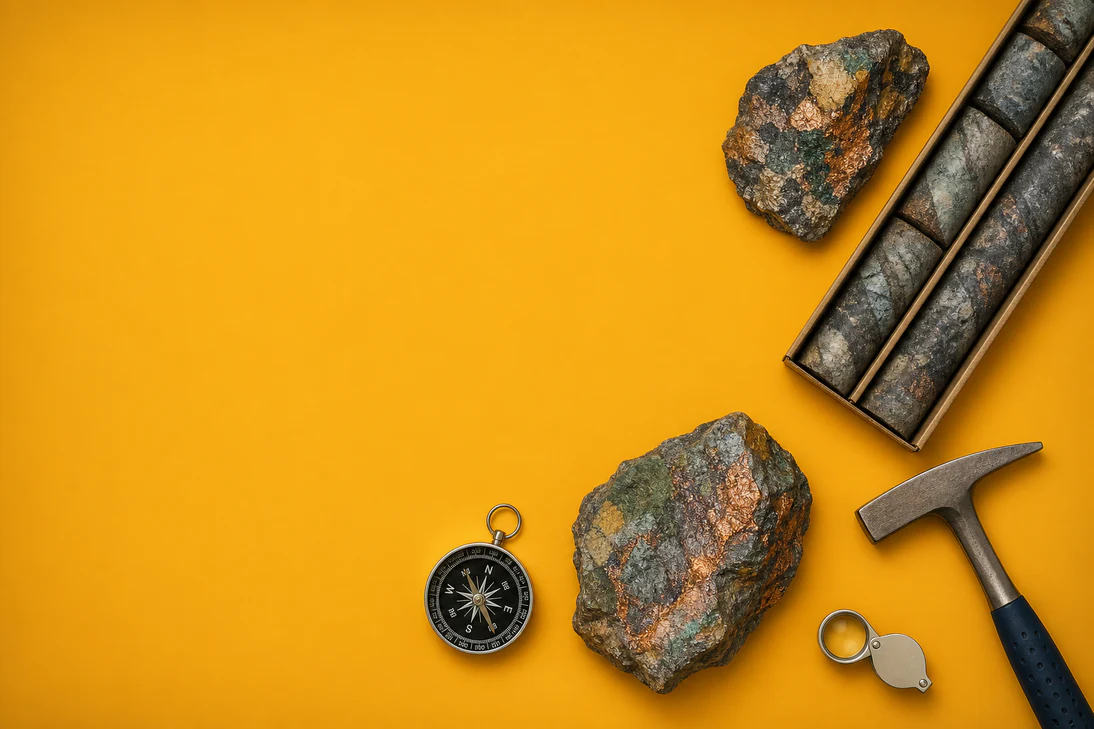
Against that financial backdrop, Paperbark remains the company’s principal exploration narrative. Rubix completed three deep drillholes targeting chargeability and density anomalies at the Queensland copper-zinc-lead project, with logging and geochemistry broadly consistent with previous work.
Geochronological analysis confirmed anomalously copper-rich units beneath the zinc and lead mineralisation at the JB Zone. Rubix said the units may be similar in age to those hosting copper mineralisation at the Mammoth Deposit at the Gunpowder Mine, raising the possibility that deeper stratigraphic levels at Paperbark could be prospective. The company stressed that the deeper units have not previously been drilled and that further work is required to determine whether they could host economic copper mineralisation.
Follow-Up Work Still Requires Capital
Rubix intends to pursue further exploration at Paperbark, including testing a third chargeability anomaly and additional ground-based geophysics. Its other projects span copper, gold, nickel, cobalt, lithium and platinum-group elements across Queensland, Western Australia and Quebec, although activity at several was limited to desktop studies during the year.
The report contains no mineral resource, ore reserve or production declaration. It also records 25 million Ceiling Project performance rights, split into two 12.5 million tranches expiring in September 2027, with management assigning a 0% probability to both vesting conditions at year-end. The immediate test for Rubix is therefore less geological than financial: whether it can secure enough capital to meet its commitments while converting Paperbark’s preliminary copper signal into a result capable of supporting a larger exploration case.
Bottom Line?
Paperbark offers a geological reason to keep drilling, but Rubix first needs to bridge the gap between $95,001 of cash and $751,500 of committed exploration work.
Questions in the middle?
- When and on what terms can Rubix secure the additional equity funding identified as necessary for ongoing operations?
- Can the company meet its $751,500 minimum exploration commitments without materially changing its exploration plans?
- Will follow-up drilling at Paperbark establish economic copper mineralisation, or merely extend an encouraging but preliminary geological signal?