Thor reports £1.453 million cash and 3% hydrogen readings

4 min read
1:10pm on Wednesday 30th of September, 2026 AEST ~1pm, 30th Sept, 26
Thor Energy has pushed HY-Range closer to drilling after recording natural hydrogen readings of up to 3% and commissioning a 464 line-kilometre seismic survey. But the annual report also carries an explicit material uncertainty over going concern, leaving funding as the project’s immediate constraint.
- Natural hydrogen readings reached 3% at HY-Range
- 464 line-kilometre seismic programme planned for Q4 2026
- Cash increased to £1.453 million after asset sales
- FY26 loss narrowed to £1.427 million
- Auditor flagged reliance on further funding
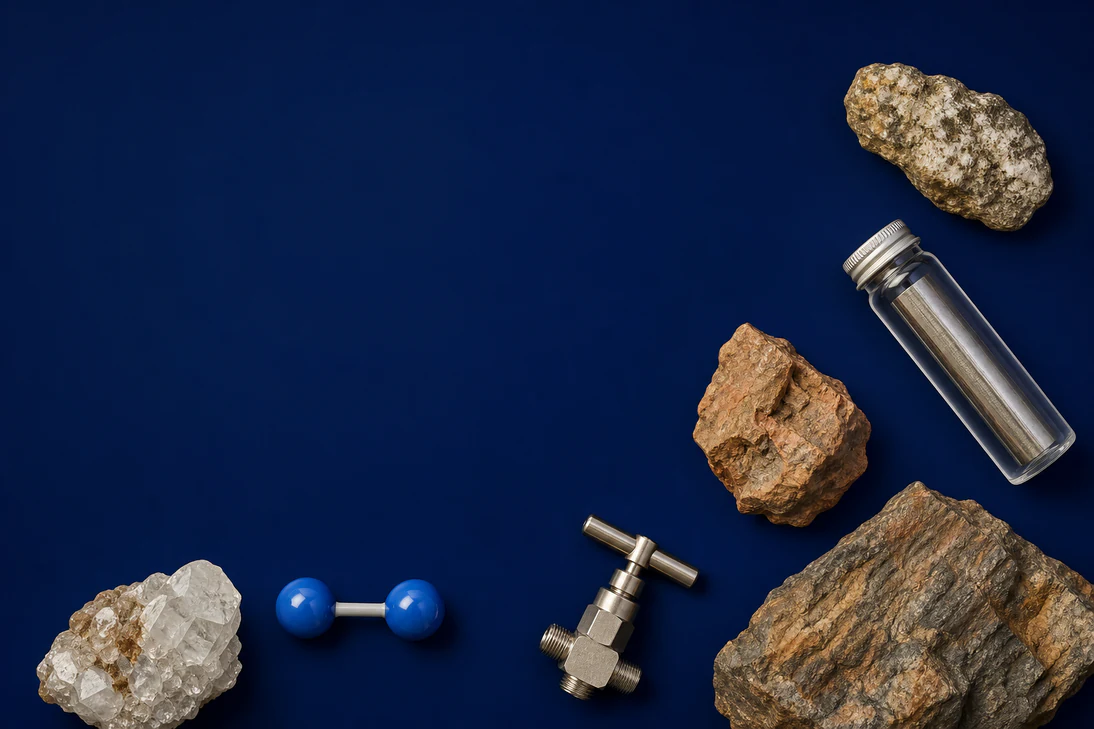
HY-Range advances from geochemistry to seismic
Thor Energy Plc (ASX:THR) has reached the next technical gate at its South Australian HY-Range project, with Phase 2 monitoring recording natural hydrogen concentrations of up to 3% or 30,000 parts per million. The company said the readings were approximately 60,000 times background levels and validated three priority areas: Mallala, Lochiel and Crystal.
The result has moved the project beyond surface sampling. Thor has signed a Letter of Award with Velseis for an approximately 464 line-kilometre onshore 2D seismic survey across RSEL 802, targeting the Torrens Hinge Zone. The work is expected to begin in the fourth quarter of calendar 2026 and is intended to refine the subsurface model, map faults and mature targets for a potential maiden drilling programme. The arrangement is described in the report as fully funded from existing cash reserves.
Asset sales lifted cash without an equity raise
Thor’s balance sheet improved during the year largely because it sold down assets rather than issued new equity. Cash and cash equivalents rose from £686,000 at 1 July 2025 to £1.453 million at 30 June 2026, helped by £1.343 million in cash proceeds from the Molyhil transaction and £586,000 from the sale of listed shares received in the US asset disposal.
The company completed the sale of its 75% Molyhil interest to Tivan Limited (ASX:TVN) for total consideration of up to A$6.56 million net to Thor, with further annual instalments due through September 2028. A deferred A$1.3125 million payment received after year-end was split between cash and Tivan shares. Thor also retained a carried 25% interest in its former US uranium and vanadium subsidiaries, alongside a potential 2.5% to 4% gross revenue share from DISA Technologies’ proposed treatment of abandoned mine waste.
Losses narrowed, but cash generation remains negative
The FY26 loss fell to £1.427 million from £7.441 million a year earlier, when exploration write-offs and other disposal-related charges were substantially larger. Net cash used in operating activities was £791,000, while net cash inflow from investing activities reached £1.581 million. Thor reported no revenue and paid no dividend.
The numbers explain both sides of the investment case. Portfolio rationalisation has reduced the immediate burden of non-core assets and funded the next HY-Range work programme, but the company remains an exploration-stage business with no operating income. The report says further funding will be required to meet working-capital needs and continue operations.
Going concern and licence renewal remain key risks
PKF Littlejohn gave an unmodified audit opinion but highlighted a material uncertainty related to going concern. Management’s forecasts to 30 September 2027 assume additional funds will be raised, while the board says discretionary spending could be reduced if cash becomes constrained. The auditor cautioned that there is no assurance funding will be obtained within the required timeframe or for the required amount.
A separate uncertainty sits beneath the HY-Range valuation. Thor’s application to renew RSEL 802 into its final five-year licence period remains under review by South Australia’s Department of Energy and Mining. The licence continues by default while the application is pending, but the report states that a refusal could impair the related exploration assets. For now, the seismic programme has a timetable and a contractor; the more consequential question is whether Thor can fund the drilling decision that the seismic is meant to inform.
Bottom Line?
HY-Range has produced the headline geological result, but Thor’s next milestone depends on converting a stronger technical story into durable funding while its key licence renewal remains unresolved.
Questions in the middle?
- Will the 2D seismic programme identify drill targets strong enough to justify a maiden well?
- When will South Australia’s Department of Energy and Mining decide the RSEL 802 renewal application?
- Can Thor fund exploration beyond the seismic programme without relying on another equity raise or further asset sales?