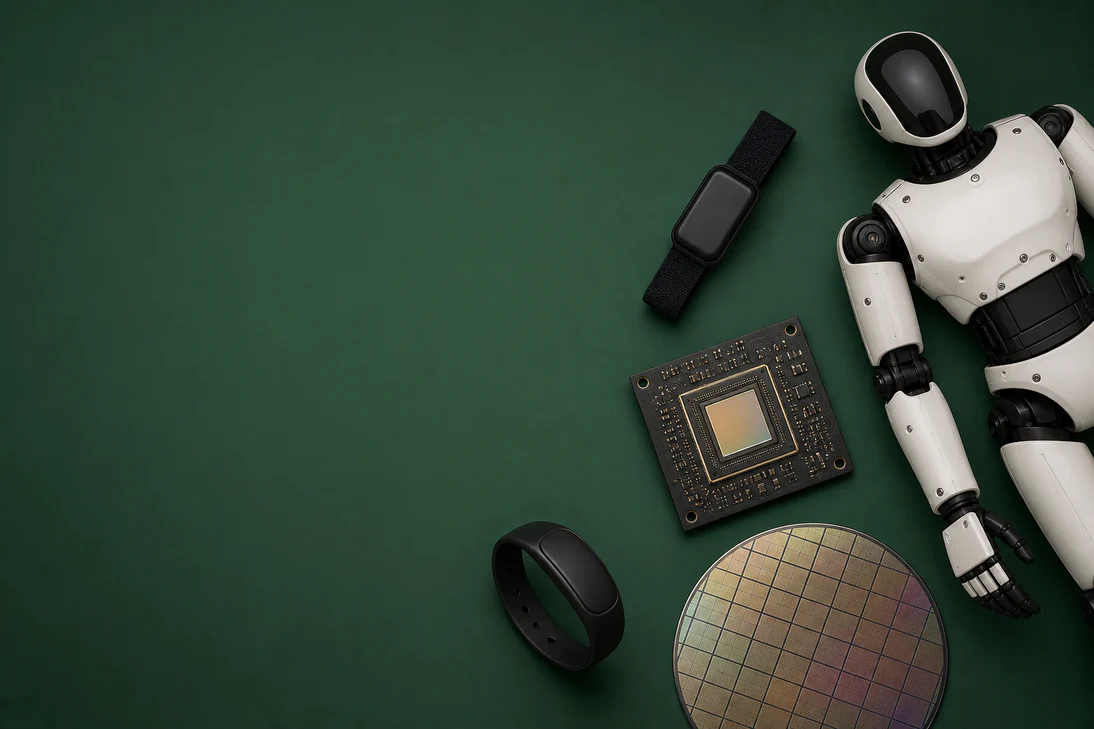
dorsaVi Funds Its Next Move From Wearables Into Humanoid Robotics

dorsaVi has secured A$3.0 million to expand its movement-data business for humanoid robotics while advancing its neuromorphic and RRAM chip programs. The raise comes as its first RRAM-CMOS validation chip moves into proprietary memory integration at TSMC.
- A$3.0 million placement at A$0.022 per share
- 136.36 million new shares and 68.18 million attaching options
- First RRAM-CMOS validation chip advances to RRAM integration
- Funds aimed at robotics data, defence applications and semiconductor development
- Commercial opportunities remain at partner-evaluation stage
 Add us as a preferred source on Google
A$3 Million Placement Targets Physical AI Expansion
dorsaVi Limited (ASX:DVL) is raising A$3.0 million from sophisticated, professional and high-net-worth investors as it tries to turn its wearable-sensor expertise into a broader Physical AI strategy. The placement will issue 136.36 million shares at A$0.022 each, a 12% discount to the last traded price and discounts of 15% and 8% to the relevant 10-day and 15-day VWAPs.
The capital is intended to expand dorsaVi’s clinical-grade human movement data library and bespoke capture capabilities, including wearable sensors and Video AI, for humanoid robotics developers. The company said discussions with prospective robotics and defence partners had focused on smart-soldier systems, aerial drones and autonomous underwater vehicles, although these remain targeted commercial and technical explorations rather than completed products or contracts.
RRAM Chip Moves From Fabrication Into Integration
The raise also arrives at a technical milestone for dorsaVi’s semiconductor ambitions. Its first RRAM-CMOS validation chip has completed front-end and middle-of-line fabrication on Taiwan Semiconductor Manufacturing Company’s CMOS process and is now moving into proprietary RRAM integration and energy testing. The company says the resulting silicon data is intended to guide a future progression towards 22-nanometre RRAM-CMOS development.
That program builds on the first RRAM-CMOS chip design, which earlier moved dorsaVi’s technology from design towards physical silicon manufacturing. Separately, the company’s Sensor v6.5 platform is part of the sensors and movement-data vertical, alongside licensed neuromorphic intellectual property from Technion and the RRAM program being developed with Nanyang Technological University and the Industrial Technology Research Institute.
Options Add Capital Structure and Execution Questions
Investors will receive more than ordinary shares in the transaction. The placement includes 68.18 million free-attaching unlisted options on a one-for-two basis, exercisable at A$0.045 for three years. Lead manager 62 Capital will also receive a 6% fee on the gross funds raised and 24 million unlisted options with the same exercise price and three-year term.
The announcement does not state the post-placement share count or the resulting dilution percentage. Settlement of the new shares is expected around 19 October 2026, after which the size of the expanded equity base and the potential option overhang will be clearer. The balance of the funds, after development spending, will support partner evaluations, working capital and offer costs.
Partner Evaluations Are the Next Commercial Test
dorsaVi’s stated near-term objective is to define customer requirements and convert partner discussions into evaluations. That leaves the commercial case dependent on whether interest in movement data, low-power intelligence and edge processing develops into paid engagements or products. The company has not announced a completed robotics or defence contract alongside the placement.
Bottom Line?
The raise gives dorsaVi room to pursue its three-part strategy, but the next value test is conversion: RRAM validation, partner evaluations and evidence of commercial demand.
Questions in the middle?
- How much of the new capital will be allocated to movement-data expansion versus the RRAM and neuromorphic programs?
- When will the first partner evaluations produce measurable commercial commitments or revenue?
- What results will emerge from RRAM integration and energy testing, and will they support progression towards 22-nanometre development?
Sources
1-
dorsaVi Raises A$3M for Robotics Strategy and RRAM Tape-Out (opens in a new tab)Official market announcement. Dorsavi Ltd · 6 Oct 2026 · dorsavi.com