Lux Copper finds visual copper across first three Alaska holes

Lux Copper’s first three diamond holes at the Baird project in Alaska have intersected broad zones of visually identified copper mineralisation from surface and at depth. The company now faces the more consequential test: laboratory assays expected in November.
- Three maiden holes intersected visible copper mineralisation
- Near-surface visual intervals ranged from 25.7m to 32.2m
- Deeper mineralisation was logged in all three holes
- Assays are expected in November
- Larger multi-rig drilling program planned for March 2027
 Add us as a preferred source on Google
Three Maiden Holes Intersect Visible Copper
Lux Copper Corp Ltd (ASX:LUX) has found visible copper mineralisation in each of the first three diamond holes drilled at its Baird Copper Project in Alaska, giving the explorer an early geological signal before the results that matter most: laboratory assays.
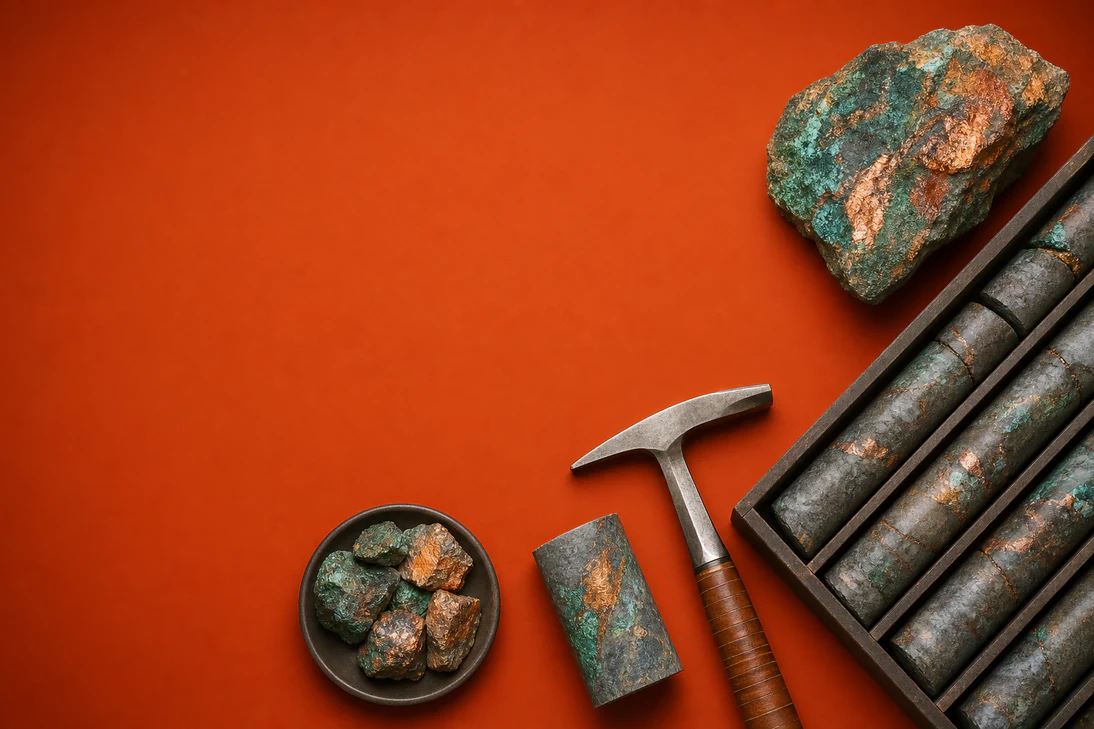
The near-surface intervals were substantial on a down-hole basis. Hole DDBA26-001 logged 26.6 metres of visible copper mineralisation from surface, DDBA26-002 logged 25.7 metres, and DDBA26-003 logged 32.2 metres. All three holes also recorded mineralisation deeper in the core, including intervals of 9.1 metres from 159.1 metres in the first hole, 3.2 metres from 76.3 metres in the second and 11.6 metres from 39.6 metres plus 15.1 metres from 61.3 metres in the third.
The results come after Lux began its maiden Baird drilling campaign, which targeted historical copper results at prospects including Omar and Frost. The current holes were completed at the high-priority Omar Prospect, where the company cites historical intersections including 37.7 metres at 2.45% copper and 30.3 metres at 1.90% copper.
Visual Mineralisation Still Awaits Assay Confirmation
Geological logging identified copper sulphides including bornite, covellite, chalcocite and chalcopyrite, alongside oxidation products such as chrysocolla, cuprite, azurite and malachite. The mineralisation occurs in Devonian carbonate sediments and is associated with brecciation, fractures, dolomitisation and carbonate recrystallisation.
That description is encouraging, but it is not a grade result. Lux says the reported percentages are preliminary visual estimates and warns they should not be treated as a substitute for laboratory analysis. The reported lengths are down-hole measurements, with true widths not yet established; the company also says the spacing is insufficient to define a mineral resource.
Core processing, cutting and sampling are being finalised, with initial assay results expected in November. Those assays will determine whether the vivid mineralisation seen in the core translates into meaningful copper grades, continuity and widths, rather than merely confirming the presence of copper-bearing minerals.
Lux Plans Larger 2027 Drilling Campaign
Lux has paused drilling for 2026 and plans to restart field activities in March 2027 with a larger, multi-rig program. The company intends to use the intervening period to interpret assay and geophysical data, refine its understanding of the controls on mineralisation and plan step-out drilling.
It says an exploration camp and key infrastructure have already been established, most of which is expected to support next year’s work. Lux also plans to pursue a US listing, citing what it describes as increasing support for critical-minerals projects from the current US administration. No listing structure, timing or associated capital requirements were provided in the announcement.
Bottom Line?
November assays are the immediate validation point; until grades and true widths are known, the drilling has demonstrated geological encouragement rather than an economic discovery.
Questions in the middle?
- Will the November assays confirm copper grades that match the visual intensity and historical results?
- What true widths and geological continuity will emerge once the drill geometry is better understood?
- What funding, structure and timing will accompany the proposed US listing and 2027 multi-rig program?
Sources
1-
First holes intersect zones of visual copper mineralisation (opens in a new tab)Verified company source. Lux Copper Corp. Ltd · 7 Oct 2026 · wcsecure.weblink.com.au