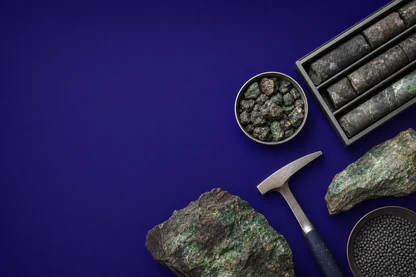
Axel REE moves Caladão toward first in-ground ISR tests

Axel REE is moving its Caladão rare earths project into the next technical test: exploratory in-situ recovery work at the Woolrich deposit. The company says bench-scale testing has recovered up to 560ppm soluble TREO, but field performance, groundwater behaviour and project economics remain unproven.
- 708.6Mt Caladão REE resource at 1,443ppm TREO
- 575.68Mt gallium resource at 37.05ppm
- Woolrich selected for the first ISR wellfield test
- Column testing recovered up to 560ppm soluble TREO
- Hydrogeology, permitting and scoping study remain ahead
 Add us as a preferred source on Google
Axel REE Limited (ASX:AXL) is taking its Brazilian rare earths project from laboratory chemistry to the more consequential question of whether the process works in the ground. The company’s investor presentation says exploratory in-situ recovery (ISR) field testing is set to begin at the Woolrich deposit, the selected first wellfield within the Caladão project in Minas Gerais.
That is the key transition for a project whose appeal rests on avoiding conventional open-pit mining, crushing and milling. Axel proposes circulating magnesium sulphate through ionic adsorption clay, recovering the pregnant solution at surface and producing mixed rare earth carbonate. The flowsheet remains conceptual, however: only bench-scale column testing has been completed so far.
Caladão resource and Woolrich test target
Axel reports a 708.6 million tonne JORC Mineral Resource Estimate at 1,443 parts per million total rare earth oxide, containing about 1.02 million tonnes of TREO. Woolrich contributes 264.6 million tonnes to the resource, including 110.08 million tonnes classified as indicated in the detailed resource table. The deposit has been selected as the anchor for the first field program across a mineralised footprint of about 2,000 hectares, where Axel has identified 12 potential wellfields.
The resource upgrade and field-test plan build on the Woolrich resource upgrade, which more than doubled the deposit’s reported tonnage and established its first indicated component. Axel says the wider Caladão resource also includes a 575.68 million tonne gallium resource grading 37.05ppm, positioning gallium as a potential second development pathway rather than part of the initial ISR test.
Column recoveries support the next technical step
At Woolrich, magnesium sulphate column tests produced up to 560ppm soluble TREO, with about 39% of the rare earth basket made up of magnet rare earths, including neodymium, praseodymium, dysprosium and terbium. Axel describes the result as comparable with operating ionic-clay ISR mines and says impurities remained low enough to support a relatively simple downstream process.
Those results are encouraging but narrow in what they establish. The company’s earlier 560ppm column test result was a laboratory result, not evidence of commercial production. The field program now needs to test leaching behaviour, permeability, hydraulic continuity, containment and recoverability under real operating conditions.
Hydrogeology and economics remain unresolved
Axel’s roadmap places hydrogeological studies, environmental work and permitting alongside further infill drilling. A scoping study is planned after the field testing, offering the first integrated technical and economic assessment of Caladão. Until those steps are complete, the company’s claims of low capital intensity, low operating costs and a small surface footprint remain development objectives rather than project outcomes.
The presentation also contains figures that require clarification. Its detailed tables report 110.08 million tonnes of indicated REE resources at Woolrich, while another slide refers to a 265 million tonne indicated MRE; appendix headings separately cite 572Mt of REE and 439Mt of gallium despite the detailed totals of 708.6Mt and 575.68Mt. The headline resource numbers are clear in the main tables, but investors will reasonably expect Axel to reconcile the differing classifications and labels.
Caldas adds exploration upside beyond Caladão
Axel also highlighted the separate Caldas project, covering 232 square kilometres around the Poços de Caldas Alkaline Complex. Drilling has returned high-grade TREO intersections in kaolinite clays, while magnesium sulphate leach testing at Caldas South identified near-surface soluble mineralisation. The company cautions that only 10 of 28 auger holes were tested and that permeability, hydraulic continuity, containment and recoverability have not yet been confirmed.
Axel’s corporate snapshot lists $5.7 million in cash at 30 June 2026, $10.6 million in undiluted market capitalisation at 6 October and 176 million shares on issue. That balance provides a stated funding base for the next work program, but the presentation does not provide a cost estimate for the field trials, scoping study or eventual development. The immediate test is therefore technical rather than financial: whether Woolrich can turn a promising column result into a repeatable, controllable in-ground recovery system.
Bottom Line?
Woolrich is now the project’s proof point. Field data, hydrogeology and a credible scoping study will determine whether Axel’s low-cost ISR proposition survives contact with the ground.
Questions in the middle?
- Can Woolrich reproduce its 560ppm soluble TREO column result in a controlled field wellfield?
- Will hydrogeological testing demonstrate sufficient permeability, containment and recoverability for ISR?
- How will Axel fund the field program, scoping study and permitting work if development milestones are met?
Sources
1-
Investor Webinar Presentation (opens in a new tab)Verified company source. Axel Ree Limited · 7 Oct 2026 · axelreelimited.com.au