EOS opens a new Gulf frontier with conditional £700m counter-drone deal

Electro Optic Systems has signed its largest-ever contract, worth £370 million or about A$700 million, to deploy a nation-wide counter-drone network in an unnamed Gulf state. The opportunity is substantial, but remains conditional on guarantees, an advance payment, export licences and further consents.
- Largest contract in EOS history, valued at £370m or approximately A$700m
- Nation-wide system centred on MARSS’s AI-enabled NiDAR command platform
- More than 80% of revenue expected within 12 to 24 months after conditions are met
- £74m bank guarantee and matching customer advance payment still required
- Significant upfront working capital need, with cashflow expected to turn positive around mid-2027
 Add us as a preferred source on Google
EOS lands largest-ever counter-drone contract
Electro Optic Systems Holdings Limited (ASX:EOS) has signed a conditional £370 million contract, valued at approximately A$700 million, with an unnamed government in a Middle Eastern Gulf state for a nation-wide counter-drone defence system. It is the largest contract in EOS’s history, and would materially expand the company’s role from supplying defence technologies to integrating a country-wide network of sensors, command systems and countermeasures.
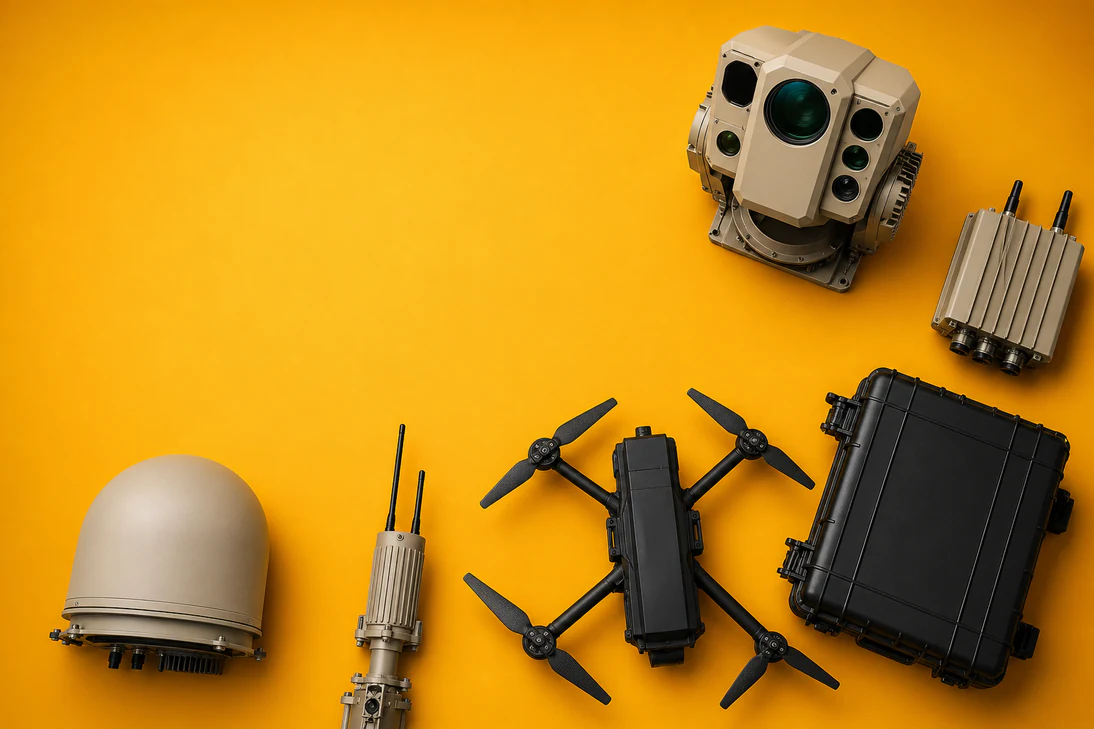
The contract places MARSS’s NiDAR command-and-control platform at the centre of the system. EOS will act as prime contractor and systems integrator, combining NiDAR with third-party electro-optical, radar and sonar sensors, alongside hard-kill interceptors and soft-kill jammers. The platform is designed to fuse incoming data into threat assessments covering airborne and coastal seaborne drones.
Gulf demand puts MARSS capability under a larger test
The announcement comes after EOS’s acquisition of MARSS, whose counter-drone technology has already featured in the company’s growing Middle East pipeline. That pipeline included the earlier £8m counter-drone command centre, while EOS’s first-half reporting said the acquisition had helped drive a sharp increase in defence orders and revenue.
EOS says systems fielded by MARSS in the Middle East have demonstrated effectiveness during the region’s recent crisis, which it believes is accelerating demand for counter-drone systems. The company is positioning the new contract as an inflection point in its ambition to become a major global integrated counter-drone supplier, although the statement does not guarantee that further regional orders will follow.
Revenue could arrive quickly, but conditions remain outstanding
More than 80% of the contract’s revenue is expected to be earned during the first 12 to 24 months after the agreement becomes unconditional. About 20% relates to ongoing support over four years. EOS says the contract is expected to be profitable and cashflow positive over its term, but has not disclosed its expected margin.
Before work can begin, EOS must provide a £74 million bank guarantee and receive a matching advance payment from the customer. It must also obtain export licences for the system’s components within two months of receiving the necessary customer documentation. EOS has already provided a 10% performance bond guarantee worth £37 million, secured by a £40.3 million cash deposit, approximately A$77 million, placed with a commercial bank on 12 August.
Working capital and execution risks sit alongside the headline value
The scale of the contract will create a substantial early funding requirement as EOS buys equipment, expands its workforce and begins deployment in the customer’s country. The company expects cashflow to turn positive around mid-2027, but that timing is a forecast rather than a contractual milestone. EOS also says it requires further consents and accommodation from WHSP and providers of guarantee facilities.
The customer can terminate the contract or withdraw work at EOS’s expense if conditions are not met. The agreement also includes five-year system warranties from customer acceptance, termination rights and both capped and uncapped damages for performance failures, delays and other breaches. The immediate question is therefore not whether the contract is large, but whether EOS can convert the conditional award into an unconditional, funded programme without placing excessive strain on its balance sheet or delivery capacity.
Bottom Line?
The contract could reshape EOS’s revenue base, but its investment case now turns on guarantees, licences, funding and execution rather than the headline £700 million value alone.
Questions in the middle?
- When will EOS satisfy the guarantees, export licences and other conditions needed to make the contract unconditional?
- How much additional funding or balance-sheet support will the early deployment phase require?
- Can EOS deliver a nation-wide integrated system while managing warranty, delay and damages exposure?
Sources
1-
New Nation-Wide Counter Drone Contract (A$700m) (opens in a new tab)Verified company source. Electro Optic Systems Holdings Limited · 9 Oct 2026 · investorhub.eos-aus.com