Li-S Energy finds a new proving ground for Australian-made drone batteries

3 min read
8:32am on Friday 9th of October, 2026 AEDT ~8am, 9th Oct, 26
Li-S Energy has signed an agreement to evaluate its Australian-made lithium-sulfur batteries in Safesky Systems' tactical drone platforms. The collaboration opens a potential defence supply pathway, but commercial orders remain dependent on testing and customer procurement decisions.
- Battery evaluation and integration agreement with Safesky Systems
- Testing to cover design, pack integration, ground trials and flight trials
- GEN3 cells approaching 500Wh/kg, according to Li-S Energy
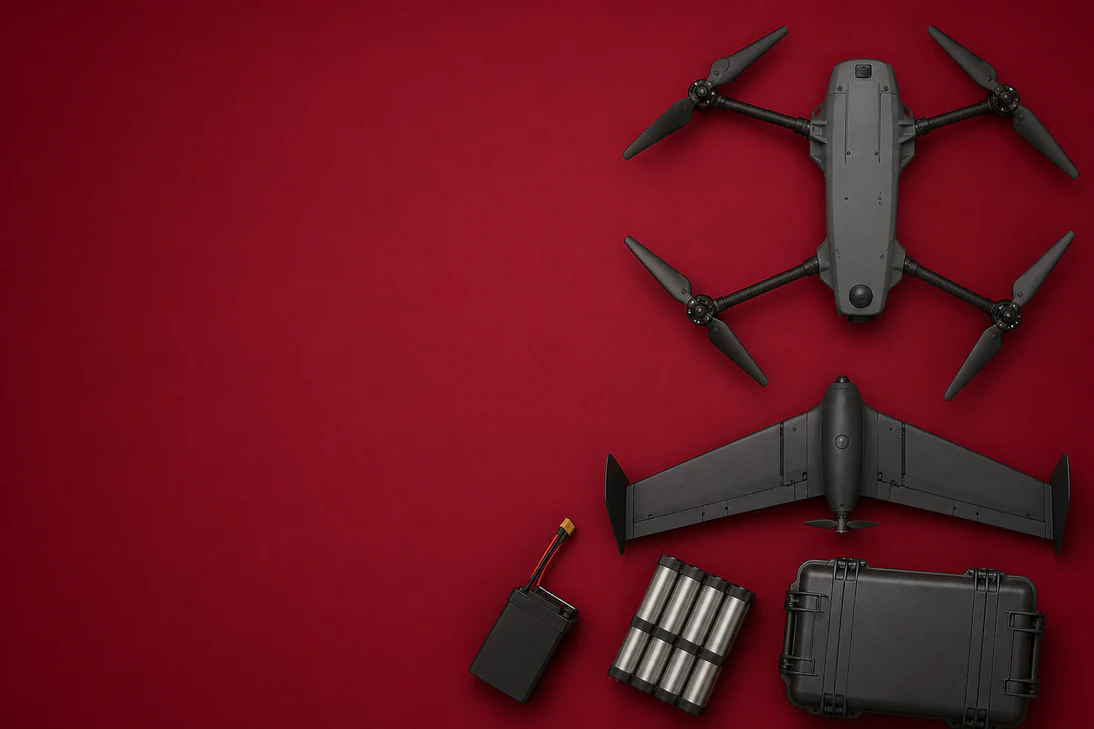
- Safesky platforms include the VTRX and Sentinel tactical drones
- No commercial supply commitment, contract value or minimum order disclosed
 Add us as a preferred source on Google
Safesky agreement creates a route to tactical drone supply
Li-S Energy (ASX:LIS) has found another potential proving ground for its lithium-sulfur technology, signing an agreement with Victorian defence company Safesky Systems to evaluate batteries for tactical uncrewed aerial systems. The arrangement targets Australian-made battery supply, but it is not yet a commercial contract: the two companies must first complete technical testing, while any eventual orders will also depend on Safesky's customer procurement decisions.
The initial work will assess Li-S Energy cells against the power and energy requirements of Safesky's platforms, followed by battery-pack construction, integration, ground testing and flight testing. Design evaluation is expected to start in the current quarter, with the company saying commercial supply will depend on the results.
Battery weight is the central performance test
For drone makers, the attraction is straightforward: a lighter battery can be exchanged for greater range, longer time airborne or a larger payload. Li-S Energy says its GEN3 cells are approaching 500Wh/kg, close to twice the energy density of conventional lithium-ion cells. Those figures are company claims and will now face platform-specific testing rather than remaining solely a cell-level proposition.
The agreement also brings the company's high-power Power Cell into a multi-rotor use case. Li-S Energy recently reported that its Power Cell had entered a defence testing pipeline, while an earlier flight demonstration saw a lithium-sulfur pack power the Pegasus drone for almost two hours across more than 75 kilometres. Safesky's evaluation will test whether the claimed performance translates into its own aircraft, operating conditions and mission requirements.
Australian supply chain is part of the proposition
Safesky's current platforms include the VTRX, a fixed-wing vertical-take-off-and-landing tactical mothership designed for intelligence, surveillance and reconnaissance and strike missions, and the Sentinel multirotor UAV for surveillance, training and target operations. The company operates in Australia and the United States and says its systems are compliant with US National Defense Authorization Act supply-chain requirements.
Li-S Energy says its cells are made in Geelong and contain no graphite, nickel, cobalt or manganese. That domestic manufacturing angle is important to the pitch being made to defence customers, for whom supply assurance and allied sourcing can matter alongside performance. It is also the part of the announcement that most clearly connects a battery specification to procurement requirements, although no customer order or financial value has been disclosed.
Testing now stands between collaboration and revenue
The announcement adds Safesky to Li-S Energy's growing list of Australian defence relationships, but the near-term milestone is technical rather than financial. The key evidence will be whether integrated packs meet the drones' power, endurance and payload requirements, and whether Safesky's customers ultimately choose to procure systems using the cells. Until then, the agreement is best read as a commercialisation pathway, not confirmed battery revenue.
Bottom Line?
The next meaningful signal will be successful integrated flight testing, followed by evidence that a Safesky customer is prepared to convert the evaluation into an order.
Questions in the middle?
- Can Li-S Energy's cells maintain their claimed energy and power advantages once integrated into Safesky battery packs?
- How will the batteries perform in the VTRX and Sentinel platforms during ground and flight testing?
- Will Safesky or its customers commit to commercial procurement after the evaluation phase?
Sources
1-
LIS and Safesky Systems sign collaboration agreement (opens in a new tab)Official market announcement. Li-S Energy Limited · 9 Oct 2026 · lis.energy