A$19.5 million loss leaves Talga reliant on further funding

5 min read
8:16am on Wednesday 14th of October, 2026 AEDT ~8am, 14th Oct, 26
Talga has moved Talnode-C from qualification into commercial shipments, completed key engineering work for its staged Vittangi project and secured major Swedish permits. But the battery materials developer remains loss-making, cash-burning and reliant on further funding to continue development.
- First commercial Talnode-C shipments under 3,000-tonne Nyobolt offtake
- A$13.35 million Swedish grant supports Vittangi engineering work
- A$19.5 million net loss and A$16.0 million operating cash outflow
- A$18.7 million cash at 30 June, with further funding required
- Commercial-scale production remains subject to financing and final investment decision
 Add us as a preferred source on Google
Commercial shipments arrive before commercial-scale production
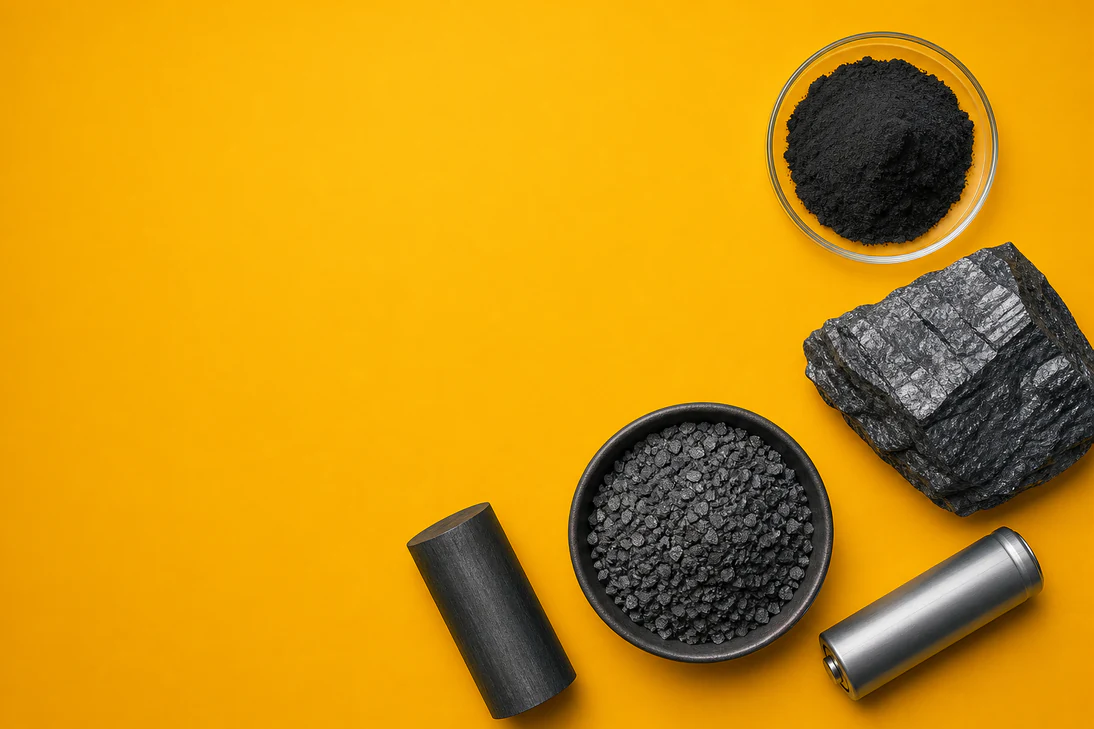
Talga Group Ltd (ASX:TLG) has reached its most tangible commercial milestone yet, moving Talnode-C battery anode material from customer qualification into commercial deliveries under its binding agreement with Nyobolt. The agreement covers 3,000 tonnes over four years, with supply initially coming from Talga’s EVA demonstration plant in Sweden while the proposed Vittangi Anode Project remains subject to funding and a final investment decision.
The company said it understands the deliveries represent the first natural graphite anode produced outside Asia to enter the global battery supply chain. That claim is framed by Talga’s own assessment, rather than an independently established market statistic, but it captures the strategic proposition behind the project: a European, traceable and Foreign Entity of Concern-free alternative in a market still dominated by Chinese supply. The milestone follows the first commercial Talnode-C shipment, which was reported after the financial year ended.
Vittangi engineering advances, but funding remains decisive
Talga completed the technical work packages for Front-End Engineering Design on time and on budget, supported by a A$13.35 million grant from the Swedish Energy Agency. Worley completed process, mechanical and piping work, Sweco delivered civil and structural design, and ABB handled electrical engineering. The work is now intended to inform the project’s financial evaluation and discussions with prospective financiers.
The revised strategy is deliberately staged: begin with an initial purification and coating line using existing Vittangi graphite stockpiles and recycled feedstock, then expand capacity as supply agreements are secured. Talga is advancing a proposed 19,500-tonne-per-year commercial project, but the annual report makes clear that execution contracts depend on funding, approvals and a final investment decision. All major mine and refinery permits are now described as approved and in force, removing one important development hurdle without resolving the capital requirement.
Revenue doubled, while losses and capital needs persist
The financial numbers show a company making progress commercially, but not yet generating anything close to the revenue needed to fund its ambitions. Product sales doubled to A$200,727 from A$106,168, while the net loss widened to A$19.5 million from A$16.7 million. Operating cash outflow improved to A$16.0 million from A$23.7 million, although capital expenditure more than doubled to A$11.3 million, largely because of the Industriklivet project.
Talga ended June with A$18.7 million in cash and cash equivalents, but A$7.5 million was restricted for approved grant expenditure. The directors said the group’s cash at the date of the report was approximately A$10.8 million, including A$5.9 million restricted under the grant. Ernst & Young issued an unmodified audit opinion but highlighted a material uncertainty related to going concern: management’s forecasts require additional debt and/or equity funding to progress the business and Vittangi.
Customer pipeline is promising, not yet bankable
Talga reported more than 20 customer validation programs targeting premium performance applications, alongside expanded activity in Japan, Europe and the United States. It also disclosed four post-year-end non-binding letters of intent, including the EAS Batteries supply proposal, with binding terms and definitive agreements still to be negotiated. The report expressly warns that these arrangements do not guarantee future volumes, pricing or purchase commitments.
The company also raised A$22.0 million before costs through an institutional placement and share purchase plan during the year, issuing 53.1 million shares at A$0.41. That capital, together with the Swedish grant, helped fund the year’s development work, but it did not remove the need for further financing. Talga says it has a conditional €150 million European Investment Bank facility and a €70 million European Commission Innovation Fund grant, while documentation and conditions attached to the debt facility remain unresolved.
Resource base supports the story, not the cash balance
Talga’s 30 June resource statement reported 70.8 million tonnes of graphite resources grading 18.8%, including 35.0 million tonnes at Vittangi grading 23.8%. Its probable Vittangi ore reserve was 2.33 million tonnes at 22.9% graphite, containing 0.53 million tonnes of graphite. The reserve changes were described as minor, following revised pit optimisation, mine design and production scheduling.
Intellectual property and recycled graphite development add to the strategic pitch, with 34 granted patents across 16 active families and the Talnode-R recycled product moving through pilot and partnership work. Yet the immediate investment question is narrower than the long-term resource potential: can Talga convert qualification programs and non-binding interest into binding contracts and financing before its unrestricted cash position becomes the constraint on Vittangi?
Bottom Line?
Commercial shipments validate Talga’s production pathway, but the next value test is securing enough funding and binding demand to move from demonstration volumes to Vittangi construction.
Questions in the middle?
- How quickly can Talga convert its Japanese and German letters of intent into binding agreements with bankable volumes?
- Will the conditional European Investment Bank facility become binding before additional equity funding is required?
- Can the staged Vittangi plan reach final investment decision without materially increasing dilution or project costs?
Sources
1-
Annual Report to shareholders (opens in a new tab)Verified company source. Talga Group Ltd · 14 Oct 2026 · investors.talgagroup.com