Hancock backs White Cliff’s next Rae copper drilling push

White Cliff Minerals shareholders have approved an A$8.77 million placement to Hancock Prospecting, giving the private company an expected 13.5% stake and funding a faster exploration campaign at Rae. The capital is aimed at advancing Danvers 1 towards a maiden resource while testing a much larger copper system across Nunavut.
- A$8.77 million placement approved at A$0.017 per share
- Hancock Prospecting expected to hold approximately 13.5% of White Cliff
- Funds directed to Danvers resource definition and regional drilling
- Placement completion remains conditional on ASX quotation approval
- Exploration Target and maiden resource milestones remain unproven
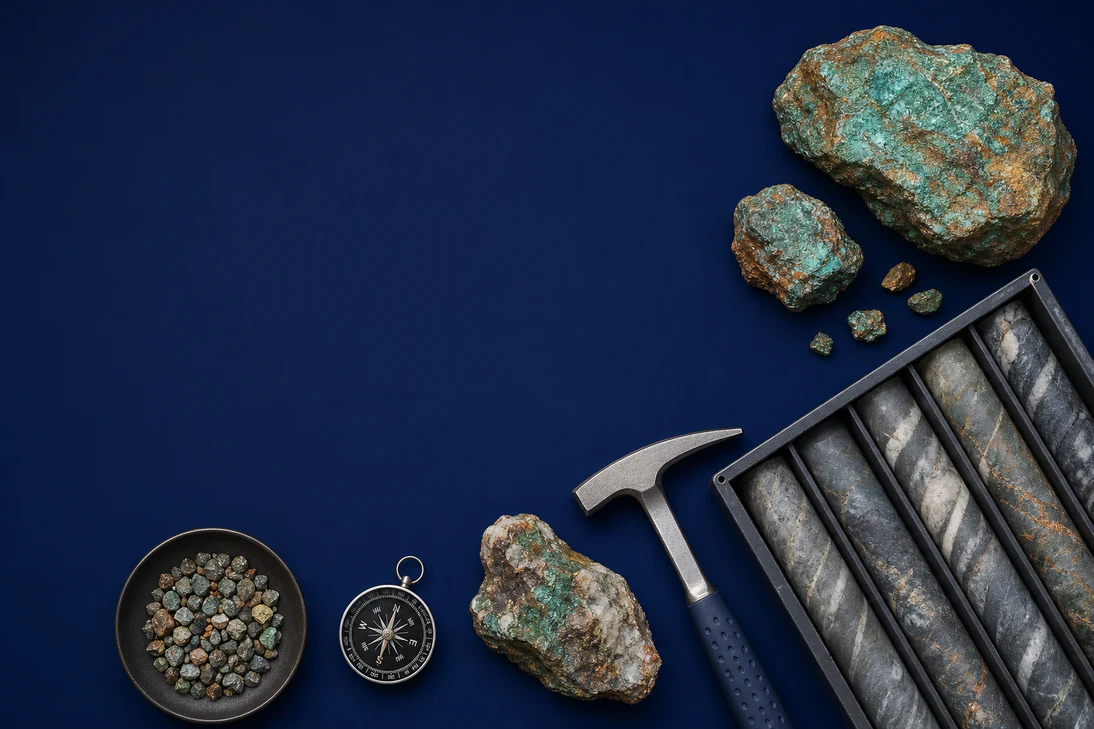
 Add us as a preferred source on Google
Hancock secures strategic position in Rae copper project
White Cliff Minerals Limited (ASX:WCN) has won shareholder approval for an A$8.77 million strategic placement to Hancock Prospecting, turning one of Australia’s best-known private companies into an expected 13.5% shareholder. The issue of 515,791,601 shares at A$0.017 each is designed to give White Cliff more room to accelerate drilling across its Rae Copper Project in Nunavut, Canada.
The deal is not quite complete: settlement is expected around 22 October and remains conditional on ASX not refusing official quotation of the new shares. Once issued, the placement will materially expand White Cliff’s share count, while Hancock gains exposure to a copper exploration story that the company says is entering a more intensive drilling phase.
Danvers 1 moves towards resource definition
The immediate priority is Danvers 1, where White Cliff plans to deploy a diamond drill rig to expand the mineralised envelope and work towards an Exploration Target and maiden Mineral Resource Estimate. That program builds on the company’s recent Danvers 1 sulphide discovery, which identified a previously untested parallel structure mapped over 2.8 kilometres, although assays from those holes were still pending at the time of that earlier report.
Funding will also support step-out drilling at Danvers 2, Danvers 3 and Danvers 4, alongside follow-up work at regional targets named Thor, Rocket, Vision and Stark. White Cliff says a review of regional datasets has identified geophysical signatures at those prospects comparable to Danvers, but that comparison is a targeting rationale rather than evidence that equivalent copper mineralisation has been established.
Airborne survey expands the exploration test
Beyond the Danvers system, the company is running airborne magnetic, gravity and radiometric surveys across the Rae Group-Husky Creek Formation contact over a 72-kilometre strike length. Till sampling is underway at Thor and Rocket, while downhole electromagnetic and ground-based geophysical equipment is expected to be mobilised to refine targets around known mineralisation.
The broader program includes sediment-hosted copper targets, including a system the company says has been traced across an expanding footprint and is now being tested towards stronger alteration and higher-grade, bornite-rich zones. Those plans remain exploration work: the proposed resource milestones and regional targets may not translate into an economic mineral resource, and the company’s own figure notes that selective surface sampling may not be representative.
Capital removes an immediate funding question, not the exploration risk
The placement gives White Cliff dedicated capital to pursue a larger and more technically demanding drilling campaign. It also follows the company’s earlier proposed Hancock placement, which was reported alongside an A$18.8 million FY26 loss, A$14.5 million operating cash outflow and an auditor-highlighted going-concern uncertainty; today’s approval resolves the shareholder vote on that proposal, but does not guarantee exploration success.
The next hard evidence will come from the drill bit and the laboratory. Investors will need to separate visible sulphides, geophysical anomalies and exploration targets from assay-backed continuity, resource definition and ultimately an economic case for development.
Bottom Line?
Hancock’s funding clears a major hurdle for Rae’s next drilling phase, but the investment thesis now depends on assays, continuity and whether Danvers can support a credible resource.
Questions in the middle?
- When will the placement complete and the new shares receive ASX quotation?
- Can Danvers 1 deliver the Exploration Target and maiden resource milestones targeted by the accelerated drilling program?
- Will step-out drilling and regional geophysics establish continuity and scale beyond the currently identified mineralised zones?
Sources
1-
Shareholders Approve Hancock Prospecting Investment (opens in a new tab)Verified company source. White Cliff Minerals Limited · 19 Oct 2026 · relait.wcminerals.com.au