Avira completes Mt Cattlin drilling as Sirdar assays loom

Avira Resources has completed its 4,234-metre Mt Cattlin drilling campaign, with assays still pending from first-pass holes at the historically high-grade Sirdar and Ellendale prospects. The exploration momentum comes alongside $860,000 in cash and an estimated 1.45 quarters of funding.
- 4,234 metres drilled across 37 Phase 1 RC holes
- Maori Queen returned 7m at 6.11 g/t gold
- Sirdar and Ellendale assays remain pending
- Maori Queen mineralisation confirmed over 650 metres
- $860,000 cash and 1.45 quarters of estimated funding
 Add us as a preferred source on Google
Mt Cattlin drilling reaches its next assay point
Avira Resources Limited (ASX:AVW) has finished the fieldwork that could determine the next leg of its Mt Cattlin gold story, completing 37 RC holes for 4,234 metres across Maori Queen, Plantagenet, Sirdar and Ellendale. Samples have now been submitted for assay, leaving the market with a familiar junior-miner tension: the drilling is done, but the most consequential results are still to come.
The completed campaign follows the company’s September drilling restart after a winter pause caused by wet conditions. During the September quarter, Avira received results from all 18 holes drilled in the first tranche at Maori Queen and Plantagenet, including 7 metres at 6.11 grams per tonne gold from 105 metres at Maori Queen, with 2 metres at 15.1 g/t, and 8 metres at 2.77 g/t at Plantagenet, including 2 metres at 9.68 g/t.
Sirdar drilling tests the project’s historical high grades
The next results will come from the prospects that carry the greatest geological promise, at least on the historical record. Avira describes Sirdar as having the highest grades and largest mineralised footprint in the project area, citing historical intersections of 1 metre at 131.24 g/t and 6 metres at 50.07 g/t. Ellendale has also produced historical intersections of 10 metres at 2.70 g/t and 13 metres at 1.51 g/t. Both prospects have now been tested by Avira for the first time.
At Maori Queen, the company says mineralisation has been confirmed over a 650-metre strike length and remains open at depth. That result extends the earlier 7m at 6.11 g/t intercept, but the reported assays in this quarterly are largely results already announced during August rather than a new batch of discoveries. Avira is reviewing a potential Phase 2 RC program across the broader New Zealand Trend corridor, with approvals already in place, and is targeting a maiden Mineral Resource Estimate in the first quarter of 2027.
Cash runway narrows as exploration continues
The operational progress is set against a material funding constraint. Avira ended the quarter with $860,000 in cash after using $132,000 on operating activities and $460,000 on exploration and evaluation. On the company’s reported spending rate, that equates to an estimated 1.45 quarters of funding, with no financing facilities available at quarter end.
Avira says it intends to manage cash flows until a capital raising is completed, but also states that no steps had been taken to raise further funds as at quarter end. The board said it would monitor the cash position and raise funds when it considered the timing appropriate, pointing to available ASX placement capacity and a previous $2.5 million equity raising in the December 2025 quarter. That leaves the pending assays and any move towards Phase 2 drilling competing for attention with the question of how the program will be financed.
Portfolio narrows around priority exploration ground
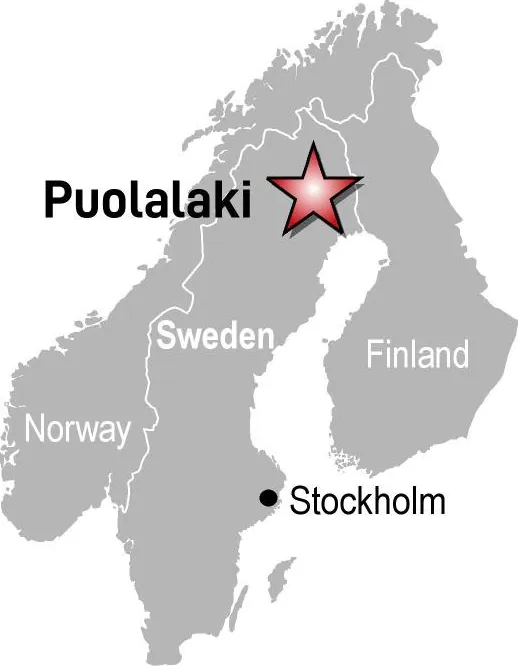
Avira also surrendered 75 lower-priority blocks at its Tangadee copper-zinc and nickel-copper project after a desktop review of historical aeromagnetic and VTEM data. The retained ground will be assessed through moving-loop electromagnetic surveys before any drill testing. In Sweden, the company’s interest in Puolalaki has fallen to 49% after it decided not to proceed with Stage 3 of the earn-in, with the parties now considering ways to advance the project.
Bottom Line?
The next assay releases from Sirdar and Ellendale may sharpen Mt Cattlin’s exploration case, but Avira’s 1.45-quarter funding estimate makes the timing and terms of any capital raising an equally important catalyst.
Questions in the middle?
- Will Sirdar’s first Avira drilling reproduce the exceptional historical grades cited in the report?
- How will pending assays affect the scope and timing of the approved Phase 2 program?
- When will Avira seek additional capital, and how much exploration runway will that funding provide?
Sources
1-
Quarterly Activities/Appendix 5B Cash Flow Report (opens in a new tab)Verified source. Avira Resources Ltd · 26 Oct 2026