Cochlear finds a new growth path through Nexa and adult hearing care

Cochlear has reaffirmed FY27 underlying net profit guidance of $330 million to $350 million after a disappointing FY26, while pointing to strong Nexa adoption and progress on fully implantable hearing technology. The company is cutting fixed costs and expanding medical referral pathways as it seeks to convert a large pool of untreated adult hearing loss into growth.
- FY26 revenue rose 2% in constant currency to $2.3 billion
- Underlying net profit reached $322 million, below initial expectations
- FY27 underlying net profit guidance reaffirmed at $330 million to $350 million
- Nexa represented more than 95% of developed-market implant sales by June
- Pivotal studies completed for drug-eluting electrode and totally implantable implant
 Add us as a preferred source on Google
Cochlear Reaffirms FY27 Profit Target
Cochlear Limited (ASX:COH) is asking shareholders to look past a bruising FY26 and focus on execution. At its annual general meeting, the hearing-implant maker reaffirmed underlying net profit guidance of $330 million to $350 million for FY27, after reporting FY26 revenue growth of 2% in constant currency to $2.3 billion and underlying net profit of $322 million.
That result was below the expectations set at the start of the year. Cochlear attributed the weaker performance to healthcare capacity constraints, industrial action in Europe, US insurance delays, reimbursement changes in China, disruption in the Middle East and foreign exchange headwinds. Revenue growth improved in the second half, but the company acknowledged that slower market growth in several developed markets persisted for longer than expected.
Nexa Adoption Reaches Developed-Market Majority
The strongest operating signal in the addresses was the uptake of the Nucleus Nexa System. By June, the Nexa implant accounted for more than 95% of implant sales in developed markets, alongside an average 3% price increase. That adoption marks a sharp contrast with the earlier Nexa rollout delays, which were linked to slower contract renewals and registration hurdles during the first half.
Cochlear said Nexa is already improving daily use, while its programmable implant, upgradeable firmware and SmartSync capabilities provide the platform for future product development. The company is researching simpler activation, richer measures of neural health and more personalised stimulation, although the AGM addresses did not quantify the commercial opportunity from those features.
Fully Implantable System Moves Through Pivotal Studies
The product pipeline also moved forward. Cochlear completed pivotal studies for a drug-eluting electrode designed to release dexamethasone and potentially reduce inflammation and fibrosis after surgery. Results are still being analysed, and the next regulatory steps have not yet been finalised.
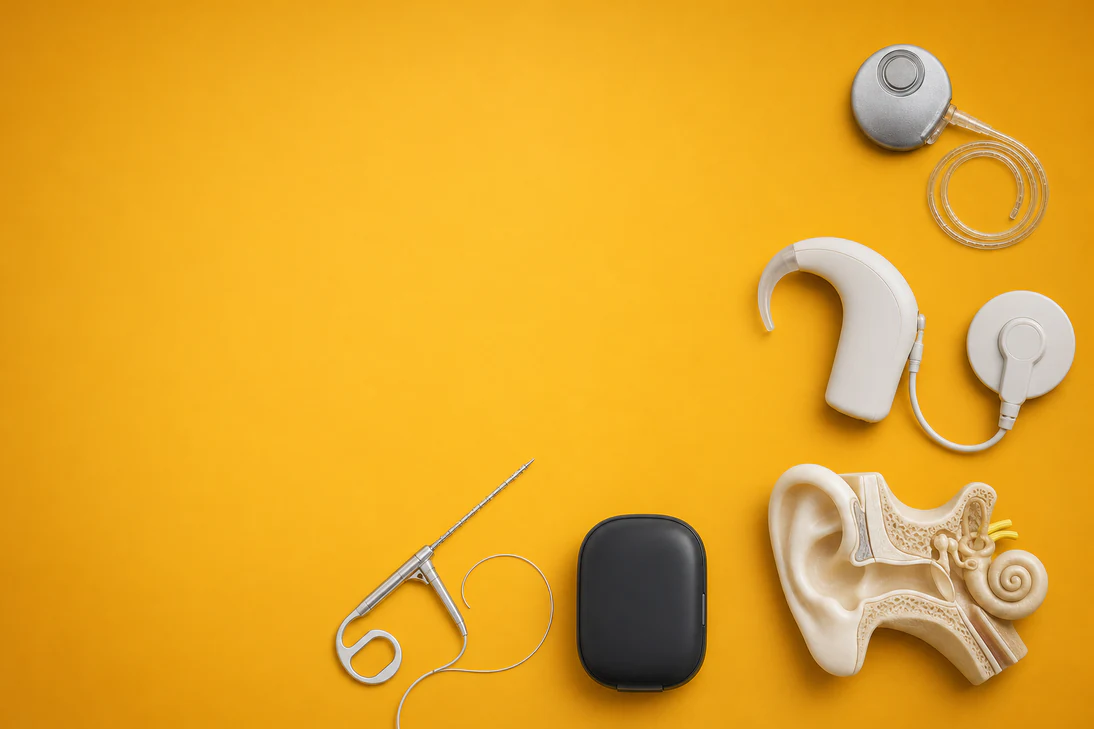
Recruitment has also been completed for pivotal studies of the totally implantable cochlear implant, or TICI. Built on the Nexa platform, the system is designed to provide hearing without an external sound processor. Cochlear said the studies recruited significantly faster than previous implant studies, which it described as an early sign of patient interest. That does not establish regulatory approval or commercial success, and the company still needs to demonstrate hearing performance, reliability and manufacturability.
Cost Reshaping Meets Adult Referral Strategy
The company is responding to FY26 by lowering fixed costs as a share of revenue, sharpening investment priorities and using shared technology platforms to create a more scalable operating model. The addresses did not disclose the quantum or timing of those savings, leaving execution a central test for the reaffirmed FY27 target.
Cochlear is simultaneously trying to expand the adult market rather than simply compete for patients already considering an implant. It said fewer than 5% of eligible adults receive a cochlear implant and is implementing clinical practice guidelines across 25 countries, while expanding direct-to-professional referral capability in the US, Germany, the UK and Australia. Early results included stronger referral activity in Australian private hospitals and a significant increase in quality referrals in the UK.
Board capability is being adjusted alongside the operating reset. Professor Ian Meredith AM, formerly Boston Scientific's chief medical officer, is due to join as an independent non-executive director on 1 December, while Bruce Robinson is standing for election to support the transition. For shareholders, the more immediate measure will be whether cost discipline and referral initiatives can lift performance without weakening the R&D investment Cochlear says is essential to its technology lead.
Bottom Line?
Cochlear has preserved its FY27 profit target, but the next proof point is whether cost reductions and medical referral growth can offset softer market conditions while the pipeline remains subject to clinical and regulatory risk.
Questions in the middle?
- Can the fixed-cost reset deliver enough operating leverage to support the $330 million to $350 million FY27 profit range?
- Will expanded clinician-led referral pathways materially increase adult implant volumes in the priority markets?
- When will Cochlear provide regulatory clarity and substantive study results for the drug-eluting electrode and TICI programs?
Sources
1-
2026 AGM Chair and CEO & President Addresses (opens in a new tab)Official market announcement. Cochlear Limited · 26 Oct 2026 · cochlear.com