TG Metals finds more high-grade lithium at Burmeister

TG Metals has reported high-grade lithium intercepts at its Burmeister deposit, including 12.35 metres at 1.53% Li2O and individual intervals above 2%. Six composite samples also exceeded the company’s nominal direct shipping ore specification, although the project remains at an inferred-resource and pre-feasibility stage.
- 12.35m at 1.53% Li2O from diamond hole DSO002
- Individual intervals above 2% Li2O recorded
- Six composites exceeded the nominal 1.2% Li2O DSO specification
- Mineralised pegmatite extended below the existing conceptual pit shell
- Mining lease application and water exploration work progressing
 Add us as a preferred source on Google
Burmeister drilling delivers high-grade lithium intervals
TG Metals Limited (ASX:TG6) has strengthened the geological case for a direct shipping ore operation at its Burmeister lithium deposit, reporting a 12.35-metre intersection grading 1.53% Li2O from diamond hole DSO002. The same hole also returned shorter intervals at 2.37%, 1.63% and 1.64% Li2O, with several individual one-metre sections grading above 2%.
The results came from five diamond holes totalling 759.9 metres. Other highlighted intersections included 5 metres at 1.24% Li2O in DSO004 and 5 metres at 1.04% in DSO005. The reported widths are downhole measurements and are only approximate to true widths, an important qualification when assessing the potential mining shape.
Six samples clear the stated DSO benchmark
The drilling was designed not only to infill the deposit, but also to produce representative core for potential offtake and financing partners. TG Metals said all six composite samples exceeded its nominal 1.2% Li2O direct shipping ore specification without ore sorting, and has dispatched the samples for independent product and downstream-processing assessment.
That work builds on the maiden Burmeister resource, which reported 6.71 million tonnes at 1.18% Li2O. The resource is entirely classified as Inferred, however, and the company has not declared a Mineral Reserve. The latest drilling therefore supports the existing geological interpretation rather than establishing an economic operation.
Mineralisation extends below the conceptual pit shell
TG Metals said mineralised pegmatite was intercepted down dip of the pit shell used for the August resource estimate. It said the results could support an expansion of the resource through further infill drilling, while also identifying exploration upside at depth.
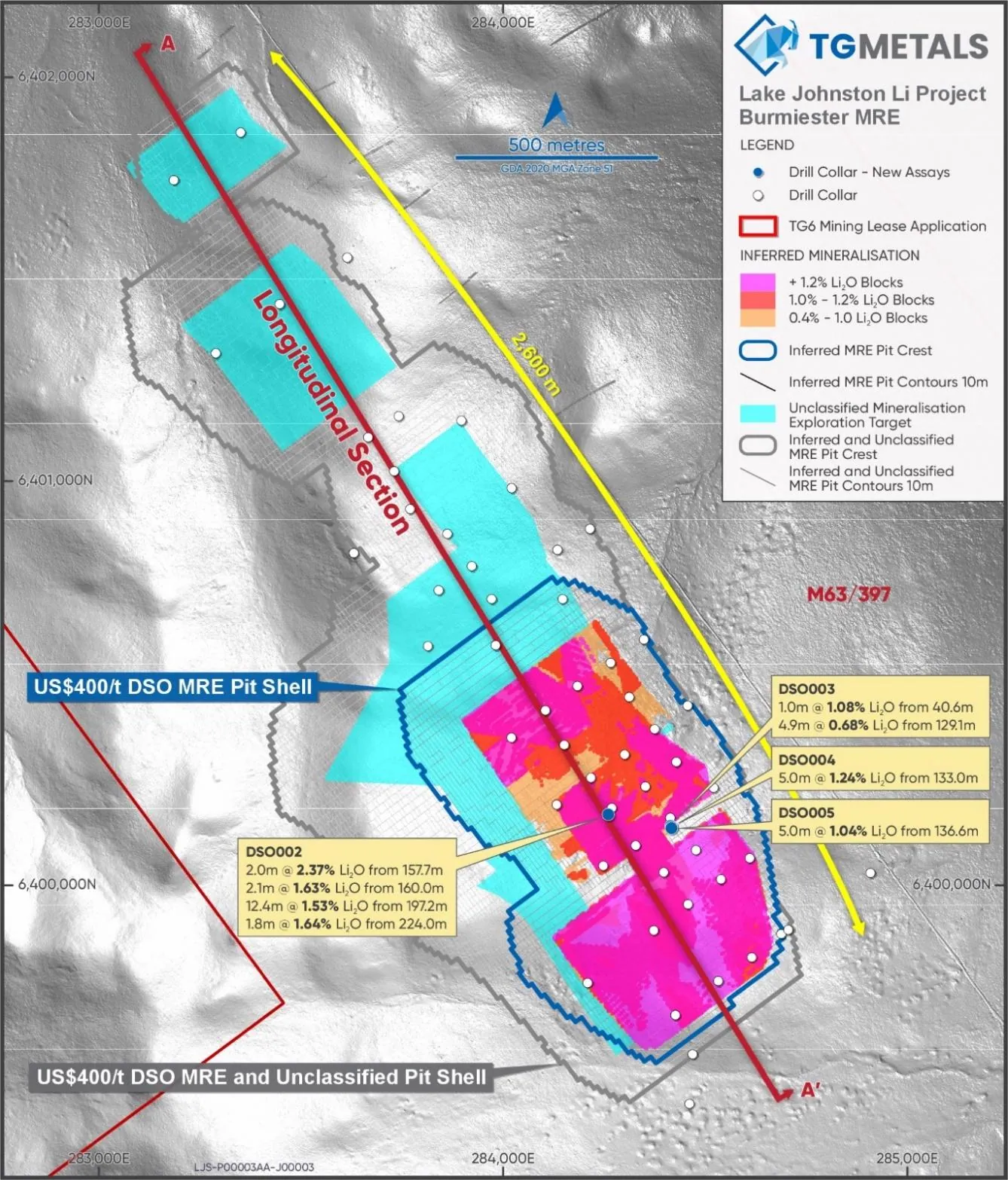
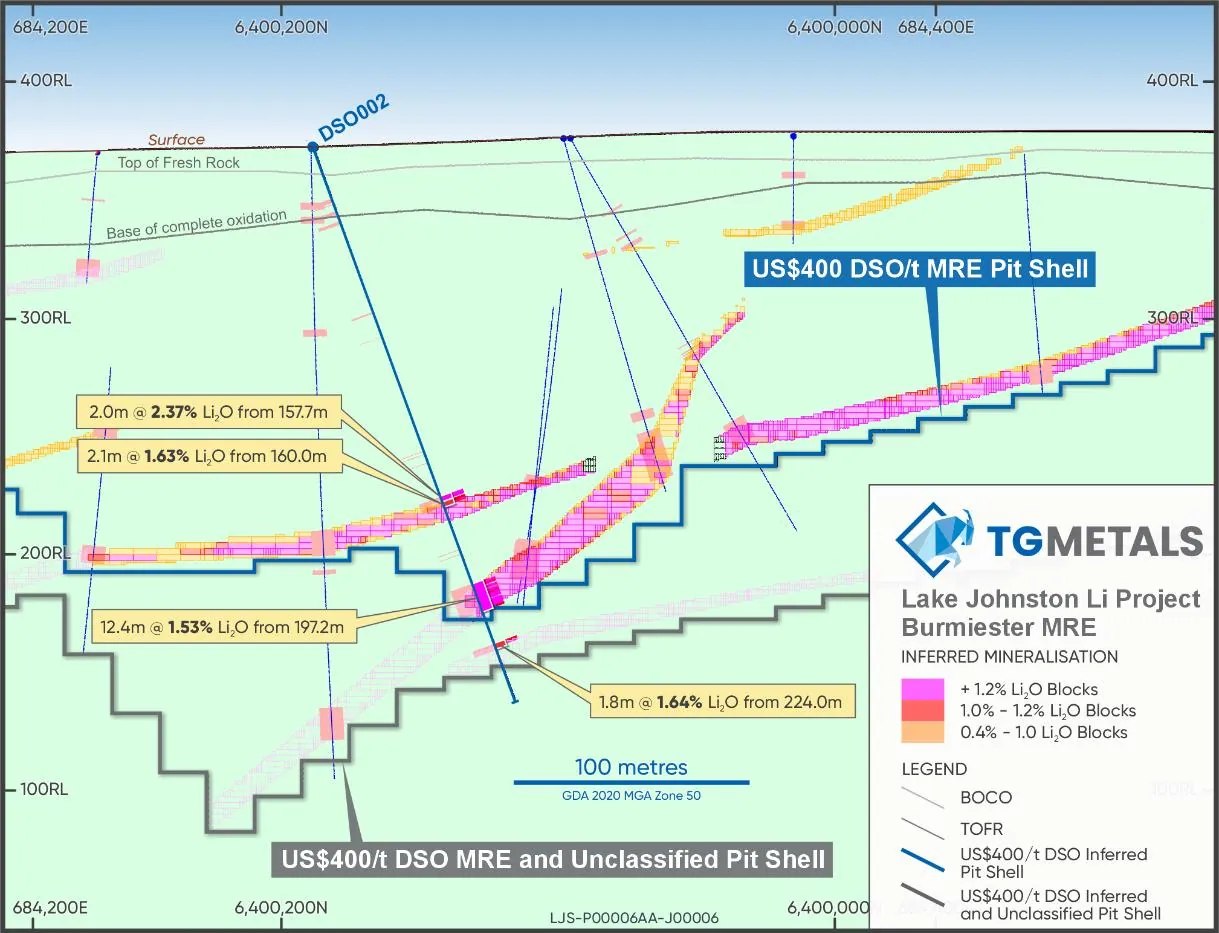
There is still some mine-design work to do. The oxidation boundary proved variable: spodumene was preserved in some upper pegmatite, while other sections were depleted. The company said closer-spaced shallow drilling will be needed to define the boundary for grade control and pit planning. A shallow 54.8-metre hole, DSO006, encountered weathered and depleted pegmatite.
Development work moves towards studies and permitting
Management said the project remains focused on an open-pit DSO model, with feasibility studies and permitting progressing alongside commercial discussions. TG Metals CEO David Selfe said the company was targeting an operation with lower capital requirements and simpler mining, while noting that product assessments and financing discussions are still under way (ASX:TG6).
The mining lease application for Burmeister is progressing, a water exploration licence has been granted, and further flora, fauna and Aboriginal heritage surveys are planned along access routes. Those steps move the project beyond geology, but they do not yet resolve the central questions of mine economics, funding, approvals or product acceptance.
Bottom Line?
The drilling improves the DSO story, but the next valuation test is whether independent product work and further resource definition can turn high-grade intercepts into a financeable mine plan.
Questions in the middle?
- Will independent testing confirm that the composite samples meet potential customers’ downstream-processing and product requirements?
- How much of the pegmatite below the current pit shell can be converted from Inferred material into a higher-confidence resource?
- Can TG Metals complete the required drilling, studies, surveys and permitting before its development funding requirements become clearer?
Sources
1-
High Grade Lithium Drill Results at Lake Johnston (opens in a new tab)Verified company source. TG Metals Limited · 26 Oct 2026 · investors.tgmetals.com.au