Antipa's Minyari route clears a key hurdle as Tim's Dome expands

Antipa Minerals has selected a gold-and-copper processing pathway for its Minyari Dome project, bringing the pre-feasibility study closer to release in November. At the same time, drilling expanded Tim's Dome mineralisation across 2.2km, while quarterly exploration spending reduced cash to A$28.0 million.
- Preferred Minyari route combines CIL gold doré with copper flotation
- PFS release now targeted for November 2026
- Tim's Dome mineralisation expanded to approximately 2.2km of strike
- A$11.5 million spent on exploration and evaluation during the quarter
- Cash balance of A$28.0 million with no debt

 Add us as a preferred source on Google
Minyari PFS settles on a two-product processing route
Antipa Minerals Ltd (ASX:AZY) has moved its Minyari Dome development a step closer to an investment-grade test, selecting a processing configuration that would produce gold doré through conventional carbon-in-leach treatment before floating copper from the primary ore residue. The company says the route was chosen after assessing five processing configurations alongside alternative open-pit and underground mine schedules.
The decision does not yet establish the project's capital cost, operating cost, production profile or economics. Those figures are still being worked into the final pre-feasibility study, now expected in November 2026 after additional mine scheduling and financial modelling. The company says the preferred schedule is being refined to bring higher-grade material into production earlier, reduce pre-production waste movement and improve the balance between capital deployment, project payback, net present value and internal rate of return.
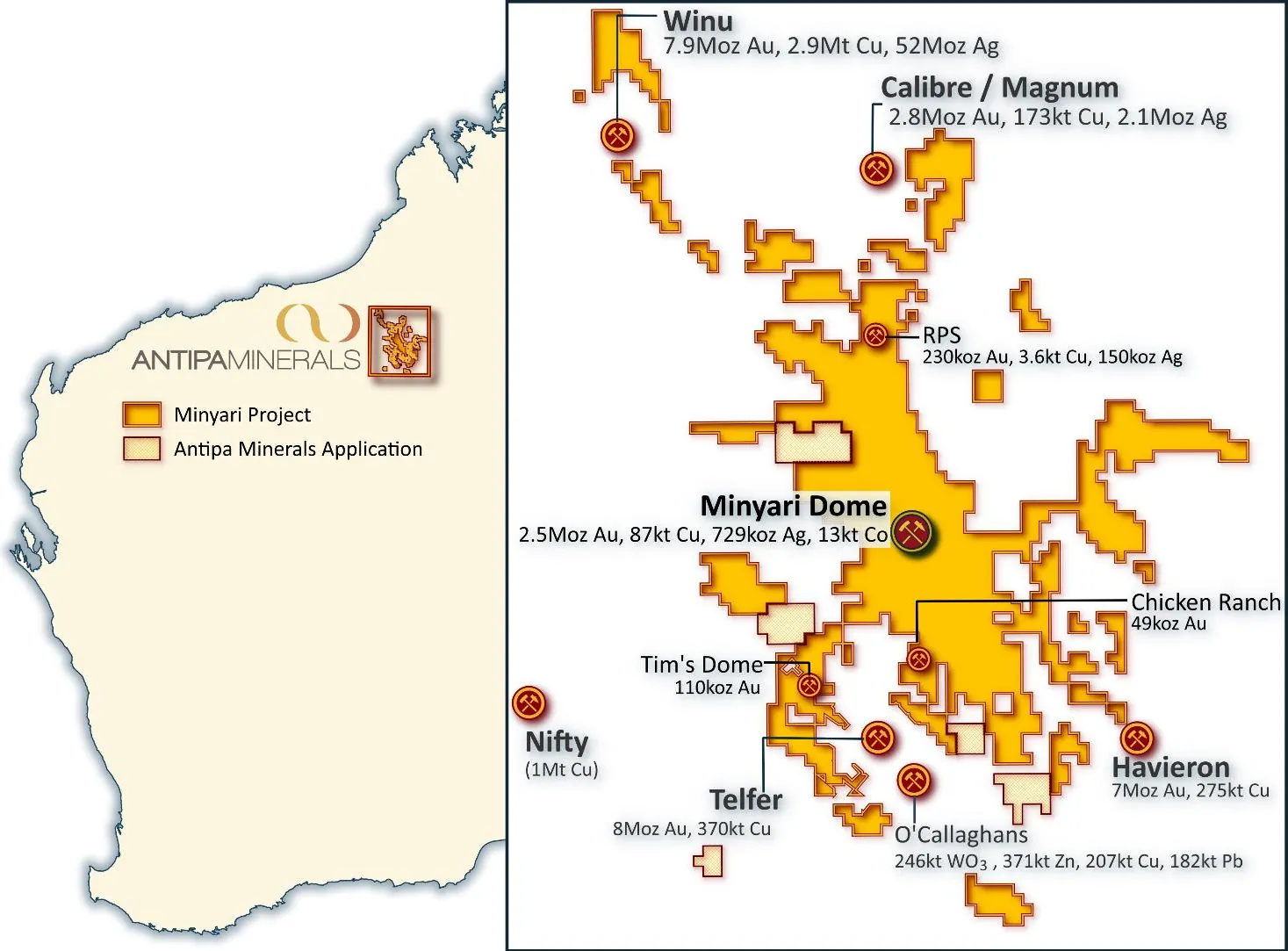
The route follows the September PFS configuration decision, when Antipa had already identified the gold-doré and copper-concentrate pathway but had not finalised the supporting financial model. Minyari Dome sits within Antipa's 100%-owned 3,840-square-kilometre Minyari Project, which the company reports contains 69 million tonnes at 1.33 grams per tonne gold, or 3.6 million ounces of gold equivalent. Those resources are not a development forecast, and the November study will determine how much of that inventory can support a practical standalone operation.
Tim's Dome drilling widens the exploration prize
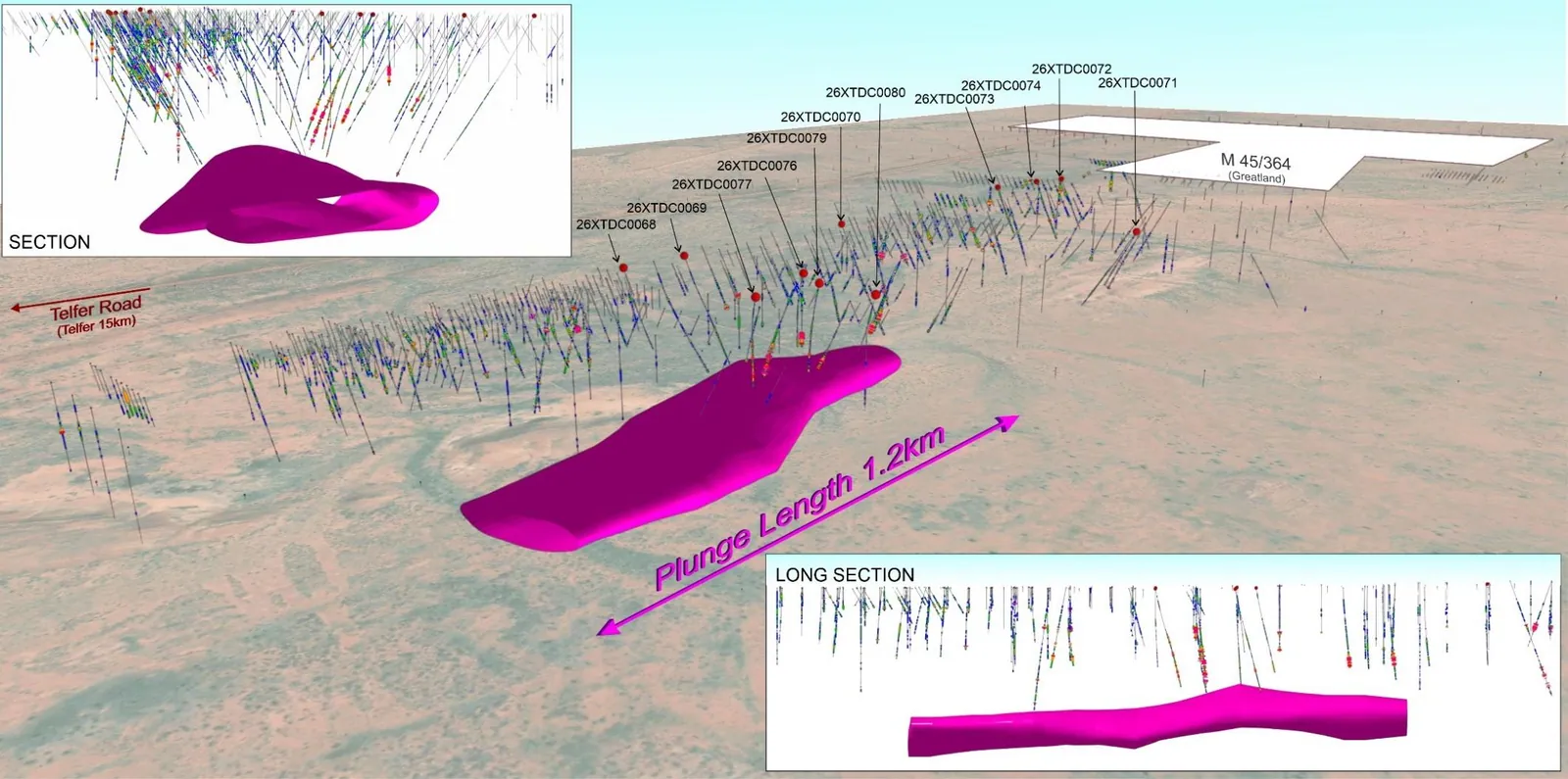
Exploration supplied the quarter's other major marker. Antipa expanded gold-copper-lead-silver mineralisation at Tim's Dome from roughly 500 metres of strike in early August to approximately 2.2 kilometres by September. Reported intersections included 10 metres at 1.5 grams per tonne gold, 26 metres at 0.4 grams per tonne gold and 0.23% copper, and a shallow 3-metre interval at 2.9 grams per tonne gold.
The mineralisation lies above and beside a large airborne electromagnetic conductor measuring about 1.2 kilometres long and between 200 and 470 metres wide. Surface diamond drilling has begun to test the conductor directly, but the company cautions that its nature and economic significance remain unestablished. The programme follows the Tim's Dome diamond drilling campaign, which earlier expanded the surrounding mineralised footprint and sharpened attention on the untested conductor.
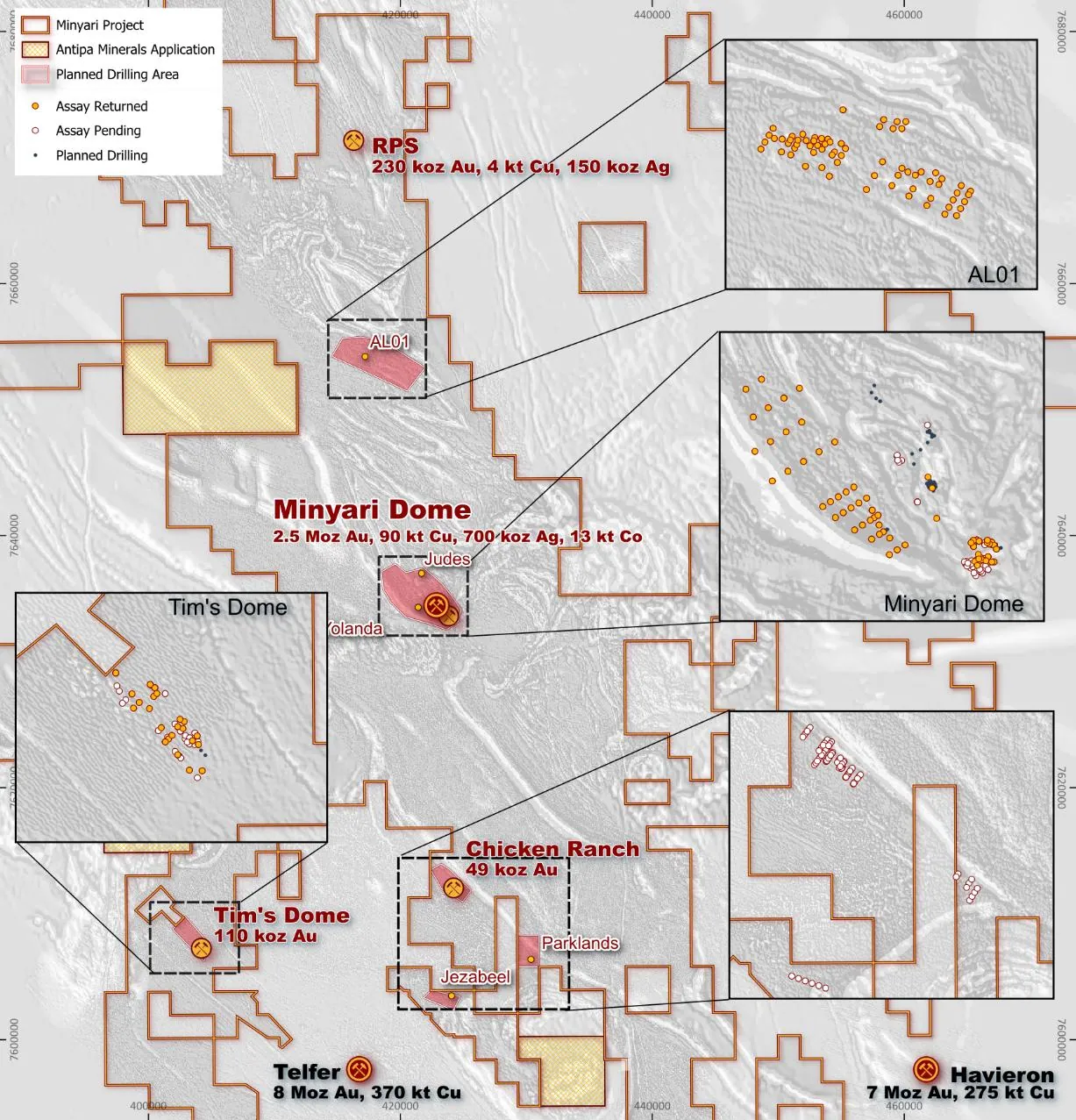
Elsewhere, Fiama North mineralisation was extended to approximately 160 metres of strike and 200 metres below surface, remaining open in all directions. Drilling also extended zones at GEO-01, while air-core work outlined a coherent two-kilometre gold-copper anomaly at AL01 and several smaller anomalies along the Yolanda Trend. These are targets for follow-up work, not yet defined resources.
Exploration spend brings cash balance into focus
Antipa spent A$11.5 million on exploration and evaluation during the quarter, with a further A$705,000 used in operating activities. Option exercises supplied A$1.216 million, leaving cash and cash equivalents at A$28.013 million at 30 September, down from A$39.145 million three months earlier. The company had no debt.
On the Appendix 5B calculation, available funding represented approximately 2.3 quarters of relevant outgoings at the quarter-end spending rate. That measure is not a forecast of future expenditure, but it highlights the tension between an active drilling campaign, the cost of completing the PFS and the funding decisions that may follow if the project advances into later-stage feasibility and execution planning.
November study becomes the next decisive test
Antipa's immediate catalysts are the November PFS, assays from Tim's Dome diamond drilling and outstanding results from Minyari resource-growth drilling. The PFS will show whether the selected two-product route can translate encouraging metallurgy and a substantial resource base into a project with manageable capital demands and a credible mine schedule. Until those numbers arrive, the story remains one of technical progress and exploration upside rather than a confirmed mine development.
Bottom Line?
The November PFS must turn a preferred processing route and sizeable resource into credible capital, operating and funding numbers.
Questions in the middle?
- What capital cost and production profile will the November PFS assign to the gold-and-copper configuration?
- Will diamond drilling confirm that Tim's Dome's large AEM conductor hosts economic mineralisation?
- How will Antipa fund continued exploration and later-stage development work if the current spending rate persists?
Sources
1-
Quarterly Activities/Appendix 5B Cash Flow Report (opens in a new tab)Official market announcement. Antipa Minerals Limited · 27 Oct 2026 · antipaminerals.com.au