Argosy uncovers deeper upside beneath 790,000-tonne Rincon resource

Argosy Minerals has upgraded the JORC mineral resource at its Rincon Lithium Project to 790,000 tonnes of lithium carbonate equivalent, with 600,000 tonnes classified as Indicated. A separate conceptual Exploration Target of up to 1.03 million tonnes has been identified below the resource, adding potential upside ahead of further drilling and the project’s Definitive Feasibility Study.
- Total Rincon MRE rises to 790,000 tonnes of lithium carbonate equivalent
- 600,000 tonnes Indicated and 190,000 tonnes Inferred
- Exploration Target ranges from 390,000 to 1.03 million tonnes
- Upgrade supports wellfield design, Ore Reserve work and the DFS
- Deeper aquifer remains open and requires further drilling to test
 Add us as a preferred source on Google
Rincon Resource Reaches 790,000 Tonnes
Argosy Minerals Limited (ASX:AGY) has put a larger resource base behind its proposed Rincon lithium development in Argentina, lifting the project’s total JORC 2012 Mineral Resource Estimate to 790,000 tonnes of lithium carbonate equivalent. The estimate contains 600,000 tonnes in the Indicated category and 190,000 tonnes classified as Inferred.
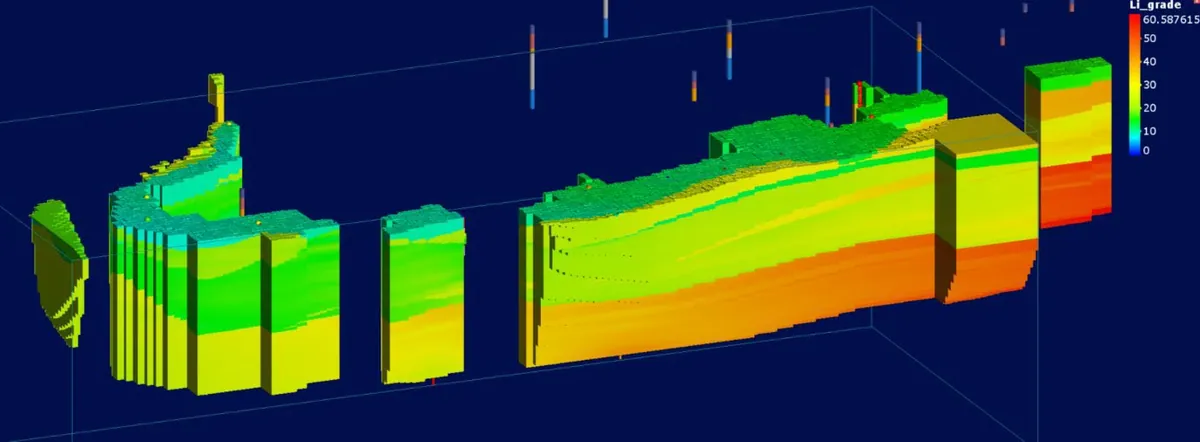
The resource is contained in an estimated 0.428 cubic kilometres of brine, with an average lithium concentration of 348 milligrams per litre. The Indicated portion carries an average concentration of 332mg/L, while the Inferred component is higher at 411mg/L. Those figures describe lithium-bearing brine in the aquifer, rather than a conventional hard-rock orebody.
Deeper Aquifer Adds Conceptual Upside
The more speculative part of the announcement sits beneath the upgraded resource. Argosy has defined an Exploration Target ranging from 390,000 to 1.03 million tonnes of lithium carbonate equivalent, based on lithium concentrations between 377mg/L and 425mg/L. The target occupies a modelled aquifer volume of 3.27 cubic kilometres and is separate from, and excluded from, the Mineral Resource Estimate.
That distinction matters. The Exploration Target is conceptual, based on extrapolation below the classified resource, and the company cautions that further exploration may not result in an additional Mineral Resource. Argosy says the basin remains open at depth, with the current three-dimensional model extending to 600 metres for modelling purposes rather than establishing a defined resource boundary.
Resource Upgrade Feeds Rincon DFS
The resource work forms part of a broader hydrogeological program intended to support production wellfield design, a JORC Ore Reserve and the Definitive Feasibility Study for a proposed 12,000-tonne-per-year Rincon operation. The update arrives after the company’s Rincon crystallisation engineering milestone, which defined the process configuration, equipment sizing and plant layout for the evaporation and crystallisation circuit.
Argosy says the updated resource will be used to prepare the wellfield design and Ore Reserve. The Competent Person’s assessment also states that pumping-test results indicate the brine could be extracted through a conventional production wellfield, while its chemistry may be suitable for conventional processing. Those are resource-level conclusions, however; the Ore Reserve, final project economics and development decision remain ahead.
Deep Drilling Becomes the Next Test
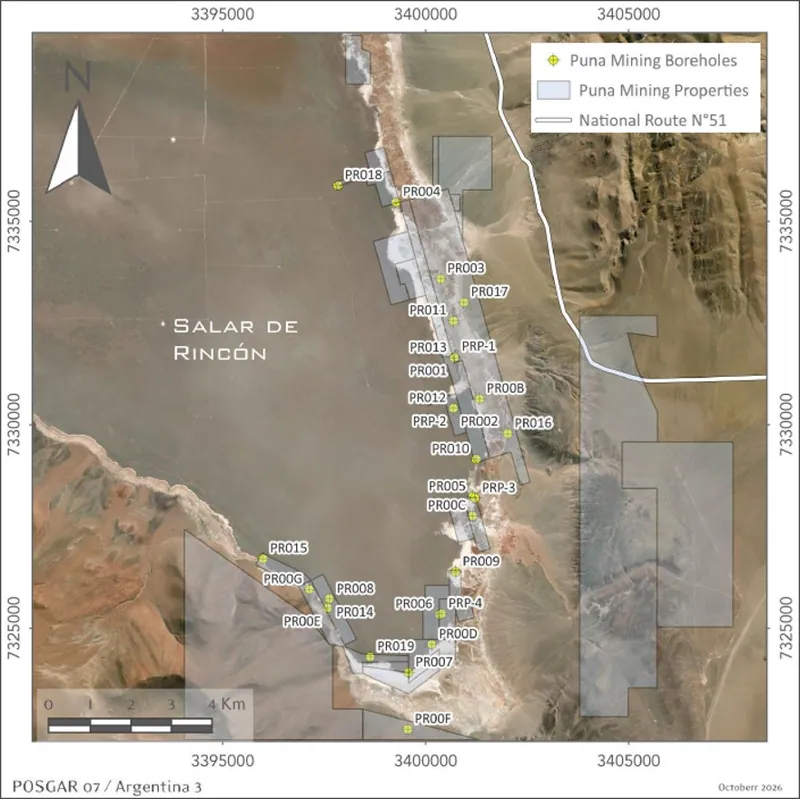
Argosy has completed 4,459 metres across 29 brine investigation holes, with the resource estimate drawing on 215 lithium analyses from 22 drill holes and specific-yield data from 45 laboratory analyses across seven holes. The company says Atacama Water Consultants reviewed and standardised the lithological database before updating the geological and hydrogeological models.
Testing the deeper target will require surface geophysics and two to four diamond holes reaching 600 metres, alongside drainable-porosity analysis, brine sampling and borehole magnetic resonance logging. The next material question is therefore not whether Rincon has more conceptual volume on paper, but how much of that deeper aquifer can be confirmed, modelled under pumping conditions and ultimately converted into an Ore Reserve.
Bottom Line?
The larger Indicated resource strengthens the DFS foundation, but Rincon’s development case still depends on converting brine volume into a tested Ore Reserve and financing a 12,000-tonne-per-year build.
Questions in the middle?
- How much of the deeper 390,000 to 1.03 million tonne Exploration Target can drilling convert into a JORC Mineral Resource?
- What Ore Reserve will emerge once wellfield design and dynamic flow modelling account for recoverability under pumping?
- Will the completed DFS support a financeable development decision in the prevailing lithium market?
Sources
1-
Rincon JORC Mineral Resource & Exploration Target Upgrade (opens in a new tab)Official market announcement. Argosy Minerals Limited · 27 Oct 2026 · argosyminerals.com.au