Black Canyon’s Wandanya resource gives its December study more weight

Black Canyon has put a 36.1Mt manganese and iron resource behind its Wandanya development push, supported by promising beneficiation testwork and a 3.4km mineralised base case. The next test is whether the December Scoping Study can turn those geological results into a credible project case.
- 23.6Mt manganese resource grading 25.8% Mn
- 12.5Mt iron resource grading 54.9% Fe
- Potential 3.7Mt manganese DSO resource at 38.9% Mn
- DMS testwork produced 38.5% to 41.0% Mn products at 80% to 82% recovery
- A$6.2 million cash and estimated three quarters of funding

 Add us as a preferred source on Google
Wandanya resource establishes the development base
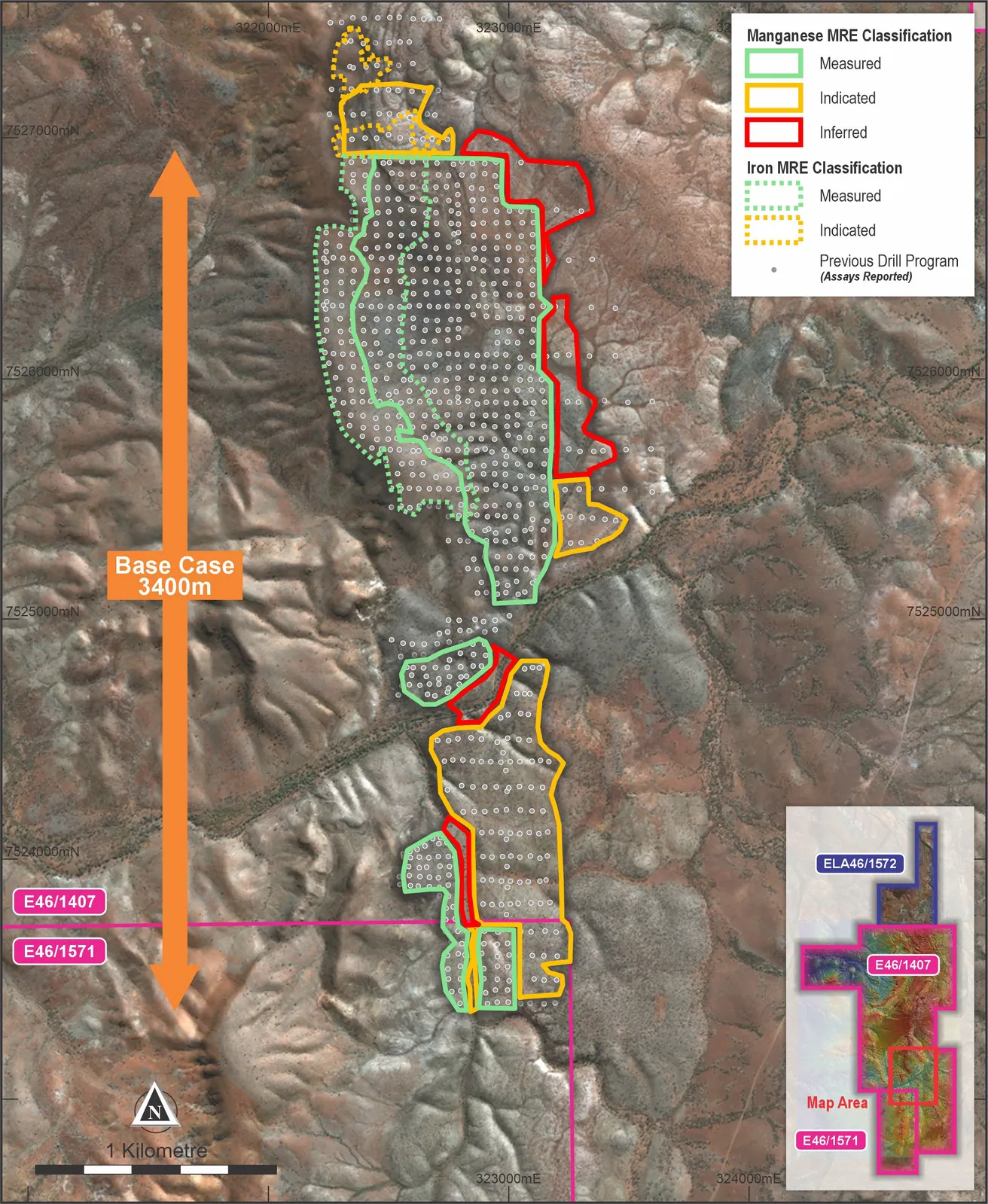
Black Canyon Limited (ASX:BCA) has defined 36.1 million tonnes of maiden manganese and iron resources at Wandanya in Western Australia, giving the company a substantial technical base for its next development study. The resource comprises 23.6Mt grading 25.8% manganese at a 12% cut-off and 12.5Mt grading 54.9% iron at a 50% cut-off.
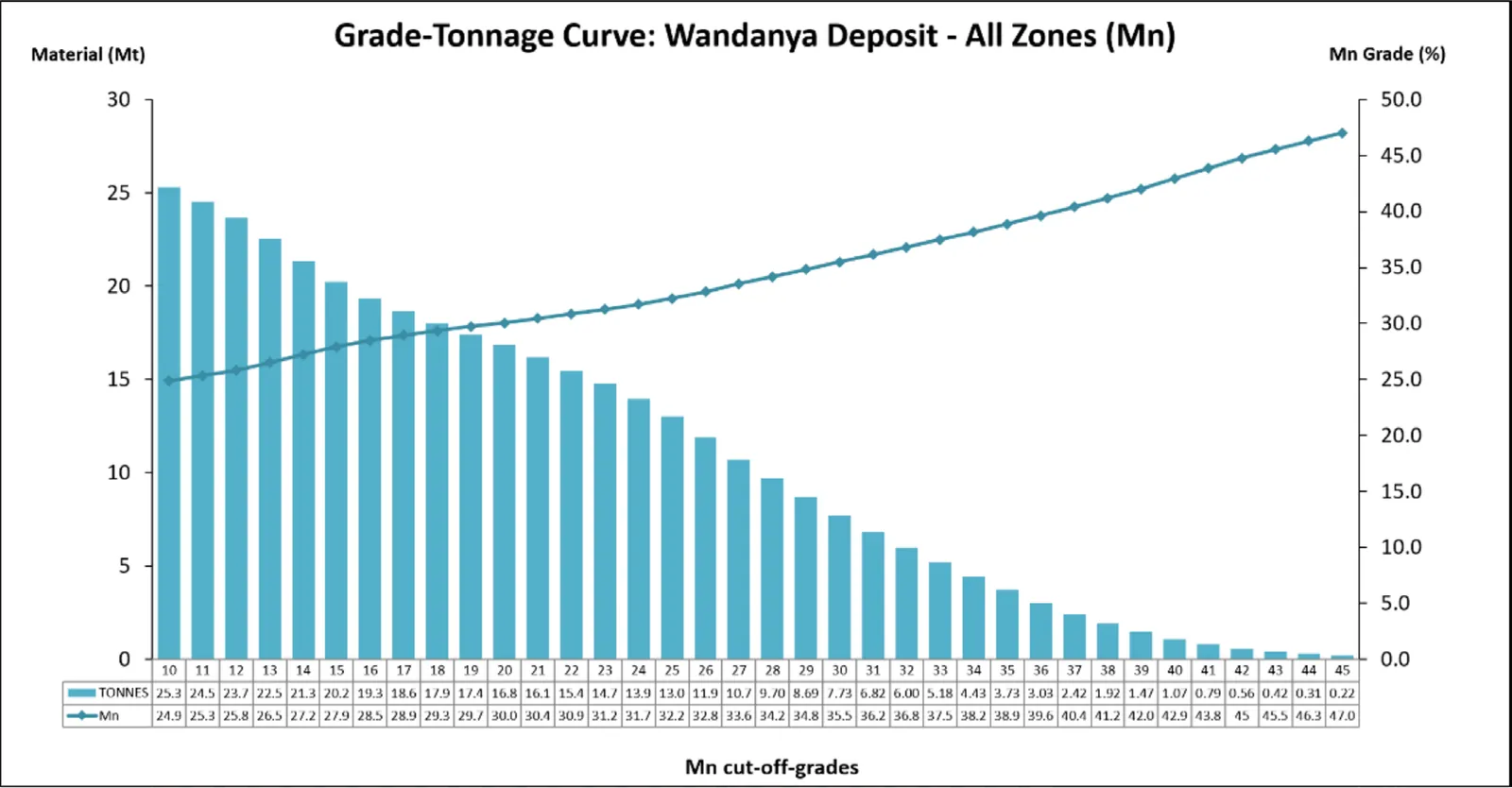
The manganese inventory includes 16.8Mt at a 20% cut-off and a potential 3.7Mt direct-shipping ore component grading 38.9% manganese at a 35% cut-off. The higher-grade iron subset totals 5.5Mt at 57.9% iron using a 55% cut-off. These are Mineral Resources, not Ore Reserves, and the filing does not yet provide a mine plan, production schedule, capital estimate or project economics.
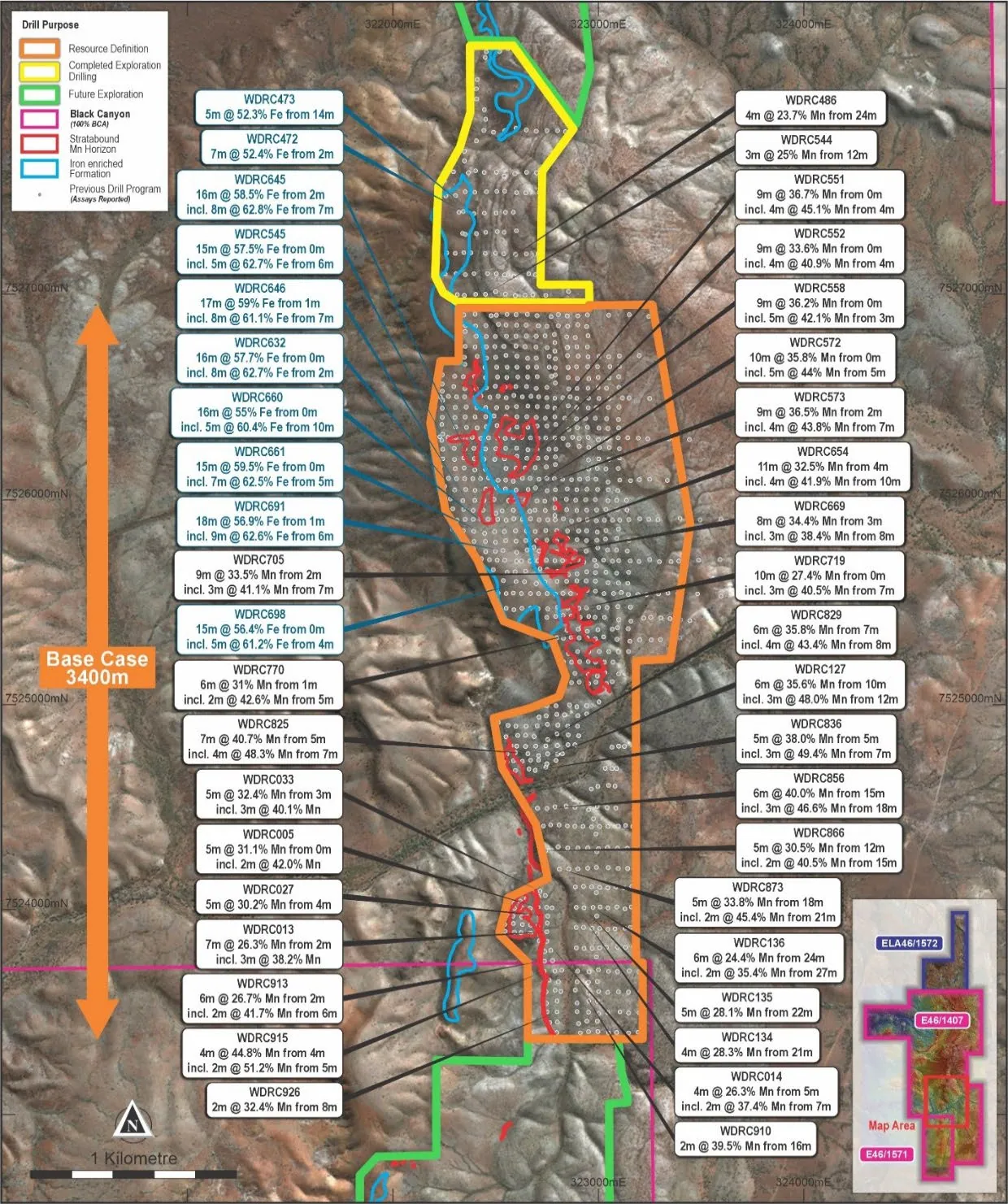
The scale of the announcement was largely established in late September, when the company released its maiden resource estimate, but the quarterly report adds the operating detail around it. Drilling has outlined manganese mineralisation over about 3.4km of strike and iron mineralisation over 1.5km, with the resource based on 929 reverse-circulation holes for 24,021 metres.
Beneficiation testwork supports multiple product paths
Metallurgy provides one of the more tangible development signals in the report. Pilot-scale dense media separation upgraded a 32.4% manganese feed to a 41.0% product at 82% manganese recovery, while a 29.4% feed produced a 38.5% product at 80% recovery. The company said the testwork also indicated potential for direct-shipping manganese products in the 42% to 44% range, although further testing is planned to optimise the proposed flowsheet.
That creates a possible mix of direct-shipping and beneficiated products rather than a single processing route. The results came from 100-kilogram blended composites crushed to between 1mm and 10mm, so they represent pilot-scale testwork on selected samples rather than demonstrated commercial plant performance.
Drilling extends the target beyond the current resource
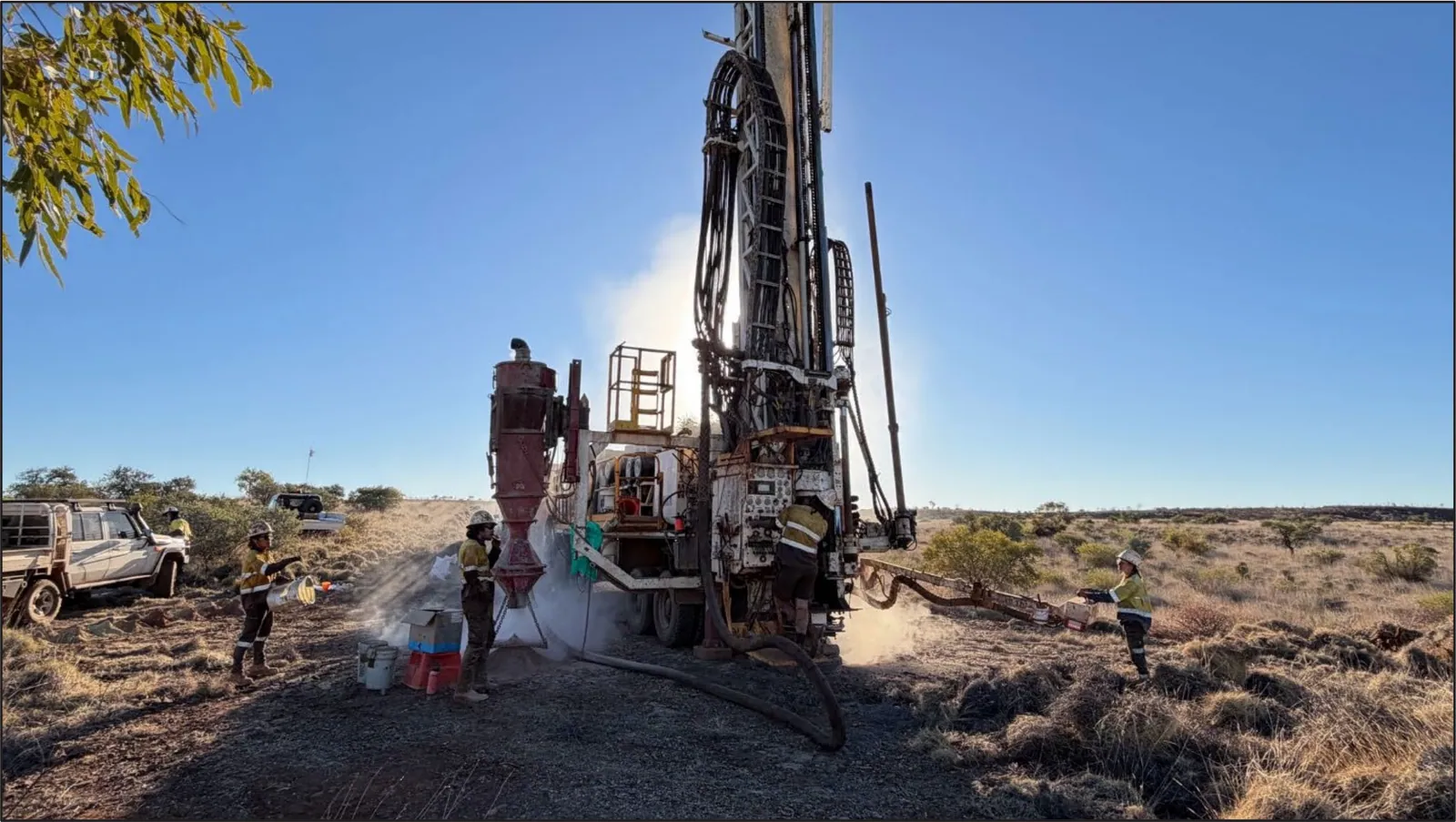
Black Canyon has moved beyond resource definition drilling into a broader test of Wandanya’s reported 9km mineralised trend. A further 4,800 metres of wide-spaced RC drilling tested 1.4km south and 2.8km north of the current resources, building on the 400-metre southern extension reported earlier in the campaign. Assays from this program were expected in early November, alongside results from shallow gravity targets.
The exploration picture is not uniformly positive: deeper holes targeting gravity anomalies did not intersect significant visual manganese or iron enrichment, although some shallow holes encountered visual iron and manganese mineralisation that remained subject to assay. Water encountered below 100 metres is being investigated as a potential process-water source, but the report provides no conclusion on that possibility.
Cash position funds the next study, not a mine
Black Canyon finished the quarter with A$6.202 million in cash and no debt. It spent A$1.810 million on exploration and evaluation, while operating cash outflows totalled A$442,000; A$691,000 of option exercise proceeds partly offset those costs. On the Appendix 5B calculation, the company had an estimated three quarters of funding available at the quarter-end spending rate, with no unused finance facilities reported.
Western Australia’s Exploration Incentive Scheme is contributing up to A$264,800 toward gravity work and deep RC drilling, reducing the cash burden of that exploration. The immediate corporate milestone remains the Scoping Study, targeted for December 2026. Its assumptions around mining, processing, logistics, capital intensity and product pricing will determine whether Wandanya’s attractive grades amount to more than a well-defined geological opportunity.
Bottom Line?
Wandanya now has the resource scale and early processing results for a serious study, but the December Scoping Study must bridge the gap between promising samples and an investable development case.
Questions in the middle?
- What production rate, mine life and capital cost will the December Scoping Study assume?
- Will the pending northern and southern drilling assays expand the current 3.4km resource base?
- Can the proposed DSO and DMS product mix achieve commercially credible recoveries and specifications at scale?
Sources
2-
Quarterly Cashflow Report (opens in a new tab)Official market announcement. Black Canyon Limited · 27 Oct 2026 · blackcanyon.com.au
-
Quarterly Activities Report (opens in a new tab)Official market announcement. Black Canyon Limited · 27 Oct 2026 · blackcanyon.com.au