Famien expands Côte d’Ivoire gold push after broad Bonougbara hits

Famien Resources has reported gold mineralisation in most holes from a 3,672-metre RC program at the Bonougbara Trend in Côte d’Ivoire. The explorer is planning geophysical work and follow-up drilling while expanding its permit portfolio and redirecting focus away from Western Australia.
- Gold mineralisation intersected in most Bonougbara drill holes
- High-grade intercepts included 3m at 5.61g/t Au and 2m at 4.43g/t Au
- Toumodi soil sampling advanced across a 28km² gold-anomalous area
- Côte d’Ivoire ground position increased by a net 1,226km²
- A$11.6 million cash at quarter end, with West Yilgarn sale pending
 Add us as a preferred source on Google
Bonougbara drilling delivers widespread gold intercepts
Famien Resources Limited (ASX:FMN) has completed a 3,672-metre reverse-circulation drilling program across the 5km-long Bonougbara Trend, with gold mineralisation recorded in nearly all holes. The results do not establish a mineral resource, but they extend the company’s early-stage exploration picture across three targets on the Gogo permit.
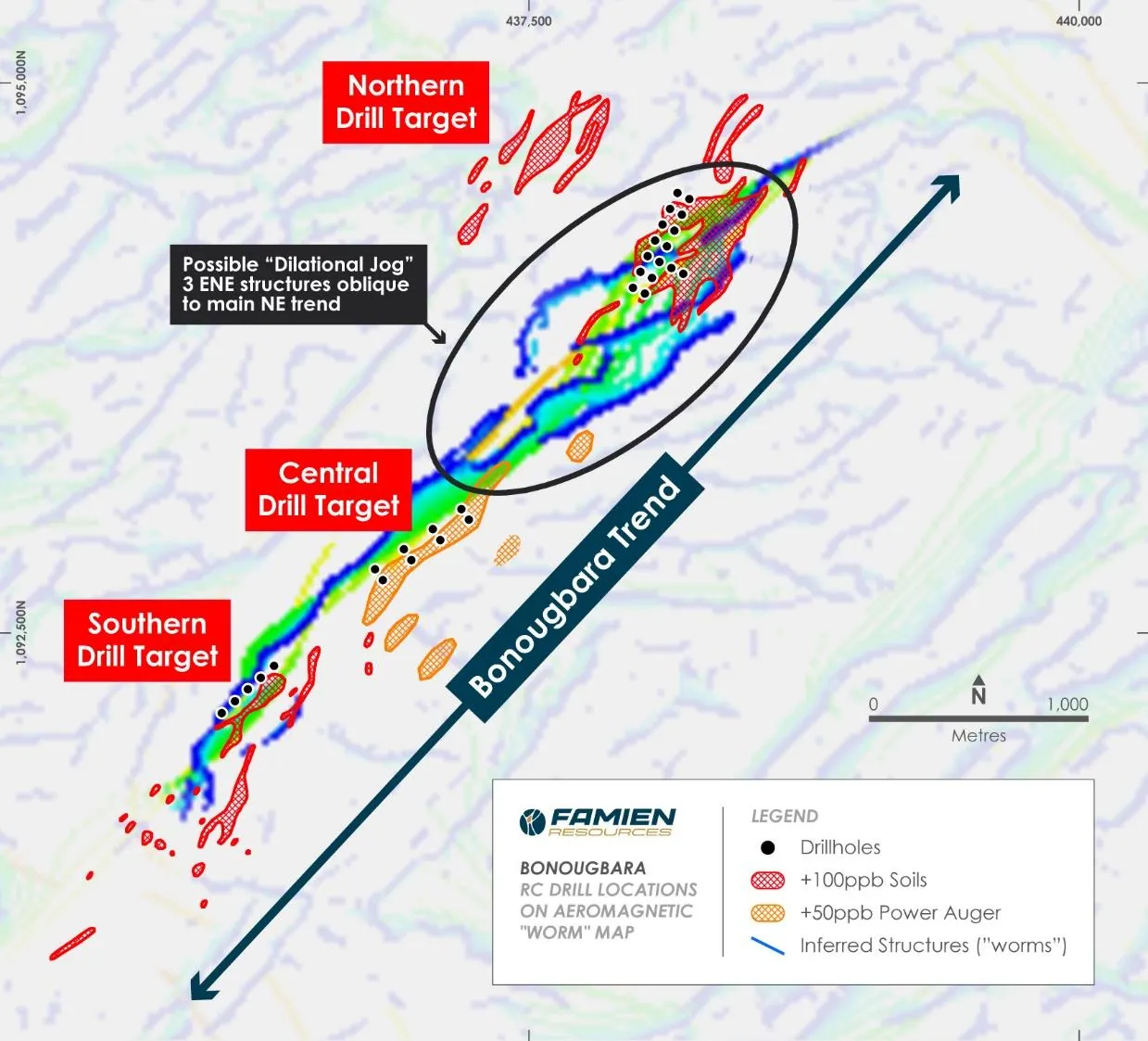
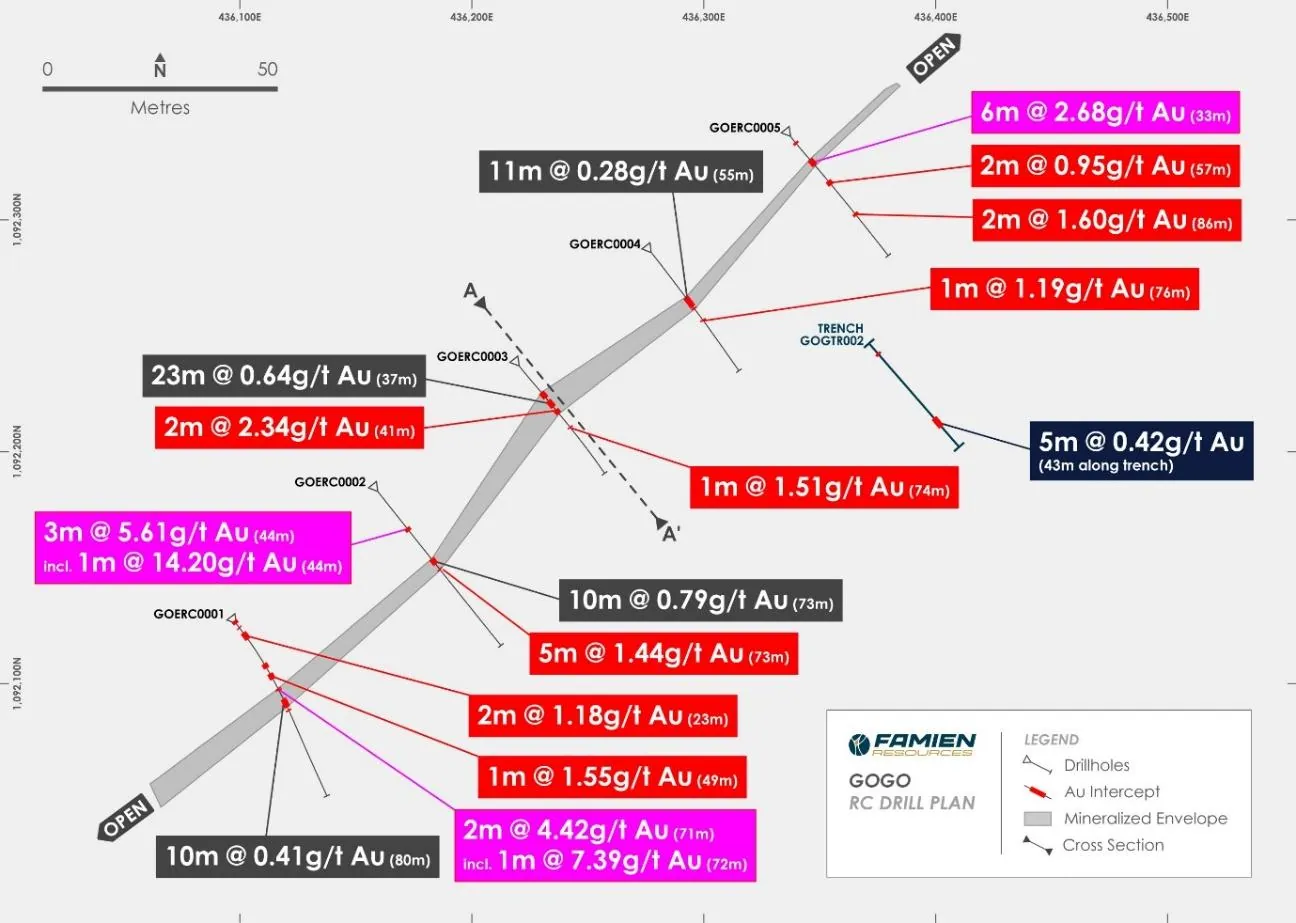
The strongest reported intercept came from the Southern Target, where GOERC0002 returned 3 metres at 5.61 grams per tonne gold from 44 metres, followed by 5 metres at 1.44g/t from 73 metres. Other notable southern results included 2 metres at 4.43g/t from 71 metres and 6 metres at 2.68g/t from 33 metres. The program tested beneath artisanal workings, anomalous auger results and quartz lodes that have reportedly been mined from deep shafts.
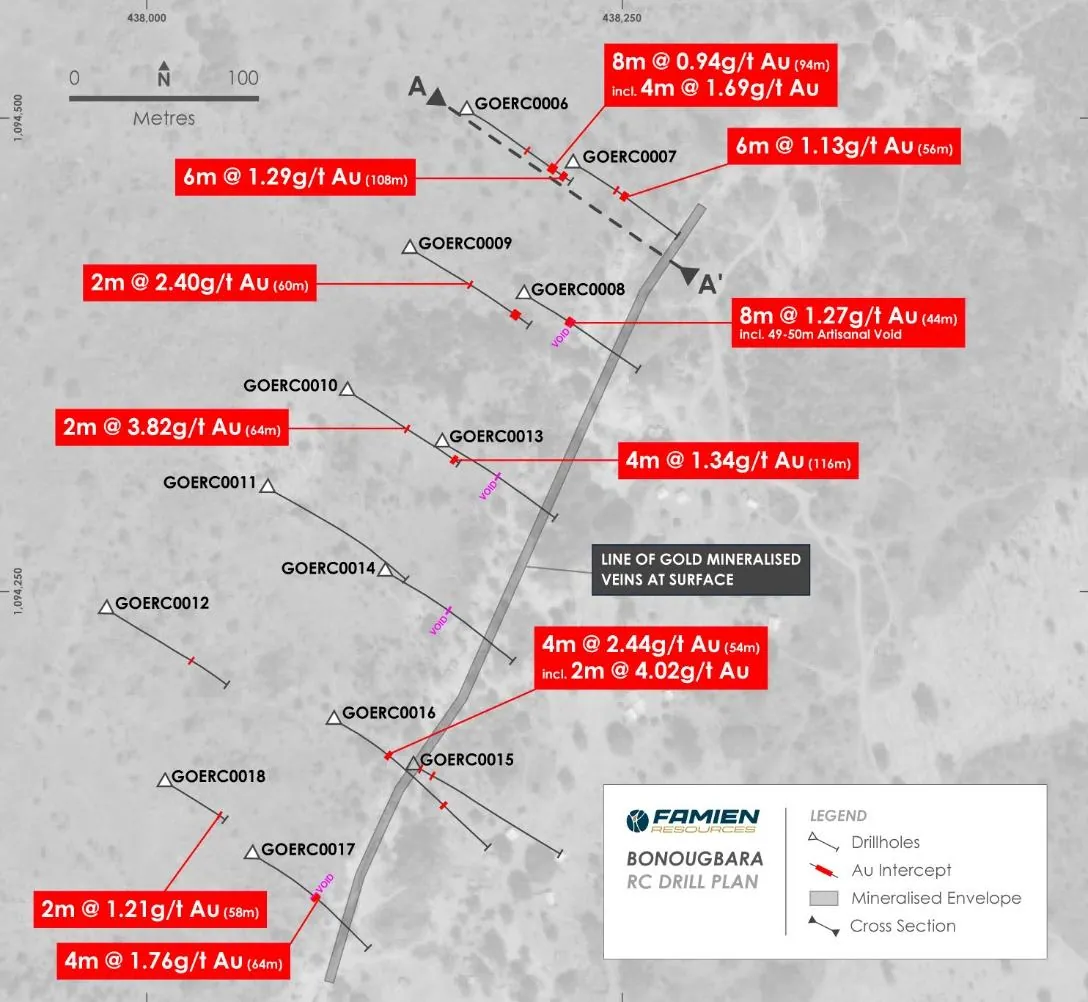
At the Northern Target, results included 2 metres at 3.82g/t from 64 metres, 4 metres at 2.44g/t from 54 metres and 8 metres at 1.27g/t from 52 metres. The Central Target also produced several mineralised intervals, including 6 metres at 1.03g/t and 4 metres at 2.11g/t in the same hole. The drilling follows the earlier Bonougbara maiden drilling, which reported grades of up to 5.61g/t Au from the first five holes.
IP survey planned before another Bonougbara campaign
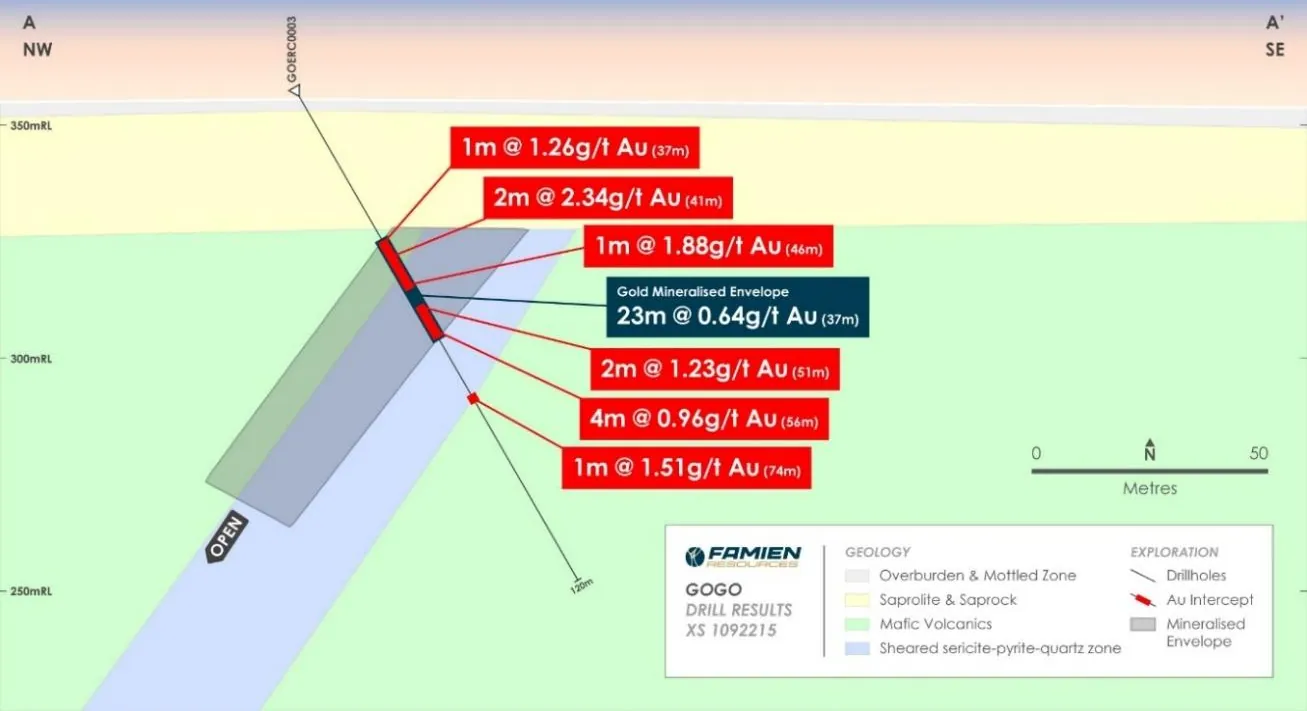
Famien said the elevated gold values are associated with sheared sericite-quartz-pyrite alteration in mafic volcanic rocks. It is planning an induced-polarisation survey to map broader zones of altered and mineralised rock across the Bonougbara Trend, with the new geophysical data intended to guide additional RC drilling.
The company also moved its rig to the Tougbo permit in September, ahead of follow-up drilling at Kalama Bave after the rainy season. That creates a sequence of exploration catalysts, although each remains dependent on further fieldwork, assays and interpretation rather than representing a defined development project.
Toumodi anomalies and permit footprint grow
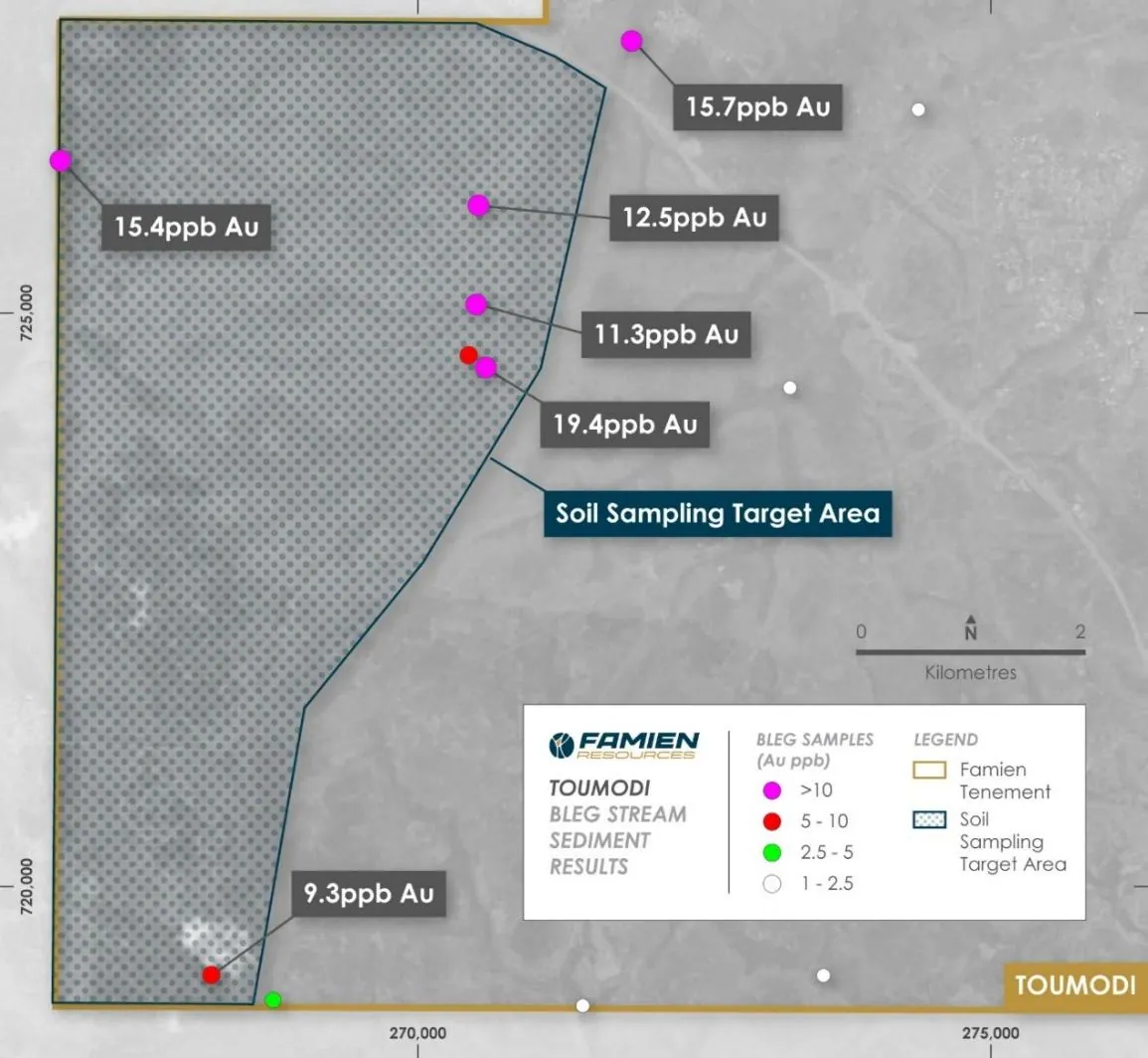
Regional work is widening the search beyond Bonougbara. BLEG stream-sediment sampling at Toumodi identified gold-anomalous catchments across a prospective area of 28km², with peak values of 15.7 parts per billion and 19.4ppb gold. Soil sampling on a 100-metre grid over the area was nearing completion at quarter end, while the comparable Dimbokro survey produced no significant results.
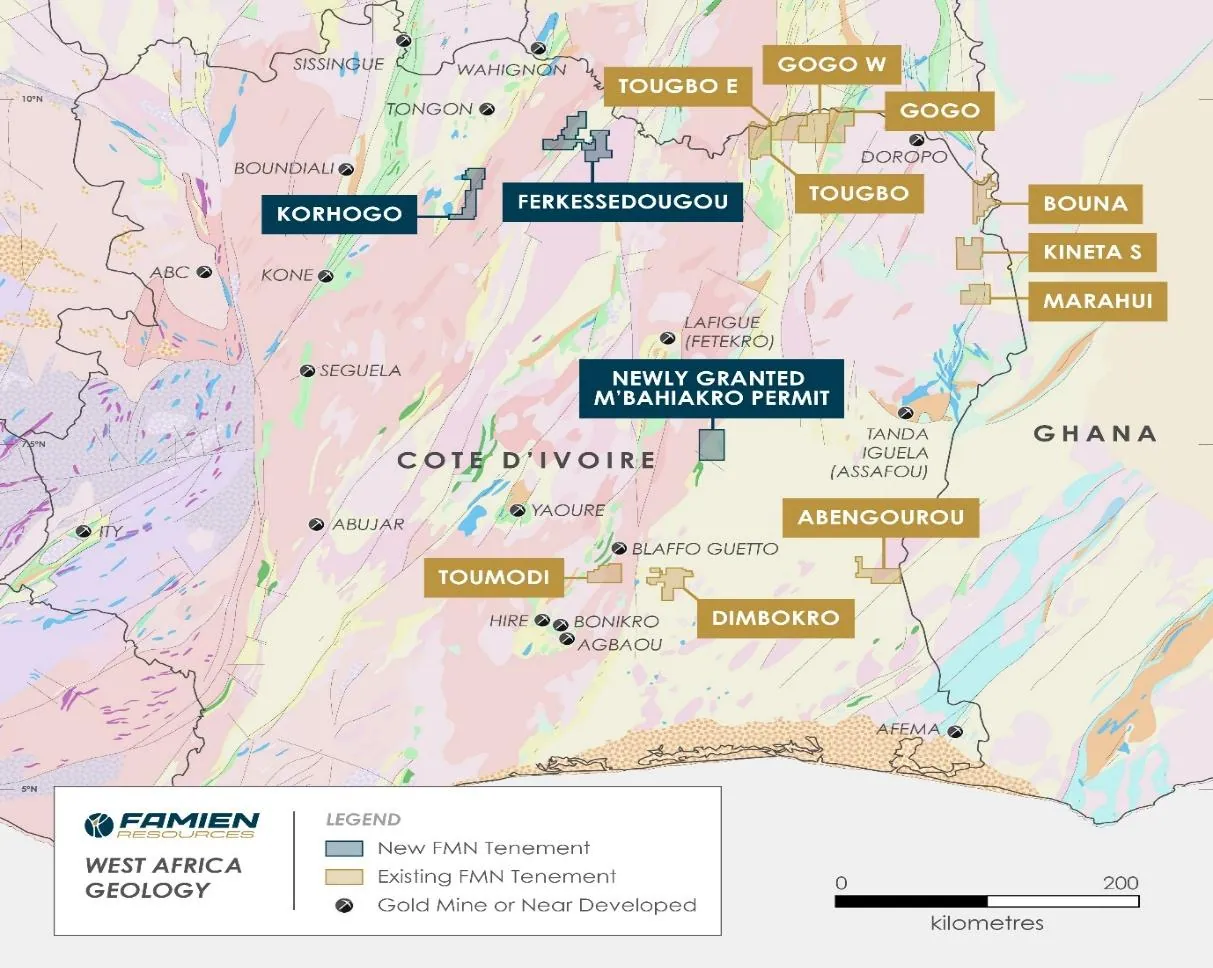
Famien increased its Côte d’Ivoire ground position by a net 1,226km² during the quarter. Two exploration permits covering 731km² were granted, and three permit applications covering a further 757km² were acquired, partly offset by the surrender of a 262km² permit near Abengourou. BLEG surveys are planned on the new Korhogo and M’Bahiakro permits in the December quarter, with work at Ferkessedougou expected in early 2027 once grant documentation is received.
Cash remains available as West Yilgarn exits
Famien held A$11.6 million in cash at 30 September, down from A$13.1 million at the end of June. Quarterly exploration expenditure was about A$1.049 million, including A$1.007 million in Côte d’Ivoire, while the Appendix 5B reported total relevant cash outgoings of A$1.347 million and estimated funding of 8.58 quarters at the quarter-end rate.
The company is also in the process of selling its non-core West Yilgarn assets through the sale of Diamandia, a transaction previously reported as the West Yilgarn asset sale. The deal provides A$330,000 in initial cash consideration and up to A$2 million in deferred payments linked to milestones, but completion remains subject to conditions precedent. The immediate strategic question is whether the next round of Côte d’Ivoire drilling can convert broad exploration encouragement into a coherent, repeatable mineralised system.
Bottom Line?
Bonougbara has produced encouraging, distributed intercepts, but the next IP survey and follow-up drilling must establish continuity, scale and depth before the results can support a resource case.
Questions in the middle?
- Will the planned induced-polarisation survey identify thicker, continuous mineralised zones along the Bonougbara Trend?
- Can follow-up drilling at Bonougbara and Kalama Bave demonstrate continuity beyond the reported intercepts?
- How quickly will the expanded Côte d’Ivoire permits generate targets strong enough to justify further drilling expenditure?
Sources
1-
Quarterly Activities/Appendix 5B Cash Flow Report (opens in a new tab)Official market announcement. Famien Resources Limited · 27 Oct 2026 · famienresources.com