Hamelin’s Day Dawn delivers a 101.5 g/t gold hit

Hamelin Gold has reported an ultra-high-grade 2-metre interval grading 101.5 g/t gold from its Phase 2 drilling at Day Dawn, alongside extensions to the Aurora and Altus lodes. Further RC assays and diamond drilling results could provide the next test of how continuous and extensive the system is.
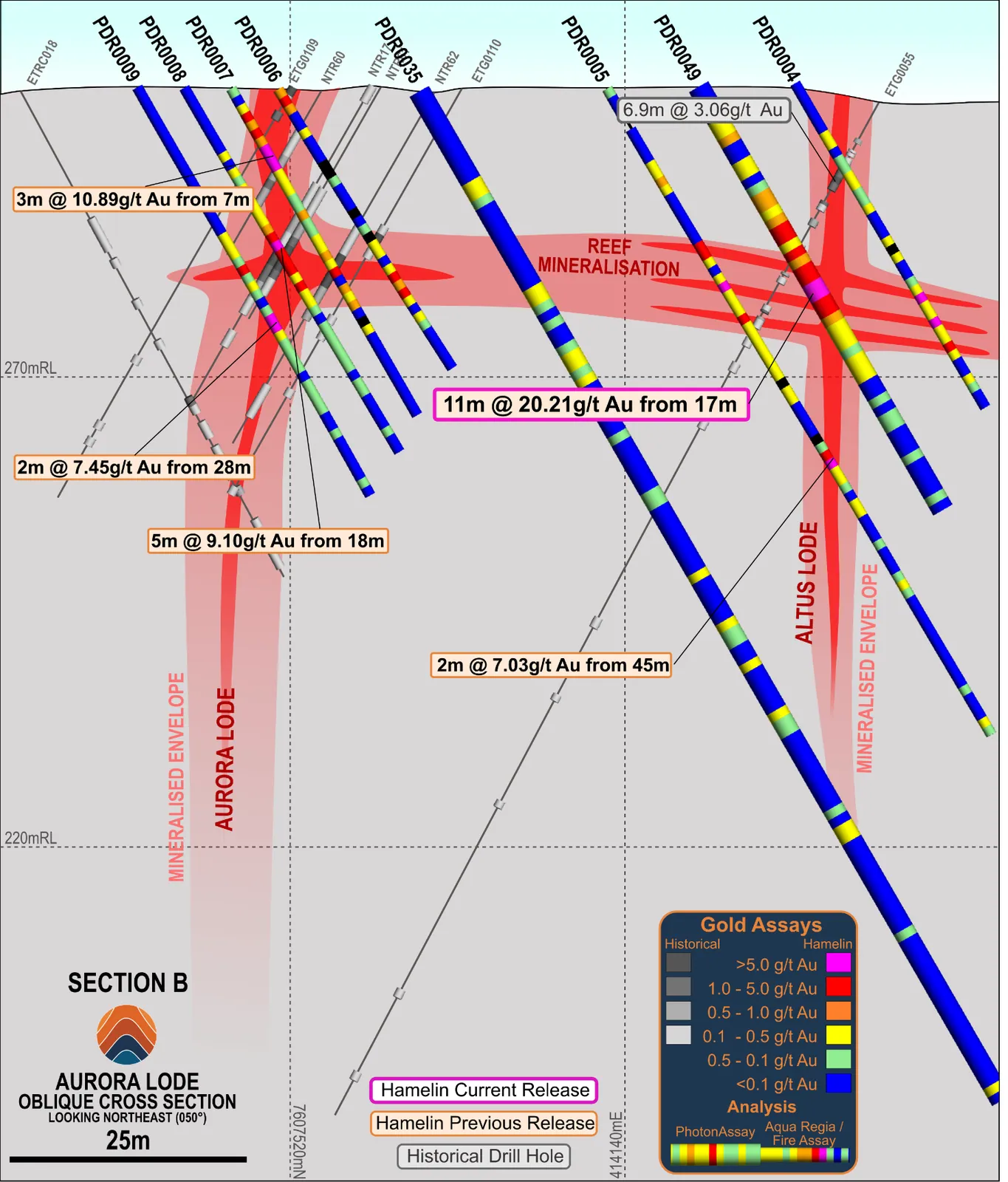
- 2m at 101.5 g/t gold within 11m at 20.2 g/t from 24m at Altus
- 5m at 25.1 g/t gold from 19m in a second Altus hole
- Aurora extended near surface and down plunge, including 7m at 5.6 g/t from 147m
- Results received for 22 of 35 Phase 2 RC holes
- Further RC assays due in November, with diamond results expected in January 2027

 Add us as a preferred source on Google
Ultra-high-grade Altus intersection leads Day Dawn results
Hamelin Gold Limited (ASX:HMG) has produced its strongest Phase 2 result yet at the Day Dawn project, with 2 metres at 101.5 g/t gold from 24 metres inside an 11-metre interval grading 20.2 g/t in hole PDR0049. A second Altus hole, PDR0059, returned 5 metres at 25.1 g/t from 19 metres, including a 1-metre section at 77.61 g/t.
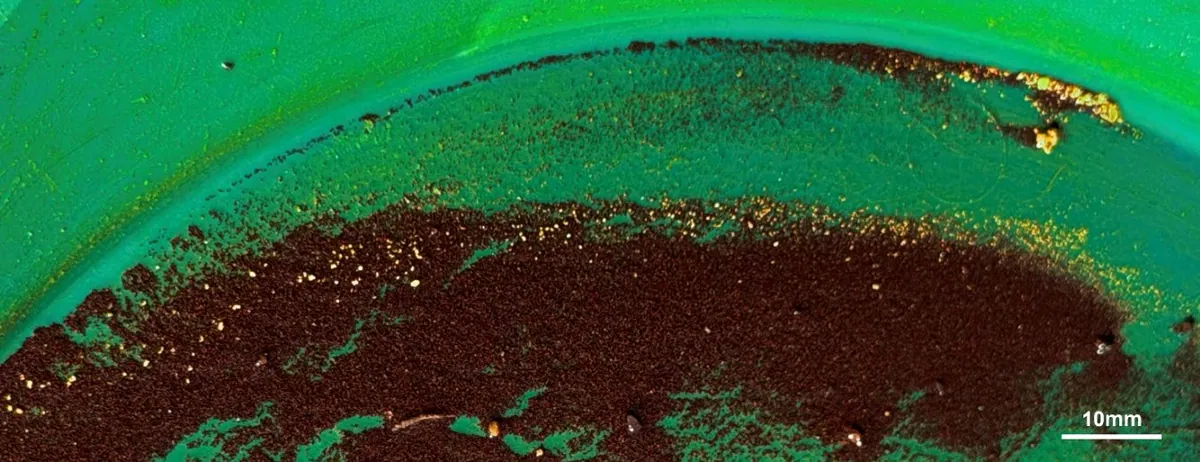
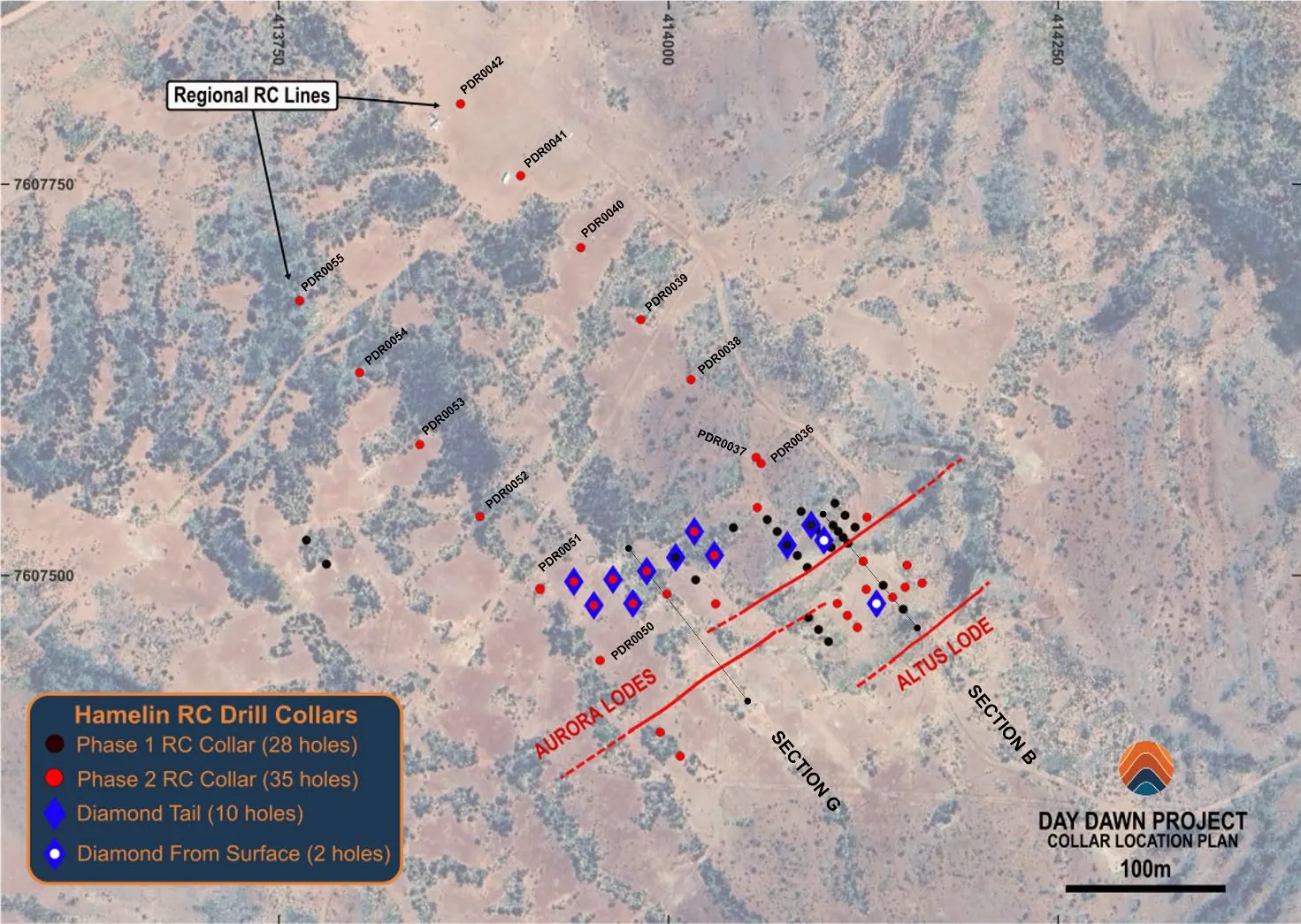
The results come from the first 22 holes of a 35-hole, approximately 4,000-metre reverse circulation program completed in September. The Altus drilling was aimed at the interpreted intersection of steeply dipping lodes and flat-lying reef-style mineralisation, where the company says visible coarse gold was observed in PDR0049. Hamelin says these intersections confirm that the structural junction can produce very high grades, although it also cautions that the zones may have limited strike extent.
Aurora lodes remain open along strike and at depth
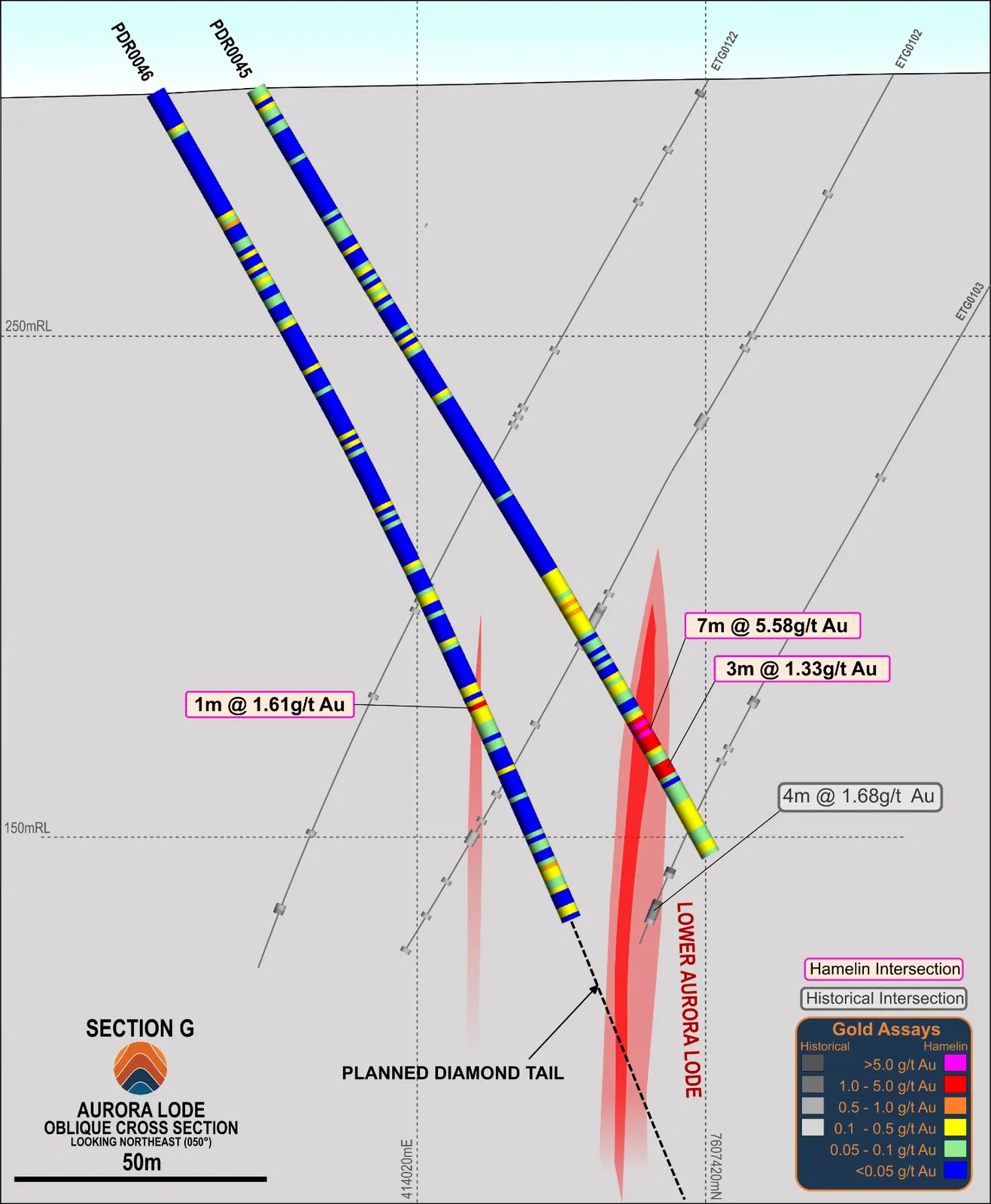
Results from the Aurora corridor add continuity rather than another headline grade. PDR0034 extended the Upper Aurora Lode to the northeast with 3 metres at 9.3 g/t gold from 6 metres, while the deepest reported Aurora result, PDR0045, returned 7 metres at 5.6 g/t from 147 metres. That hole is the deepest and most south-westerly drilled at the Lower Aurora Lode so far, leaving the mineralisation open at depth.
The new data build on Hamelin’s earlier Aurora drilling, which had reported a 3-metre interval at 93.4 g/t gold and prompted an expansion of the Phase 2 campaign. The company interprets Aurora as a swarm of steeply dipping high-grade lodes that could form part of a deeper fluid conduit, but that interpretation remains an exploration model rather than a mineral resource or economic assessment.
Regional drilling finds narrow high-grade veins
Two regional lines northwest of Aurora were designed to test for parallel lode positions. The first five holes produced broad gold anomalism and narrow high-grade intervals, including 1 metre at 11.42 g/t in PDR0038 and 1 metre at 11.33 g/t in PDR0039. Assays from most of the regional program are still pending, so the results do not yet establish the scale or continuity of any parallel system.
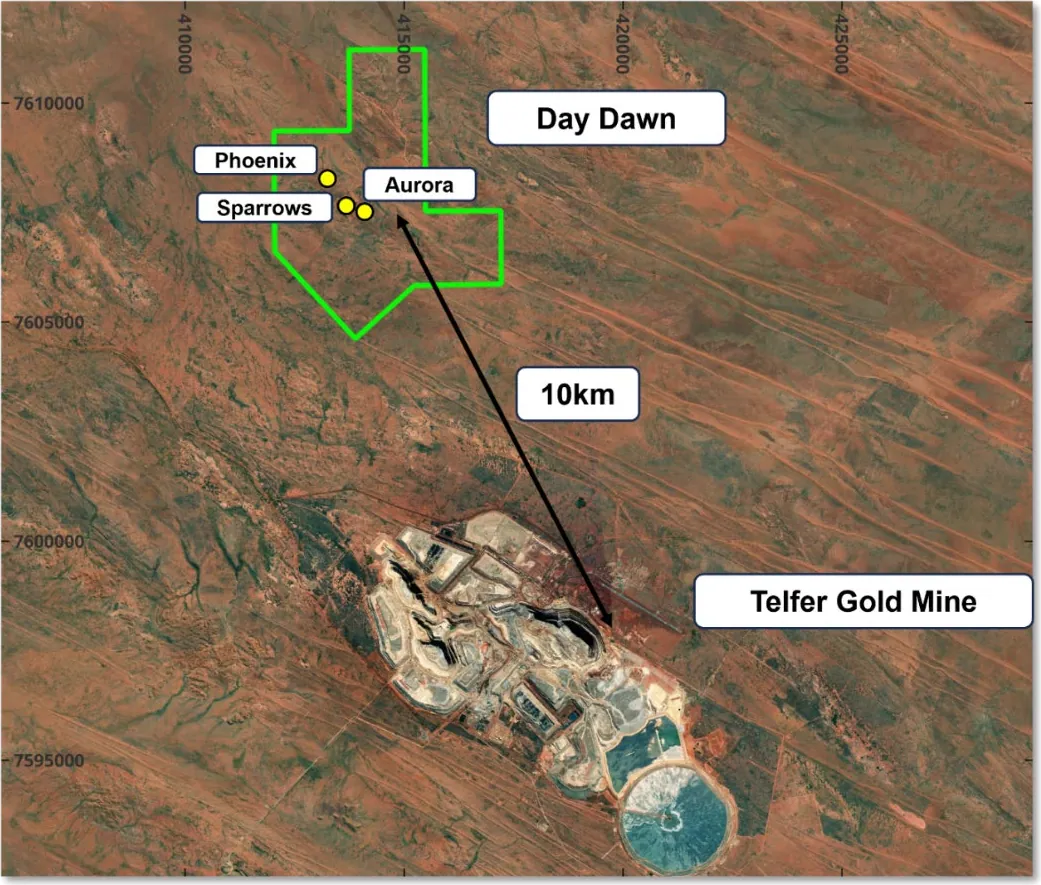
The reef-style interpretation is central to Hamelin’s longer-term targeting. Day Dawn sits about 10 kilometres northwest of the Telfer gold-copper mine in Western Australia’s Paterson Province, and the company says its recognition of conformable reef mineralisation has similarities to the architecture of major Proterozoic sediment-hosted gold deposits. Hamelin’s earlier reef-style discovery first brought that comparison into focus, but the current announcement does not establish that Day Dawn has comparable scale.
Diamond drilling sets the next test of continuity
Hamelin has started a 16-hole, 1,500-metre maiden diamond program, with results expected in January 2027. Several deeper RC holes were stopped at about 140 metres after wet sample returns were encountered and are being used as pre-collars for diamond tails, making the core program particularly relevant to the down-plunge interpretation.
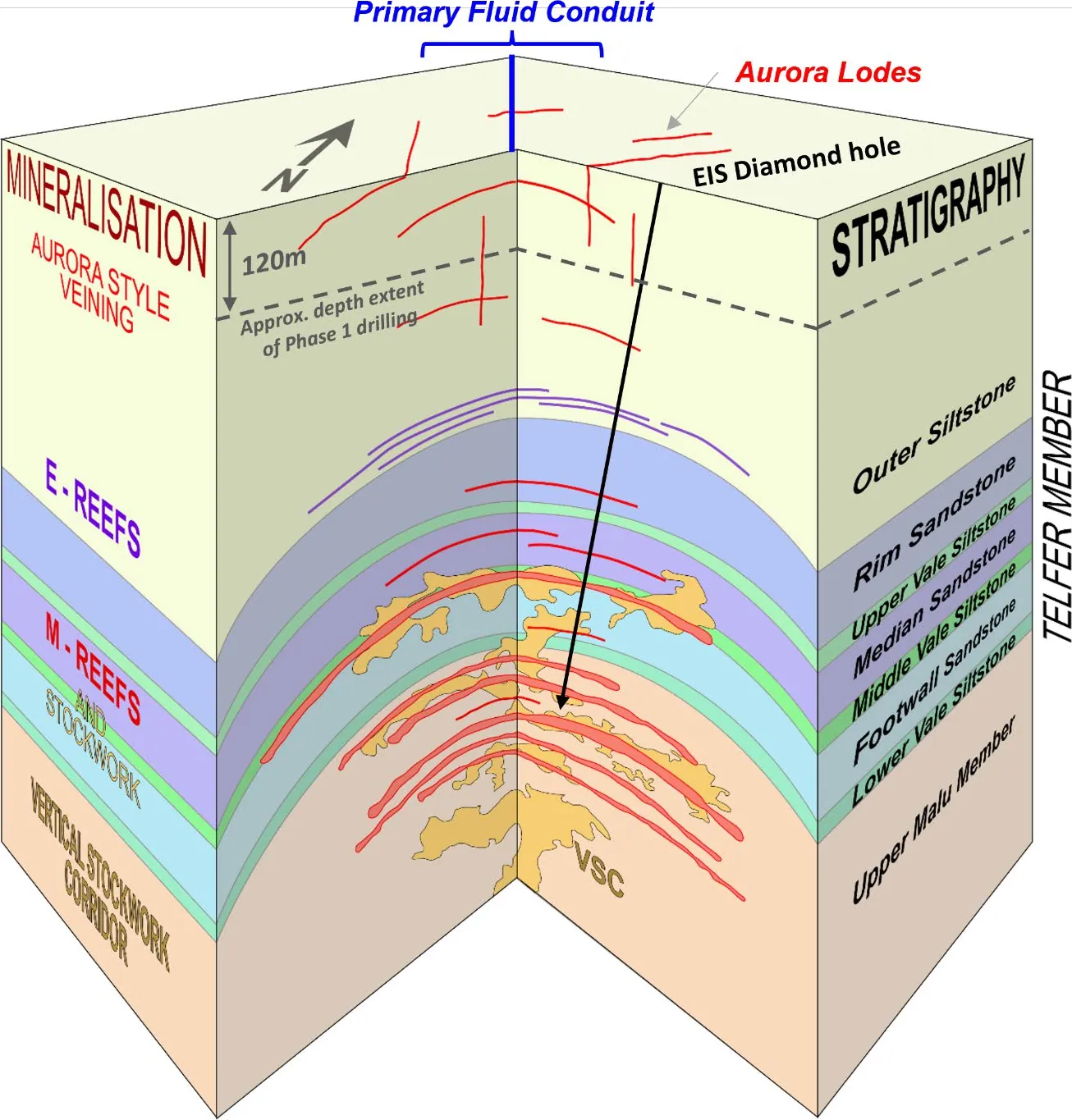
Thirteen Phase 2 RC assay results are expected in November, followed by an EIS co-funded deep diamond program planned for March 2027. Those deeper holes are intended to test the interpreted intersection between the steep lode system and the more prospective Telfer Formation stratigraphy. For now, the reported intervals are downhole lengths rather than true widths, metallurgical and mineralogical work has not been completed, and the key question is whether the spectacular Altus grades connect into a mineable and vertically extensive system.
Bottom Line?
The headline grades are encouraging, but the investment case now turns on continuity, true widths, metallurgy and the pending deeper drilling rather than isolated high-grade hits.
Questions in the middle?
- Will the remaining 13 RC holes extend the Altus and Aurora lodes with consistent widths and grades?
- Do diamond holes confirm that the reported downhole intervals translate into meaningful true widths and continuity?
- Can the planned deep drilling demonstrate a broader reef-hosted system within the Telfer Formation stratigraphy?
Sources
1-
High-Grade Hits Expand Day Dawn Gold Lodes (opens in a new tab)Official market announcement. Hamelin Gold Limited · 27 Oct 2026 · hamelingold.com.au