LinQ uncovers a 429m visual mineralised system south of Gidginbung

LinQ Minerals has identified more than 429 metres of visually mineralised core at a new target south of Gidginbung, although laboratory assays are still pending. The ASX-listed explorer also reported broad copper-gold results at Monza, fresh gold hits at Gidginbung and A$14.4 million in cash to fund its next drilling phase.
- More than 429m of visual mineralisation logged in Gidginbung South hole GBRCD021
- Assays expected in six to eight weeks, with visual estimates not a substitute for laboratory results
- Monza returned 72m at 0.95% CuEq within 113m at 0.71% CuEq
- Gidginbung delivered 61m at 2.3 g/t AuEq and 46.4m at 1.2 g/t AuEq
- A$14.4m cash balance supports a fully funded 30,000m drilling campaign

 Add us as a preferred source on Google
Gidginbung South produces a potentially significant visual result
LinQ Minerals Limited (ASX:LNQ) has put its most intriguing result after quarter-end at the centre of its September report: drill hole GBRCD021 at Gidginbung South showed more than 429 metres of visually mineralised core in what the company believes could be a large high-sulphidation epithermal and porphyry system.
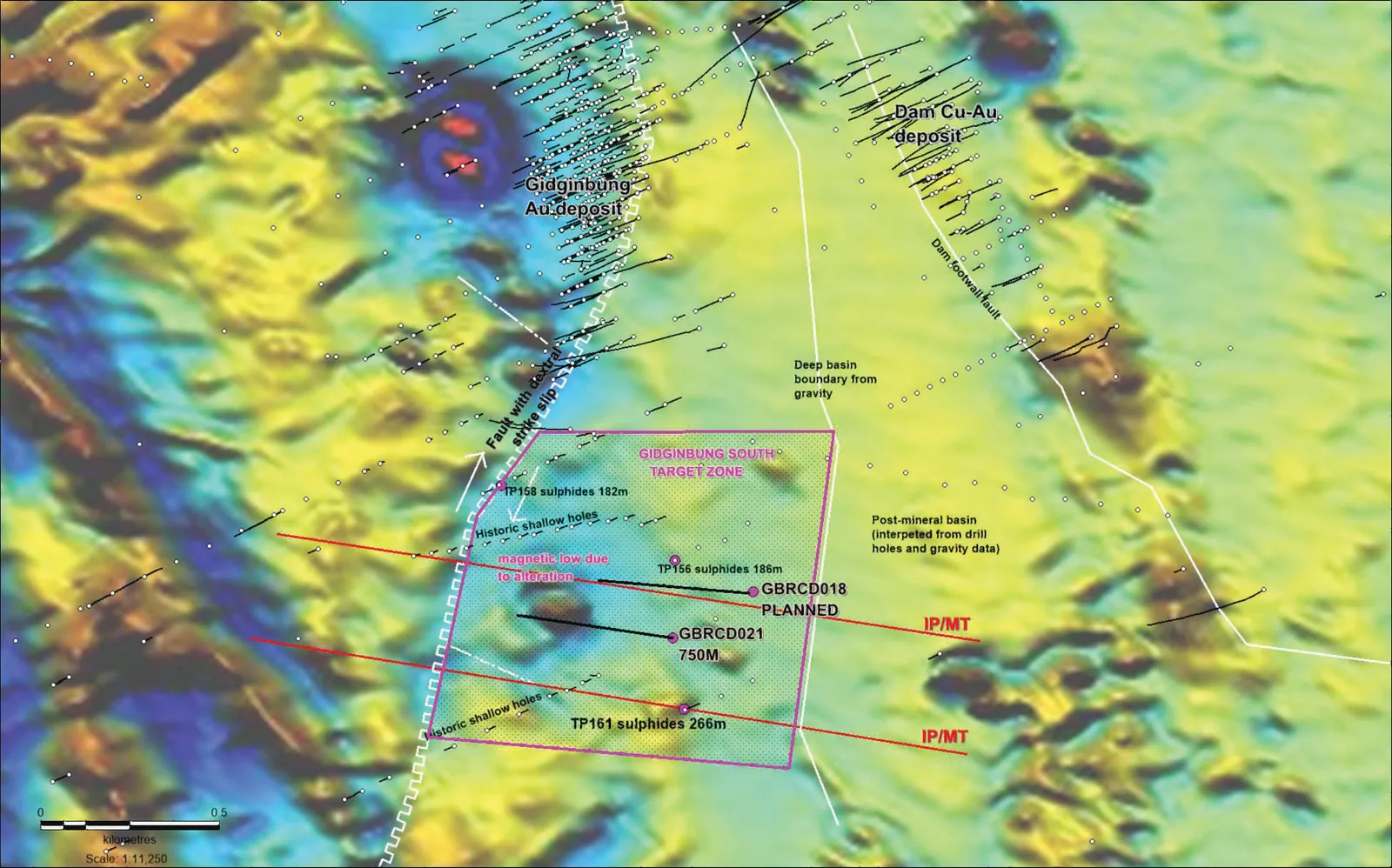
The hole, drilled about 1 kilometre south of the Gidginbung gold project, encountered visible sulphides and alteration from 320.2 metres through to the end of the hole at 750.3 metres. The company’s logging recorded pyrite, luzonite, enargite and chalcopyrite across several intervals, with mineralisation described as remaining open in all directions, including at depth.
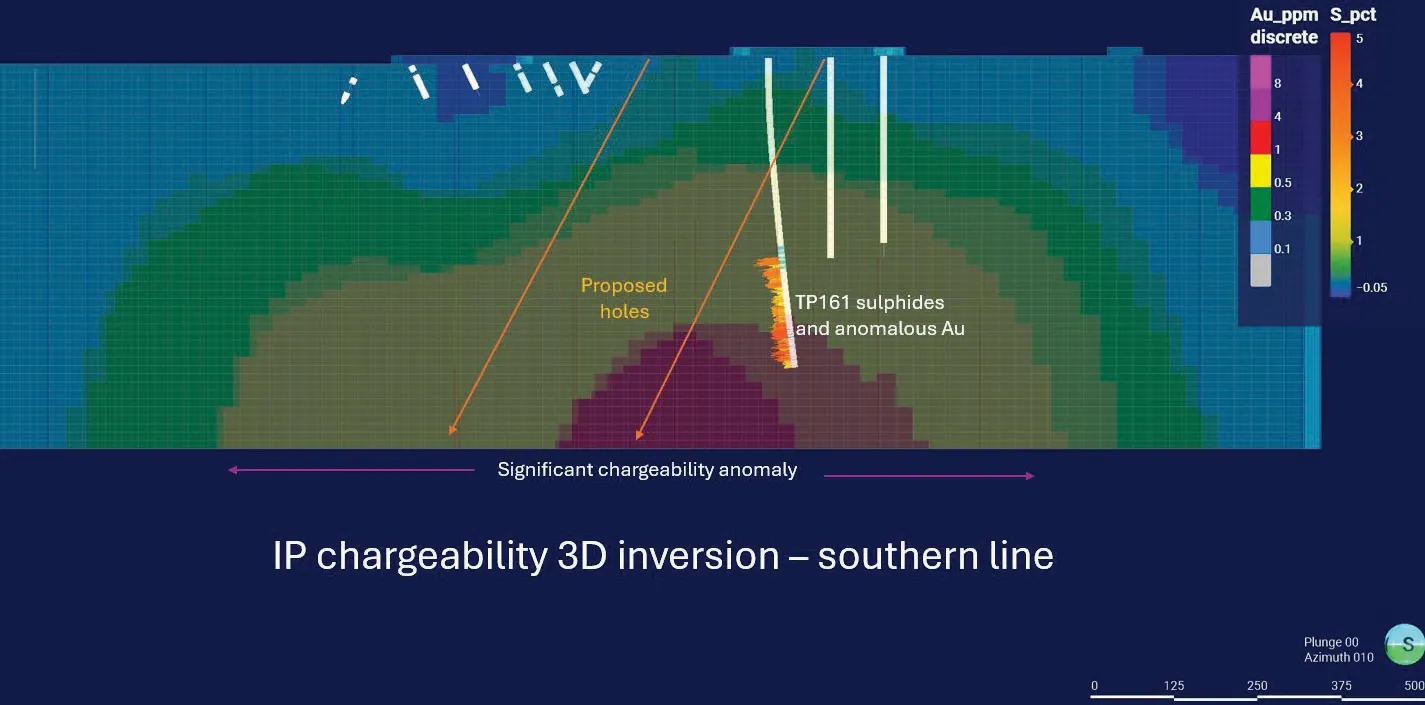
That is potentially important exploration news, but it is not yet an assay result. LinQ says laboratory results are expected in six to eight weeks and explicitly cautions that visual estimates of mineral abundance cannot replace analytical testing. The eventual grades, widths and economic significance of GBRCD021 therefore remain unresolved.
Monza continues to build a shallow copper-gold footprint
At Monza, the company reported another set of broad, shallow copper-gold intersections from its maiden drilling campaign. Hole MZACD010 returned 113 metres at 0.71% copper equivalent from 33 metres, including 72 metres at 0.95% CuEq and a 4-metre high-grade interval at 5.3% CuEq.
The results add to the earlier Monza drilling results, which had reported 113 metres at 0.71% CuEq and a 1-kilometre largely untested corridor towards Estoril. Other reported results include 208 metres at 0.61% CuEq in MZACD005, including 5 metres at 5.36% CuEq, and 226 metres at 0.70% CuEq in MZACD003, including 28 metres at 1.85% CuEq.
LinQ says mineralisation remains open in multiple directions, with high-grade near-surface mineralisation open to the east and north-east of MZACD010. Follow-up drilling is being planned at Monza and across the roughly 1-kilometre strike between Monza and Estoril. The reported equivalent grades are based on assumed US$2,500 per ounce gold and US$10,000 per tonne copper prices, and the intervals are down-hole lengths rather than confirmed true widths.
Gidginbung results support further Southern Zone testing
Existing Gidginbung drilling also delivered substantial gold intersections. Hole GBRCD016 returned 61 metres at 2.3 grams per tonne gold equivalent from 124 metres, including a 10-metre section at 4.3 g/t AuEq, while GBRCD015 returned 46.4 metres at 1.2 g/t AuEq from 142 metres.
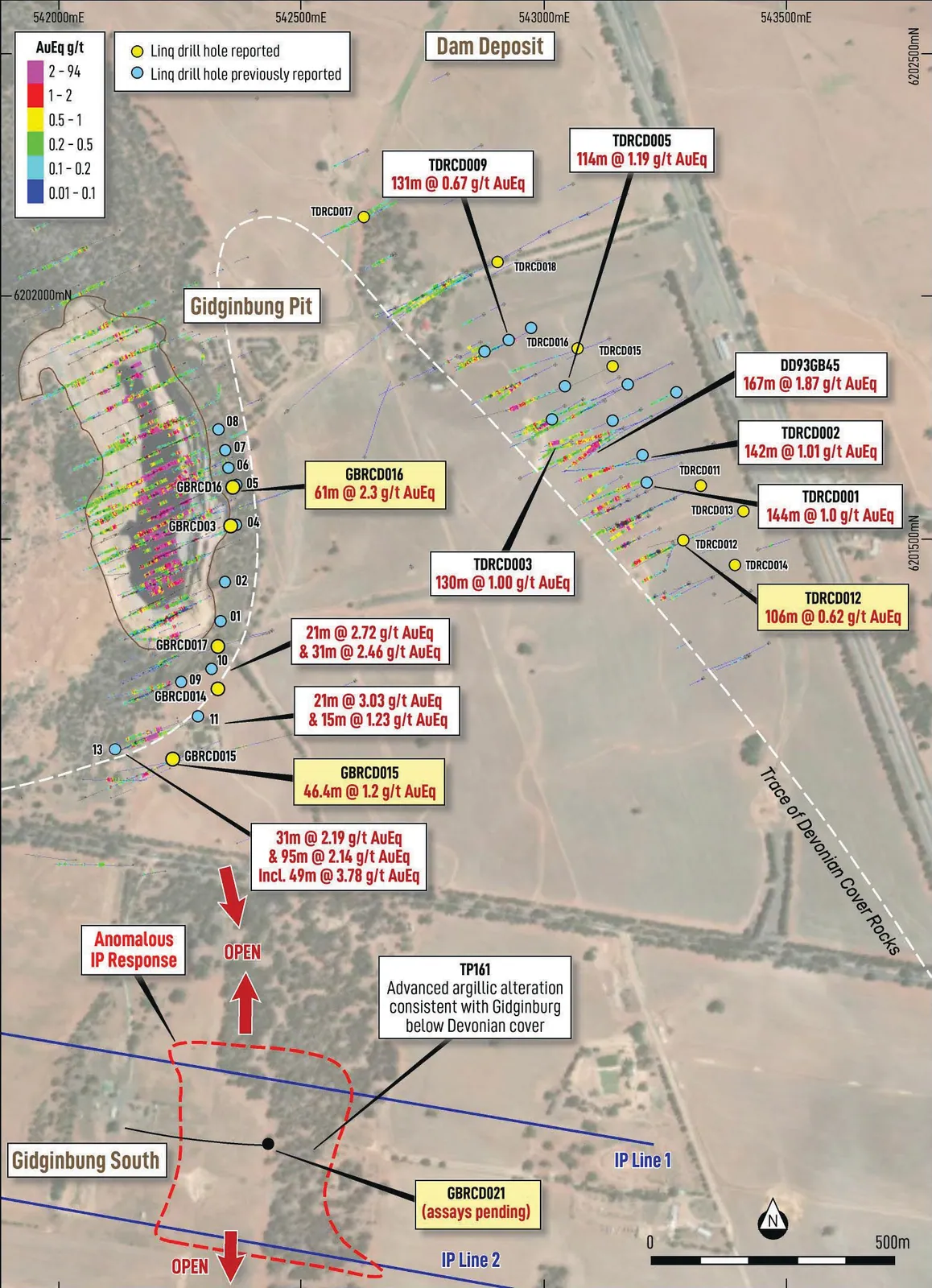
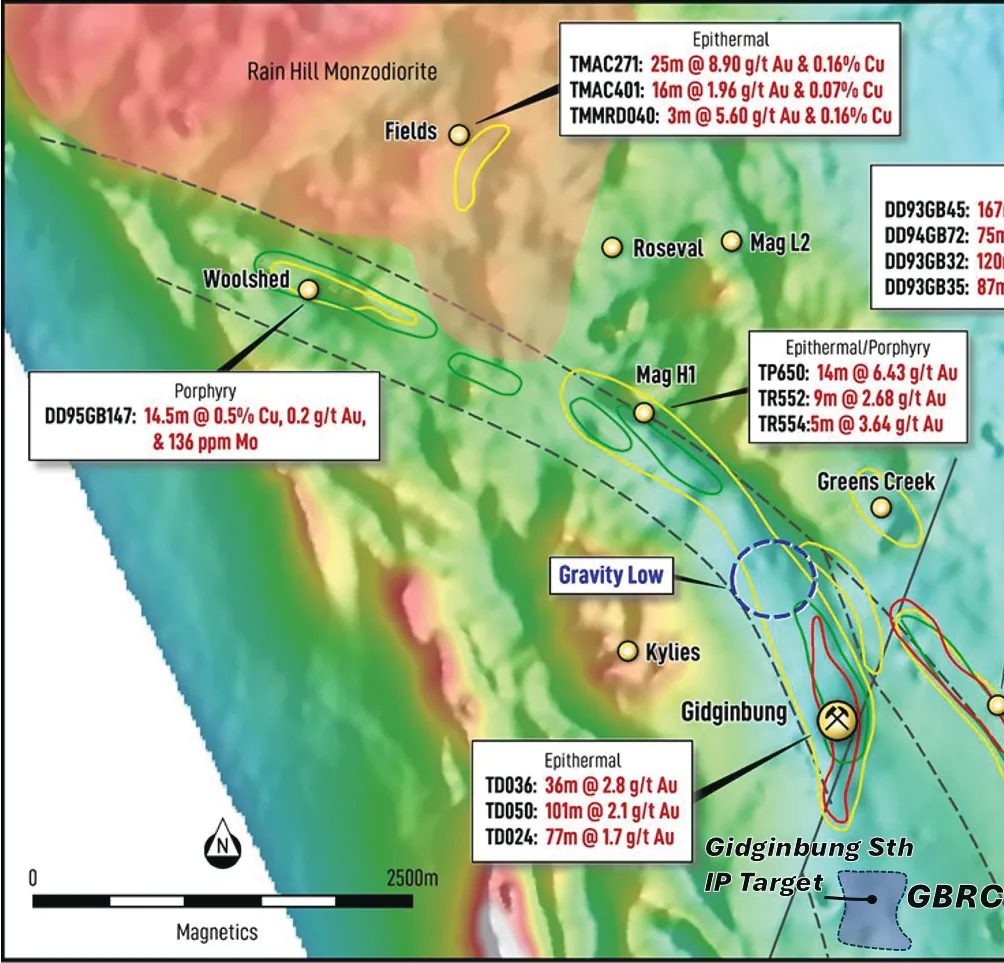
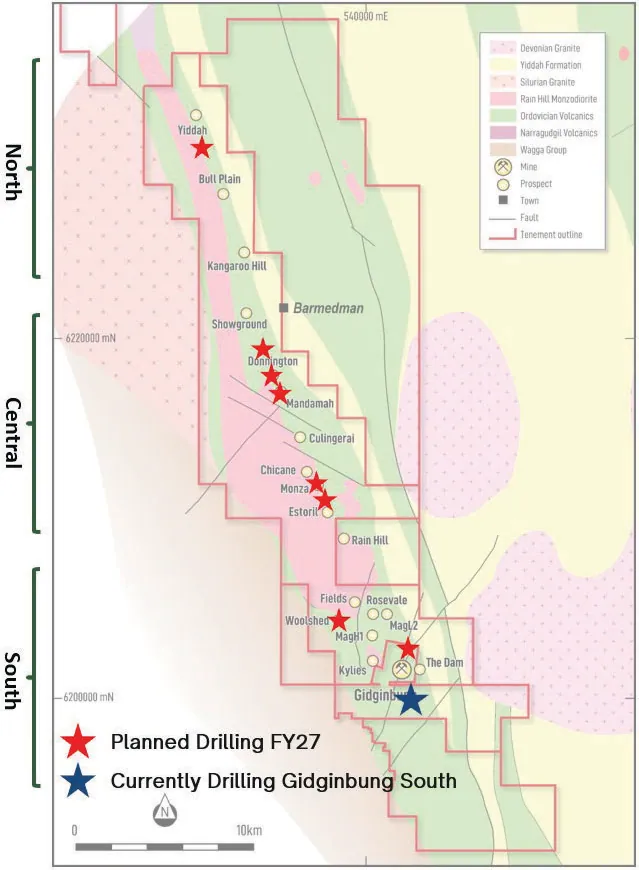
Those results sit alongside the Gidginbung South drill target identified through geophysics and historic drilling. LinQ has now started drilling the Southern Zone target, which it interprets as a possible faulted offset of the Gidginbung system extending more than 1 kilometre beyond the current resource boundary.
A$14.4m cash balance funds an eight-target campaign
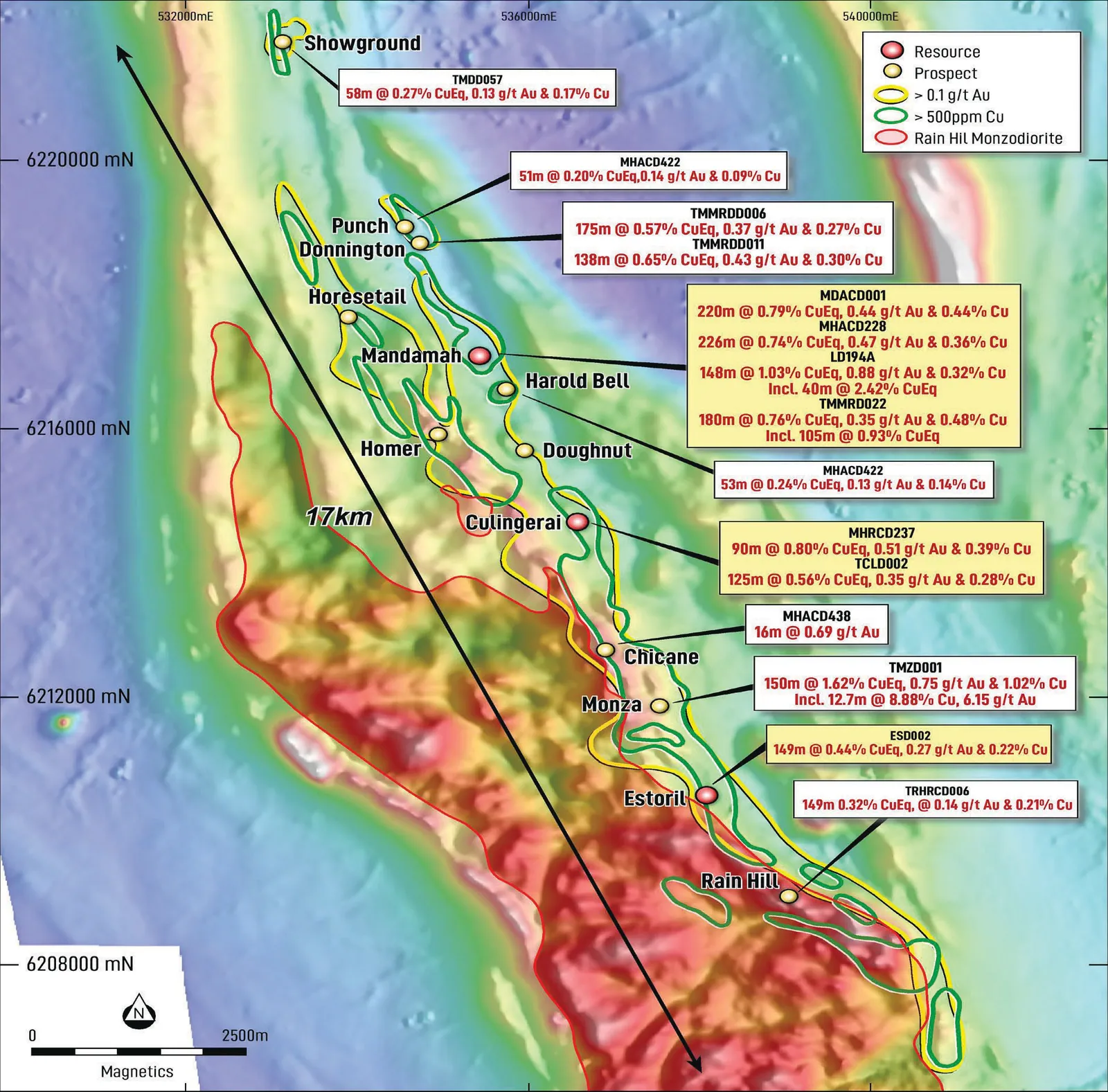
LinQ’s exploration program is not being presented as a one-hole wager. The company has prioritised eight to ten targets from more than 20 mineralised prospects across its 40-kilometre Gilmore belt, with a fully funded 30,000-metre campaign focused on resource growth and new discoveries. Targets include Gidginbung South and North, Mandamah, the Estoril-to-Monza corridor, Donnington, Donnington North and Yiddah South.
Cash stood at A$14.4 million at 30 September, down from A$16.23 million at the previous quarter-end. Net operating cash outflow was A$1.314 million, while A$507,000 was spent on investing activities and exploration and evaluation expenditure was reported at A$1.39 million. On the quarter’s reported cash usage, the Appendix 5B indicated roughly 11 quarters of funding, although drilling intensity and future exploration costs can change that arithmetic.
The immediate test is whether GBRCD021’s visual sulphide story survives the laboratory. If the assays confirm meaningful grades across the long interval, Gidginbung South could become a major new workstream inside LinQ’s already busy campaign. Until then, the company has a compelling geological signal, not a defined resource.
Bottom Line?
The next major catalyst is the GBRCD021 assay package, which must convert an impressive visual interval into measured grades before its scale can be assessed.
Questions in the middle?
- Will laboratory assays confirm economically meaningful gold and copper grades across the 429-metre visual interval?
- Can follow-up drilling establish continuity between Monza and Estoril and support resource growth?
- How quickly will the 30,000-metre campaign draw down LinQ’s A$14.4 million cash balance?
Sources
1-
Quarterly Commentary and Appendix 5B (opens in a new tab)Official market announcement. Linq Minerals Limited · 27 Oct 2026 · linqminerals.com