Minerals 260 strengthens Bullabulling path with A$600 million cash balance

Minerals 260 has strengthened the funding and development position of its Bullabulling gold project, reporting approximately A$600 million of pro forma cash and a definitive feasibility study still targeted for Q1 2027. The company has also completed initial grade-control drilling, expanded its mining tenure and advanced village and water infrastructure.
- A$420 million of new Franco-Nevada royalty and equity funding
- Approximately A$600 million pro forma cash, subject partly to shareholder approval
- Definitive Feasibility Study remains on track for Q1 2027
- 25,970 metres of grade-control drilling completed across Phoenix
- Bullabulling tenure expanded by 367 square kilometres

 Add us as a preferred source on Google
Bullabulling funding moves closer to construction
Minerals 260 Limited (ASX:MI6) has given its 6.2Moz Bullabulling Gold Project a substantial financial buffer, ending the September quarter with approximately A$600 million of pro forma cash and a further funding process under way for the debt still required to build the mine.
The figure includes A$530 million of cash and short-term deposits at 30 September, A$1.98 million received through the share purchase plan after quarter-end and approximately A$71.1 million from the second tranche of its placement, which remains subject to shareholder approval on 30 October. The company raised A$178.9 million in the first tranche and received A$170 million in royalty funding during the quarter.
Franco-Nevada’s total investment in Minerals 260 has now reached A$420 million, comprising the royalty funding and a A$30 million cornerstone equity investment. The royalty extension lifts Franco-Nevada’s aggregate royalty across the relevant area by 1.45 percentage points to 3.90%, while Minerals 260 says traditional project finance is expected to fund the remaining capital required for production.
DFS and approvals remain the key development gates
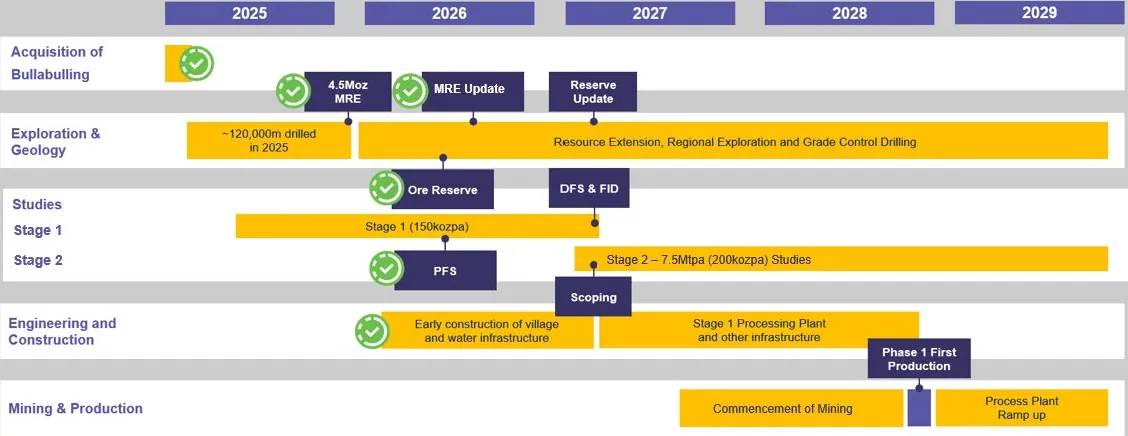
The Definitive Feasibility Study remains scheduled for the first quarter of calendar 2027 and is intended to support a Final Investment Decision. Minerals 260 says geotechnical testwork is complete and is expected to support steeper pit wall angles in fresh rock than those used in the Pre-Feasibility Study, while metallurgical work continues to show comminution assumptions and gold recoveries consistent with that earlier study.
An expanded mining lease has been granted, with the new lease and other granted leases covering the entire mining and processing area defined in the PFS. Remaining approvals under Western Australia’s state pathway are still being assessed, so the Q1 2027 timetable remains dependent on regulatory progress as well as completion of the project financing process.
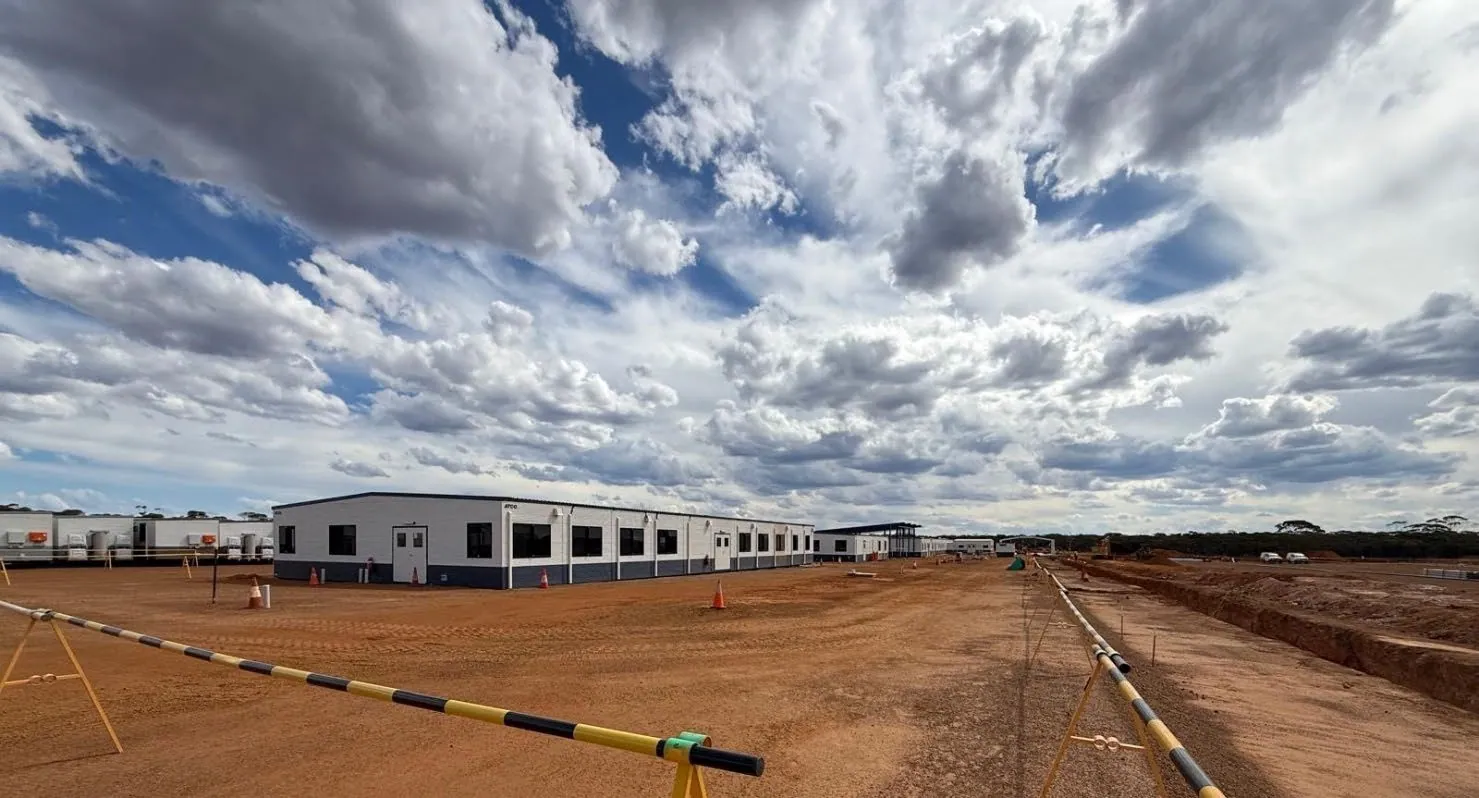
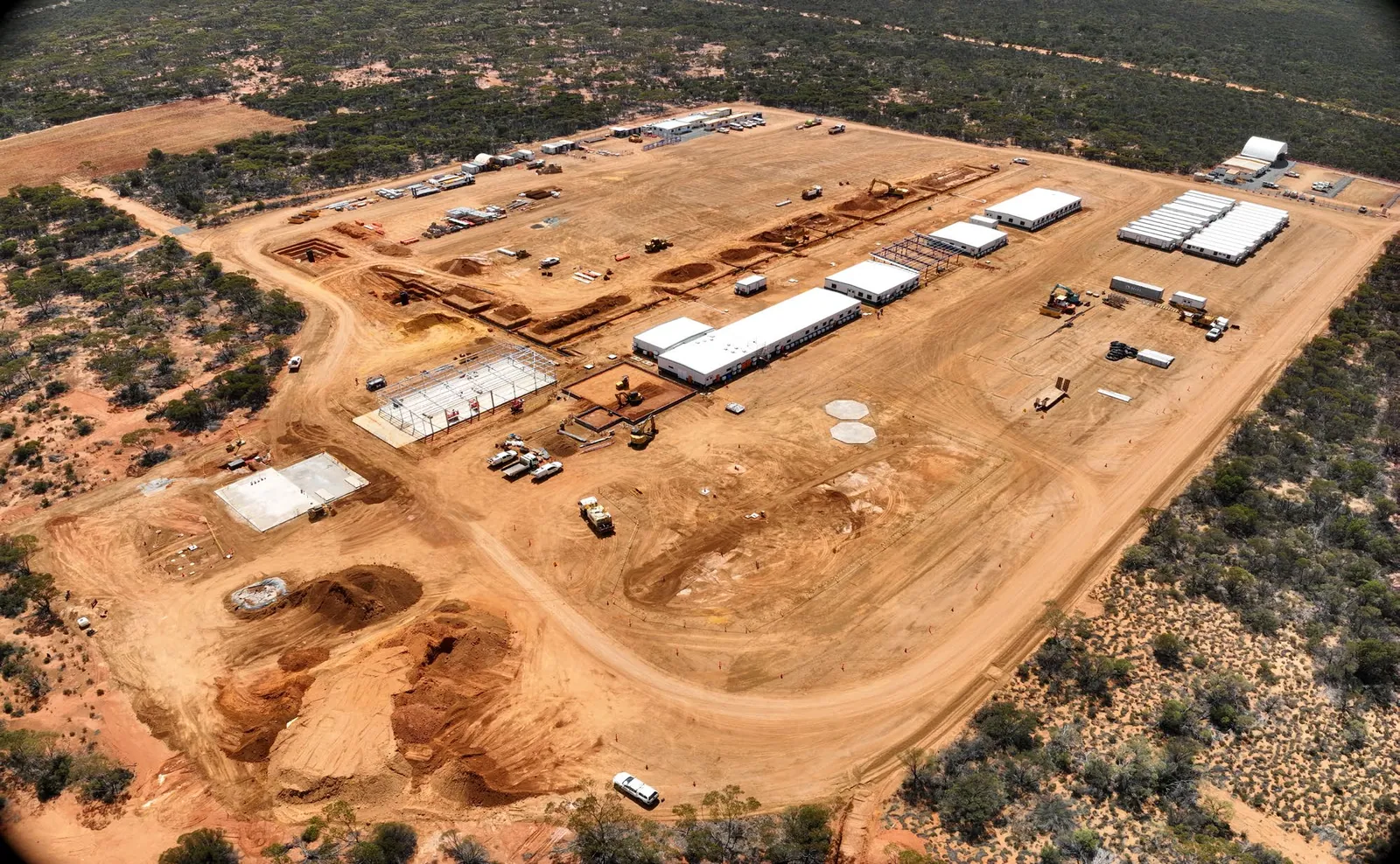
Physical preparation is advancing alongside the paperwork. Construction of the accommodation village began in May, central facilities have been manufactured and an additional 200 rooms have been approved, taking planned capacity to 600 rooms. The village is expected to be operational in the first quarter of 2027, while 22 water bores have been installed and pump testing continues.
Grade control drilling supports the resource model
The initial grade-control program comprised 320 reverse-circulation holes for 25,970 metres across Phoenix North and South. Minerals 260 said preliminary analysis, including 39 twin-hole comparisons, indicated overall gold grades and mineralised intercepts correlated well with the drilling supporting its 6.2Moz Mineral Resource Estimate. The program follows the October grade control drilling that reported consistent resource-model results and high-grade intersections.
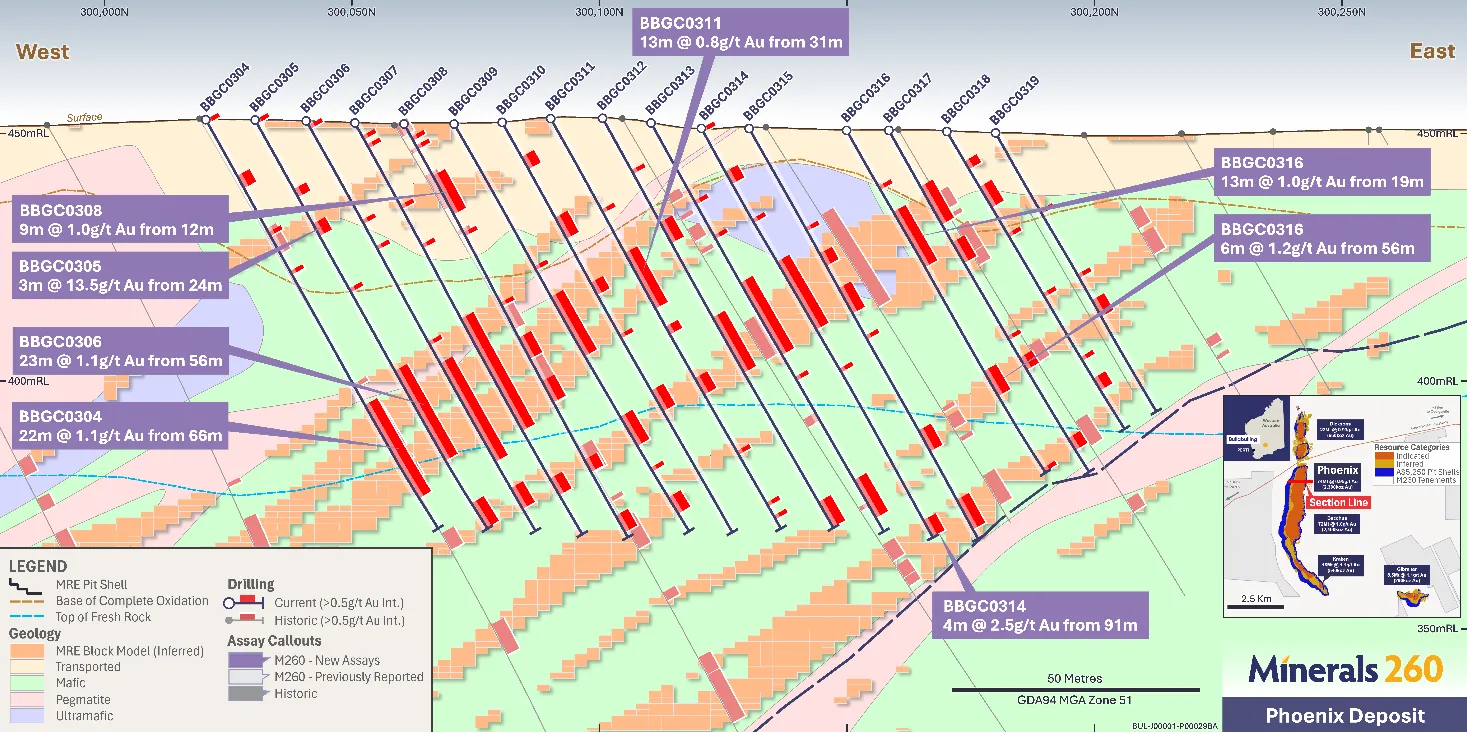
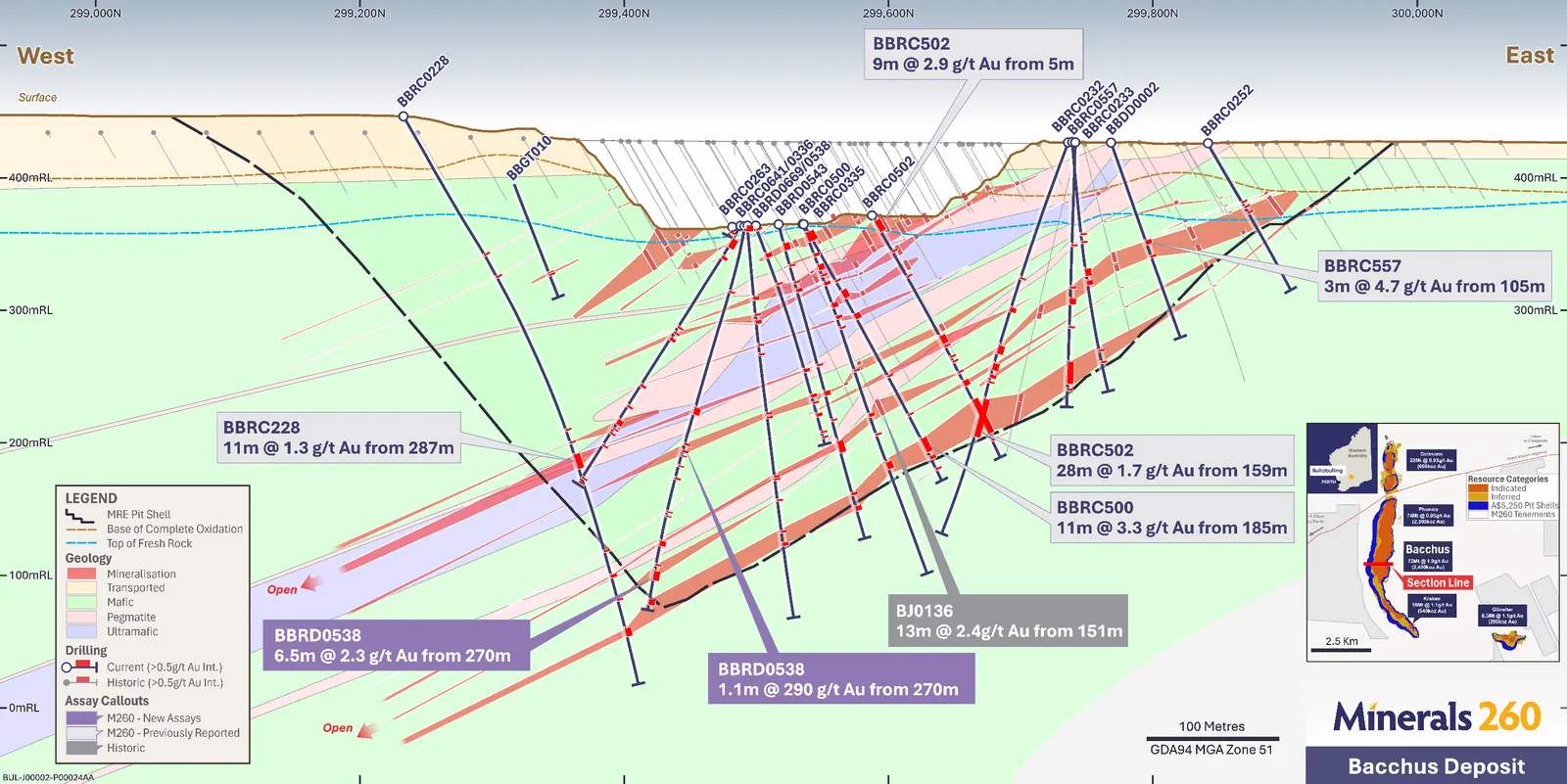
Results included 1.1 metres at 290 grams per tonne gold from 170 metres at Bacchus and 7 metres at 10.9 grams per tonne from 7 metres at Phoenix. The company says further drilling is planned to test the geometry and continuity of the higher-grade Bacchus zones and assess their potential materiality to the resource, while a second grade-control program is due to begin shortly.
Tenure expands as cash deployment accelerates
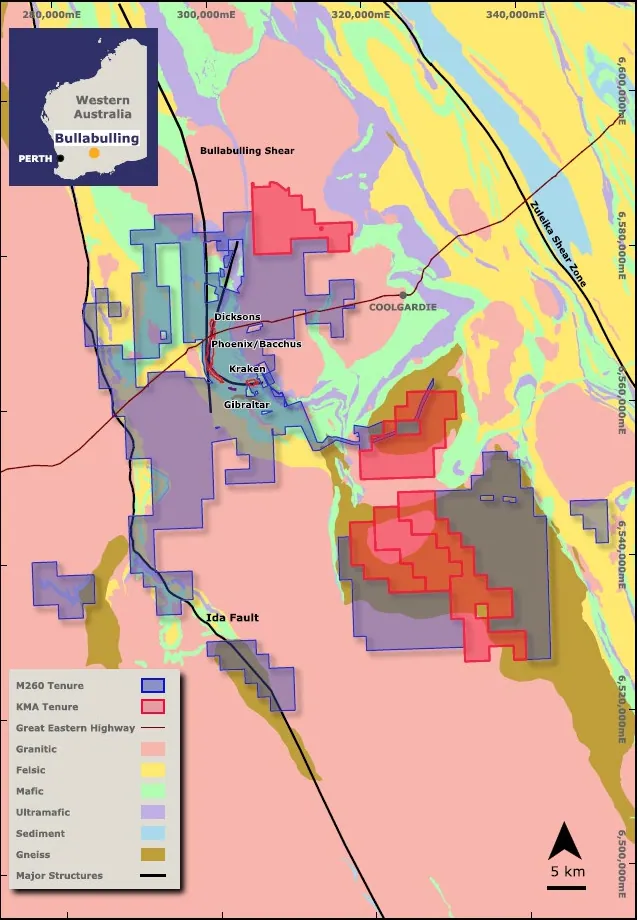
Minerals 260 acquired 367 square kilometres of largely contiguous tenure during the quarter, taking the Bullabulling project area to 1,527 square kilometres from the 130 square kilometres acquired in April 2025. It says the expanded ground gives it control of the largest and most prospective areas along the Bullabulling fault, although the filing does not attach a new resource estimate to the acquisition.
Cash use reflects the transition from exploration towards development: A$20.3 million went to exploration and evaluation, including drilling, water work, testwork and engineering, while A$19.1 million was spent on property, plant and equipment, primarily the village. Against that spending, the company has the A$250 million institutional placement largely completed and a Franco-Nevada royalty package in place, but it has yet to secure the project debt needed to complete the funding plan.
Bottom Line?
The balance sheet now gives Minerals 260 room to advance Bullabulling, but the investment case is moving into a more demanding phase: approvals, project debt, the DFS and the October placement vote all need to line up before FID.
Questions in the middle?
- Will shareholders approve the A$71.1 million second placement tranche on 30 October?
- Can project finance be completed on terms that preserve the planned Q1 2027 FID timetable?
- Will the second grade-control program show that the higher-grade Bacchus and Phoenix zones are continuous enough to affect mine planning or reserves?
Sources
1-
September 2026 Quarterly Activities and Cashflow Report (opens in a new tab)Verified source. Minerals 260 Limited · 27 Oct 2026