Platina finds broad gold system with most of Sunrise Bore still untested

Platina Resources has confirmed a broad, shallow gold system at Sunrise Bore, with only about 200 metres of a 1.2km mineralised trend tested so far. The ASX-listed explorer ended September with A$10.746 million in cash after completing the US$14 million sale of its Owendale scandium project.
- 29m at 3.38g/t gold from 11m, including 11m at 8.62g/t
- Mineralised zone estimated at around 80m true thickness and open down-dip
- Only about 200m of a 1.2km Sunrise Bore trend tested
- A$10.746 million cash balance after final US$2 million Rio Tinto payment
- Mt McKenna Phase 4 drilling under way and 992km² of Jove tin licences applied for

 Add us as a preferred source on Google
Sunrise Bore delivers Platina’s strongest exploration signal
Platina Resources Limited (ASX:PGM) has found the kind of early-stage exploration result that can change the shape of a junior’s story: its first reverse-circulation drilling at Sunrise Bore confirmed a broad gold system, while leaving most of the identified trend untouched.
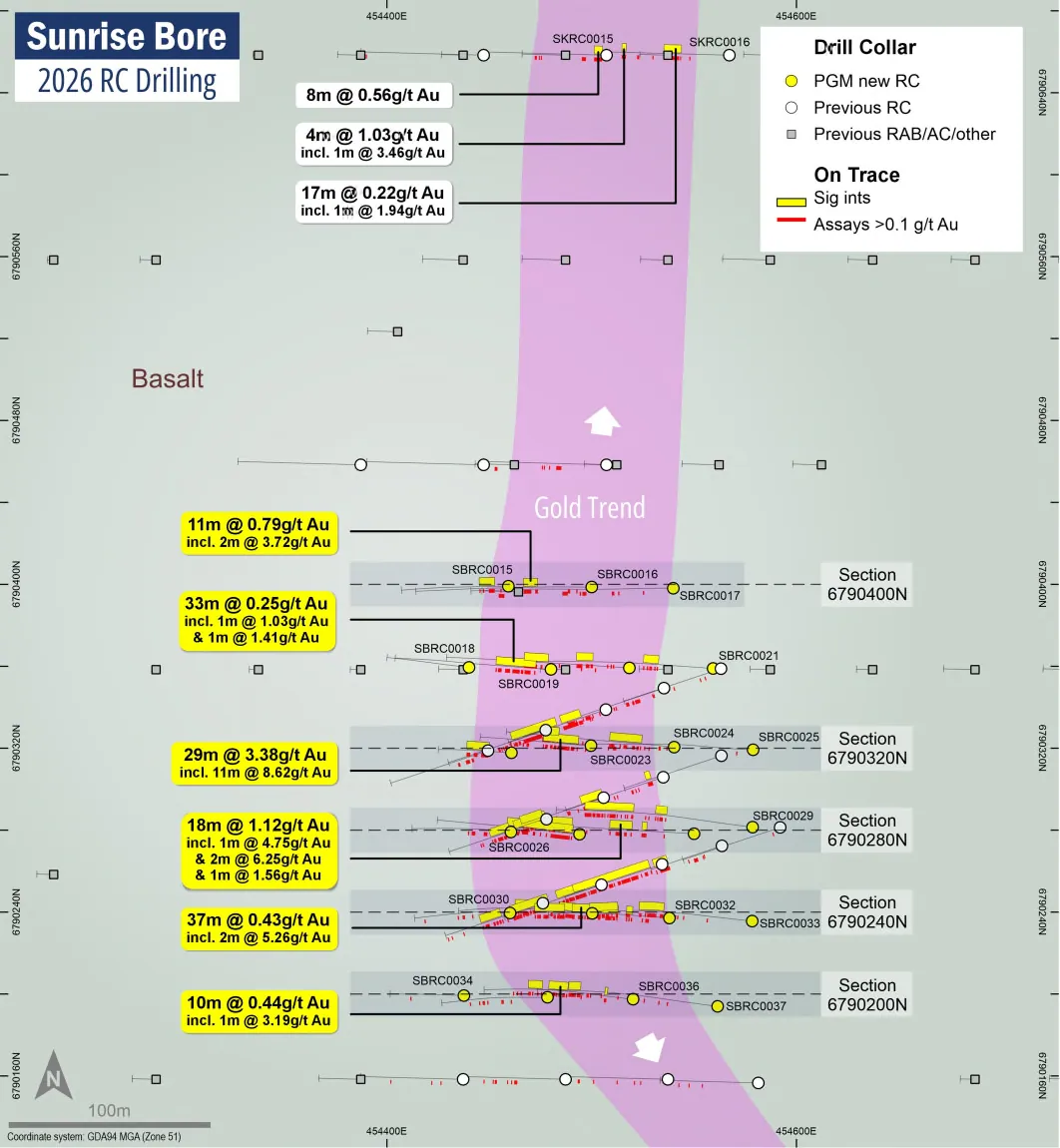
The standout result was 29 metres at 3.38 grams per tonne gold from 11 metres, including 11 metres at 8.62g/t, in hole SBRC0023. The company estimates the main mineralised zone has a true thickness of about 80 metres and remains open down-dip and along strike. Yet the 23-hole, 2,863-metre program tested only about 200 metres of a 1.2km mineralised trend within a wider 3.6km structural corridor.
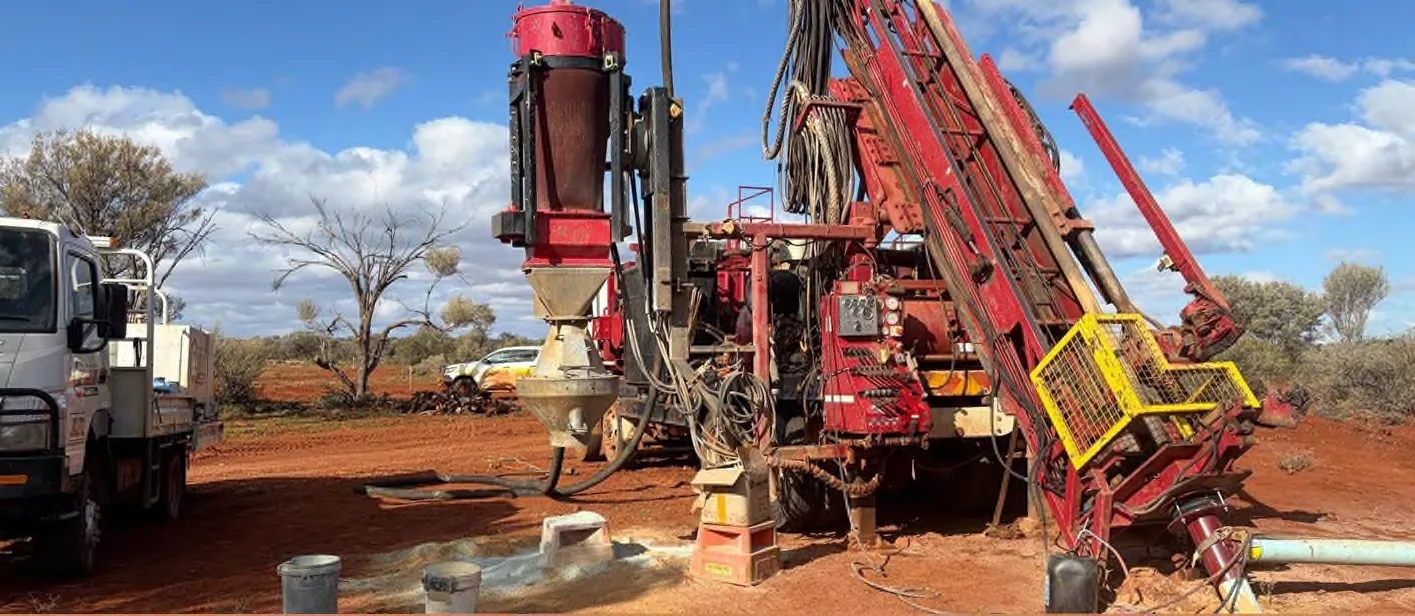
The result builds on the maiden Sunrise Bore drilling, which earlier reported the same standout intercept and framed the project as a largely untested gold opportunity near Laverton. Platina now plans to combine multi-element geochemistry, magnetic susceptibility data, historical drilling and further geophysical work before designing the next RC campaign.
Grade continuity remains the central geological question
The encouraging headline comes with an important qualification. The higher grades occur mainly in oxide material and may reflect supergene enrichment, meaning Platina needs to establish how the mineralisation behaves in fresh rock rather than assume that the shallow grades will persist at depth. Other reported intersections included 18 metres at 1.12g/t, 37 metres at 0.43g/t and 55 metres at 0.25g/t.
No mineral resource has been reported for Sunrise Bore. The immediate value of the program is therefore geological: it has confirmed the presence, width and apparent scale of mineralisation, but not yet defined an economic deposit. Follow-up drilling will need to show whether the higher-grade zones have coherent controls and meaningful continuity.
Mt McKenna drilling adds a second active gold front
Platina is not relying on one target. At Mt McKenna, the company integrated 220 aircore holes covering 10,809 metres and identified a mineralised corridor extending more than 1km at Granite Well East, including 1 metre at 7.10g/t gold. A separate north-north-east-trending structure at Black Rock and Granite Hill extends for more than 800 metres and returned 4 metres at 4.69g/t.
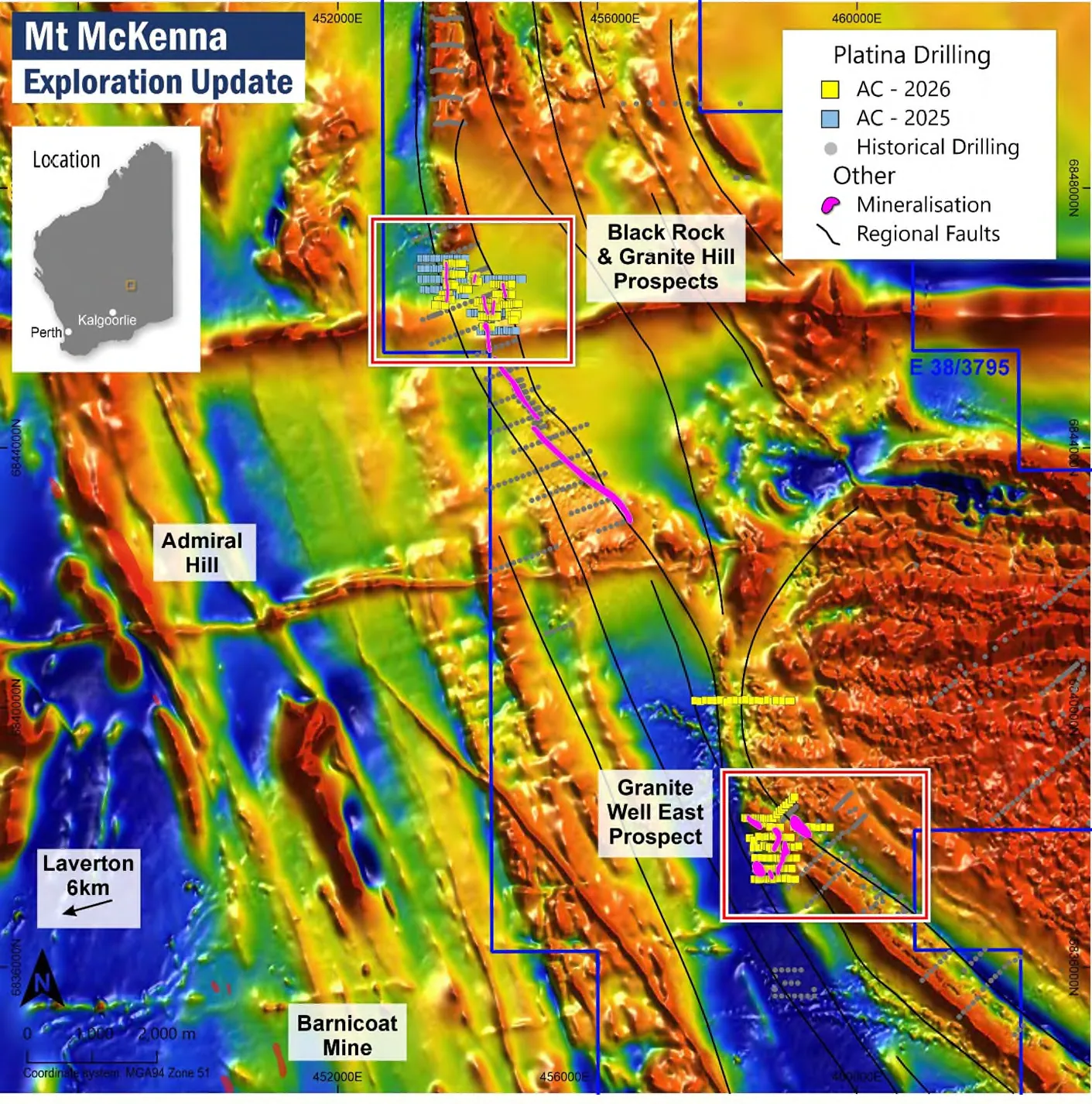
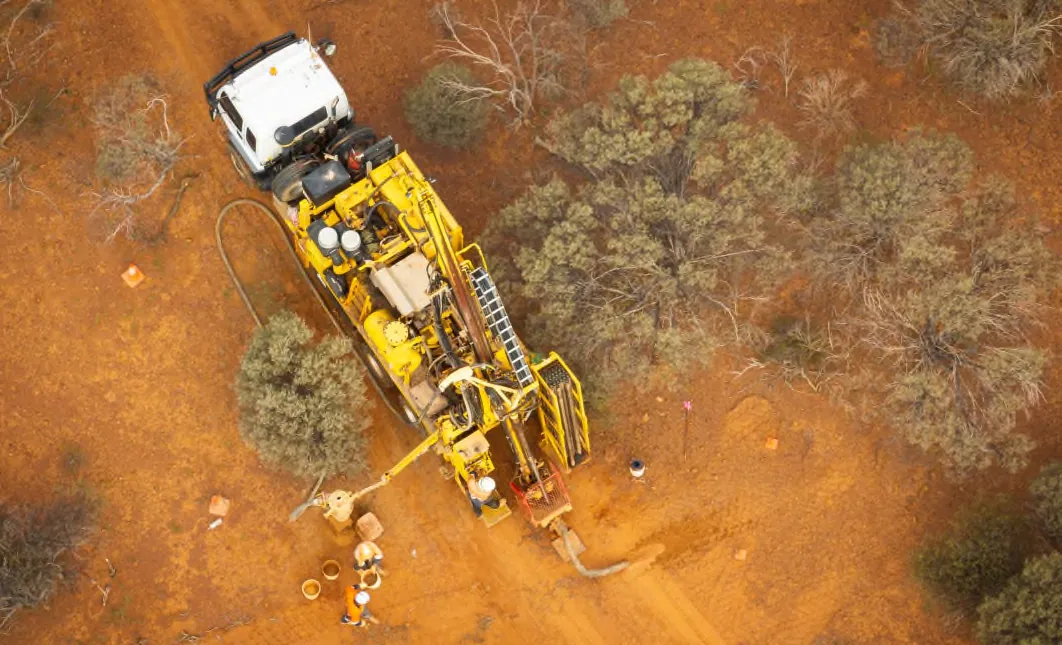
Mt McKenna gold zones had already pointed to deeper drilling backed by a A$109,200 Western Australian Government grant. Phase 4 aircore drilling at Granite Well East began on 6 October, with 53 holes planned over roughly 3,200 metres. Assays are intended to guide either follow-up RC drilling or induced-polarisation surveys, while a 13-hole RC program at Black Rock and Granite Hill is planned for early 2027.
Owendale cash funds a wider exploration pipeline
The quarter also strengthened Platina’s funding position. Rio Tinto’s final US$2 million payment completed the US$14 million sale of the Owendale Scandium Project, lifting cash to A$10.746 million from A$8.615 million at 30 June. Quarterly exploration and evaluation expenditure was A$830,000, while the Appendix 5B calculation indicated about 10.31 quarters of funding at the reported level of net operating outgoings.
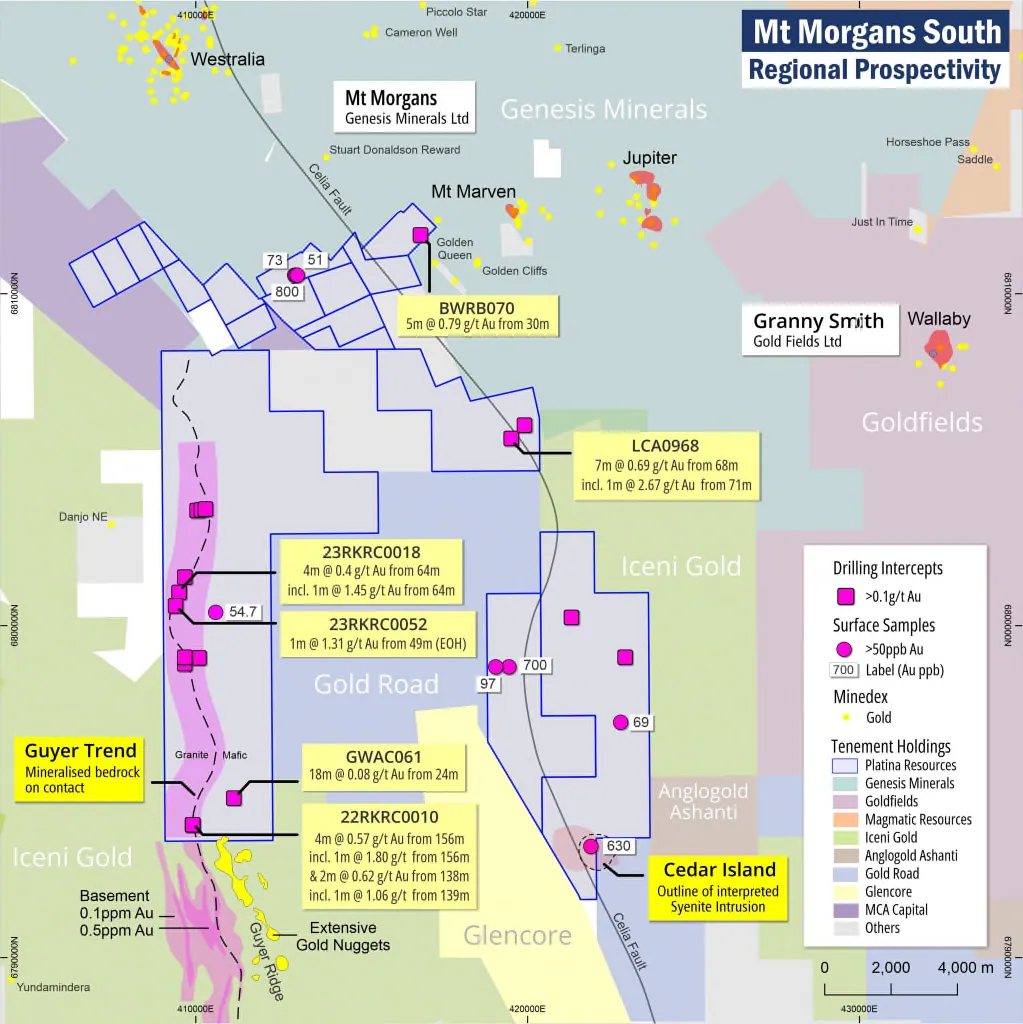
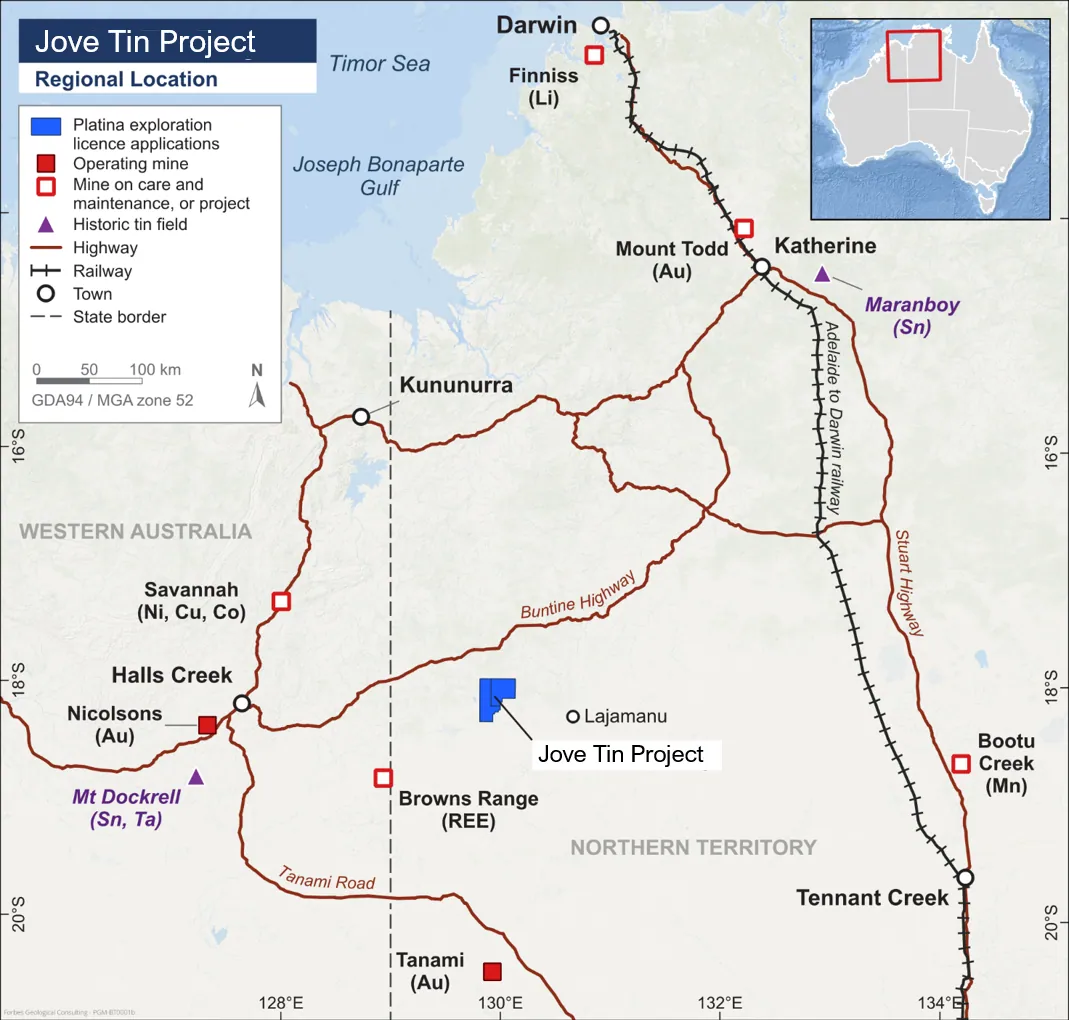
That balance is supporting a broader Laverton program across Sunrise Bore, Mt McKenna and Mt Morgans South, where Platina is still compiling historical data and arranging access and heritage work before soil sampling. The company has also applied for two exploration licences covering about 992 square kilometres at the Jove tin project in the Northern Territory. The applications remain subject to grant and regulatory approvals, and the apparent geophysical targets have not yet been confirmed as a tin system.
The next test is execution rather than acreage. Sunrise Bore needs fresh-rock drilling and tighter geological modelling; Mt McKenna needs assays that convert long corridors into drillable targets; and Jove must first clear the licensing process. Platina now has the cash and multiple shots on goal, but the portfolio’s exploration promise still has to survive the more demanding stages of continuity, grade and metallurgy.
Bottom Line?
Platina has funded room to pursue several targets, but Sunrise Bore’s investment case now depends on whether its shallow oxide grades continue into fresh rock and along the untested trend.
Questions in the middle?
- Will follow-up drilling confirm that Sunrise Bore’s higher-grade zones persist beyond the oxide profile?
- Can Mt McKenna’s broad aircore corridors produce repeatable mineralisation strong enough to justify deeper RC drilling?
- Will the Jove licence applications and early geophysical work add a credible second commodity pathway without diluting the Laverton gold focus?
Sources
1-
Quarterly Activities/Appendix 5B Cash Flow Report (opens in a new tab)Verified source. Platina Resources Limited · 27 Oct 2026