Rapid uncovers widening sulphide zones at Prophet River

Rapid Critical Metals has completed maiden drilling at its Prophet River gallium-germanium project, with visible sphalerite and galena logged in all seven holes. The strongest downhole intervals widened at Pad 2, but laboratory assays will determine whether the visual results contain economic zinc, germanium or gallium grades.
- Seven diamond holes completed for 1,486m
- Pad 2 intervals widened to about 29m downhole
- Visible sphalerite and galena logged in all holes
- True widths and grades remain unconfirmed
- Assays expected in mid-November 2026

 Add us as a preferred source on Google
Pad 2 produces the strongest visual intersections
Rapid Critical Metals Limited (ASX:RCM, RCMO) has finished its first diamond drilling campaign at the 100%-owned Prophet River Gallium-Germanium Project in northeastern British Columbia, with the most encouraging visual observations concentrated around Pad 2. All three holes drilled from that pad intersected visible sphalerite, the zinc sulphide that can host germanium and gallium, alongside galena.
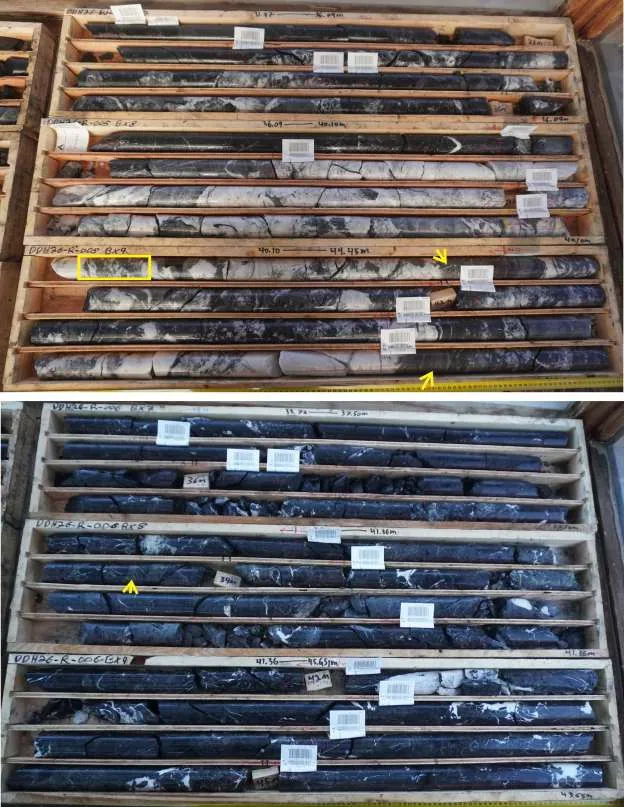
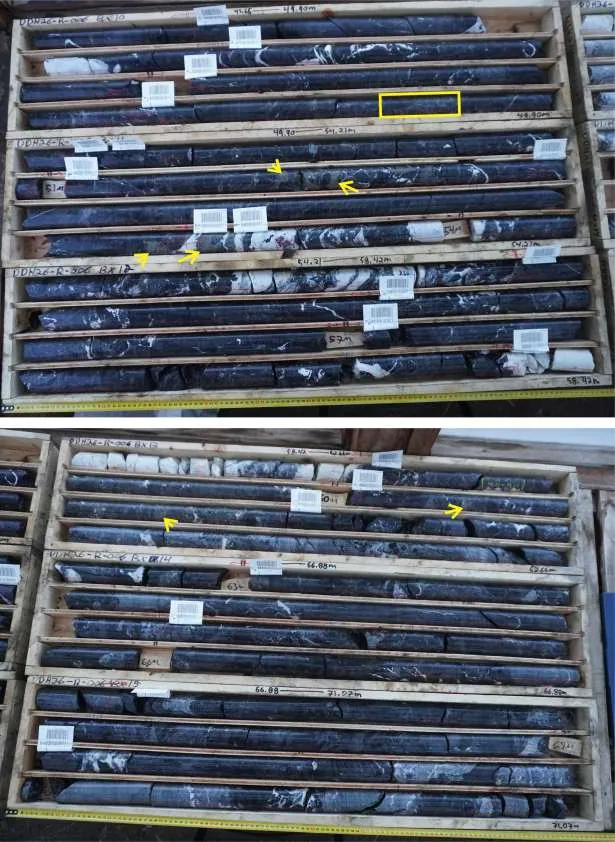
The logged zone expanded as the holes steepened: about 3.5 metres in PR-004, 11 metres in PR-005 and 29 metres in PR-006. The standout observations included a three-metre interval with visually estimated sphalerite of up to 8% in PR-005, and portions of PR-006 carrying visual estimates as high as 10%. Those are downhole lengths, not true widths, and the company has not yet established the geometry of the mineralisation.
Seven holes test the Prophet River system
The programme comprised seven NQ diamond holes totalling 1,486 metres from three drill pads. Pad 1 tested the area of historical drilling, while Pad 3 targeted an induced-polarisation chargeability anomaly identified in Rapid’s 2025 survey. The deepest hole, PR-007, reached 276 metres, more than twice the depth of the deepest historical hole, but returned only trace sphalerite and galena at 170 to 172 metres.
Visible sulphides were also recorded in the three Pad 1 holes, including deeper zones within the Stone Formation. Rapid interprets these deeper occurrences as part of a broader Mississippi Valley-type mineral system. The company had previously secured the Prophet River drilling permit after obtaining a British Columbia Mines Act permit, clearing the formal approval needed for the campaign.
Assays will decide whether the geology carries value
The visual results are an exploration signal, not a grade result. Sphalerite and galena cannot reveal germanium or gallium concentrations by eye, and the company expressly cautions that visual abundance is not a substitute for laboratory analysis. Samples from the mineralised intervals are at ALS in Kamloops, with germanium to be tested in Perth using sodium peroxide fusion because the company says conventional four-acid digestion can understate germanium.
Initial assay results are expected in mid-November 2026. Those results will need to show not only zinc and lead grades, but whether germanium and gallium are present at meaningful levels and correlate with the sulphide zones. Historical bulk samples at Prophet River returned reported germanium values of up to 1,500 parts per million, although the announcement notes that historical concentrate figures were calculated estimates rather than assays of produced concentrate.
Seismic work to guide the next drilling phase
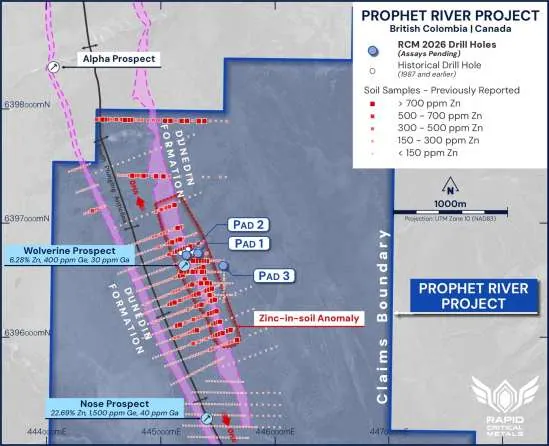
Rapid plans to combine the assays with mineralogical studies, structural modelling and a seismic survey. The company says the Dunedin Contact, interpreted as the main mineralising conduit, extends for more than six kilometres across its claims. It also intends to reassess the Pad 3 chargeability result, after the weak sulphide observation suggested that IP alone may not reliably target sphalerite at Prophet River.
Follow-up drilling could begin as early as mid-2027, subject to assay results, the seismic programme, weather and annual renewal of the wildlife management plan. Until then, the key question is whether the widening visual intervals at Pad 2 translate into continuous, economically relevant grades rather than simply thicker downhole exposure to a complex sulphide-bearing zone.
Bottom Line?
The visual widening at Pad 2 provides a stronger geological target, but the investment case still turns on November assays, true widths and the relationship between zinc mineralisation and germanium-gallium grades.
Questions in the middle?
- Do the Pad 2 sulphide zones carry consistent zinc, germanium and gallium grades across the reported downhole intervals?
- How much narrower will the mineralised zones be once true widths and structural orientation are established?
- Will seismic data identify a feeder structure capable of supporting follow-up drilling beyond the initial Pad 2 area?
Sources
1-
Sphalerite Intervals at Prophet River Ga-Ge Project - Canada (opens in a new tab)Verified source. Rapid Critical Metals Limited · 27 Oct 2026