Reach Resources uncovers stronger gold zones before Murchison South mining

Reach Resources has identified shallow, higher-grade gold zones in grade control drilling at the proposed NW Pit, including 2 metres at 24.6 g/t Au within a broader 7-metre interval grading 7.5 g/t Au. The results largely support the existing resource model while pointing to additional grade and width that could influence mine scheduling.
- 2m at 24.6 g/t Au within 7m at 7.5 g/t Au from 20m
- 123 of 163 holes have reportable assay results
- 10m x 10m drilling confirmed mineralisation continuity and exposed higher-grade zones
- Remaining assays and re-assays are expected to inform final mine scheduling
- Mining at the NW Pit remains targeted for 2027

 Add us as a preferred source on Google
High-grade zones emerge inside the proposed NW Pit
Reach Resources Limited (ASX:RR1) has found stronger and wider pockets of shallow gold than its existing model predicted at the proposed NW Pit within the Murchison South Gold Project in Western Australia. The standout result was 7 metres at 7.5 g/t Au from 20 metres in hole 26MSGC0091, including 2 metres at 24.6 g/t Au.
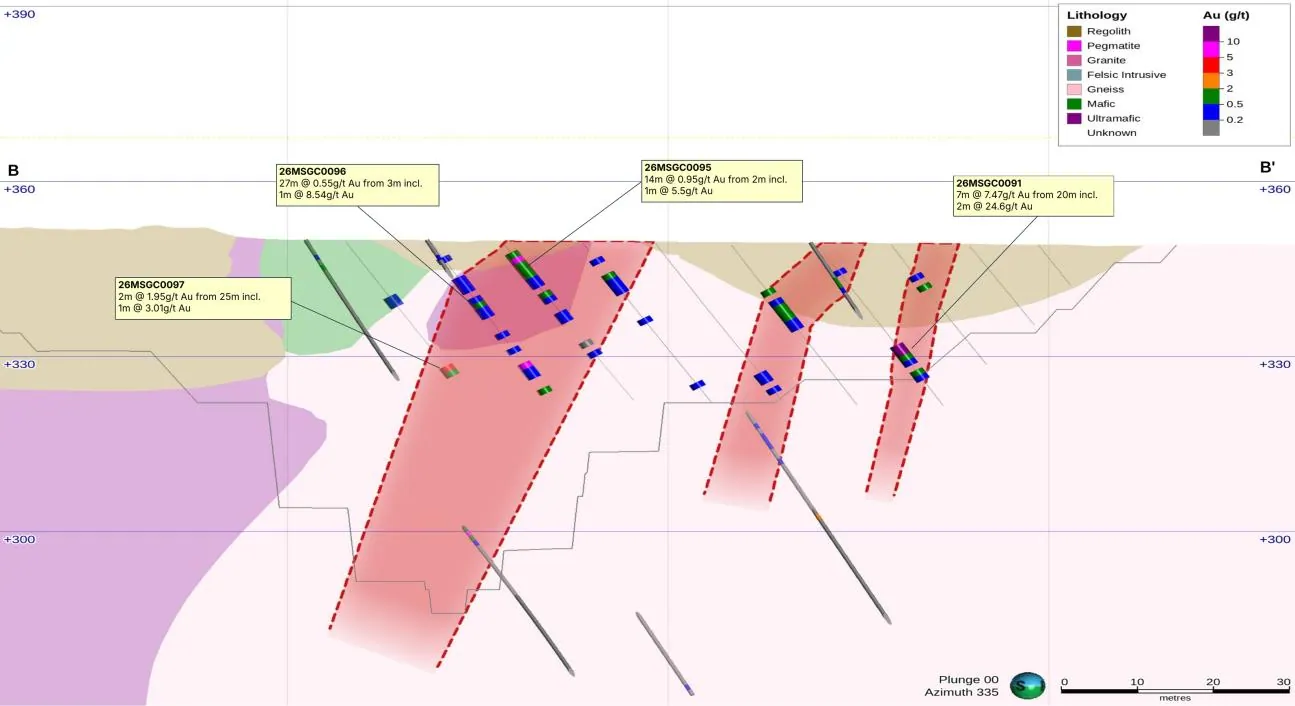
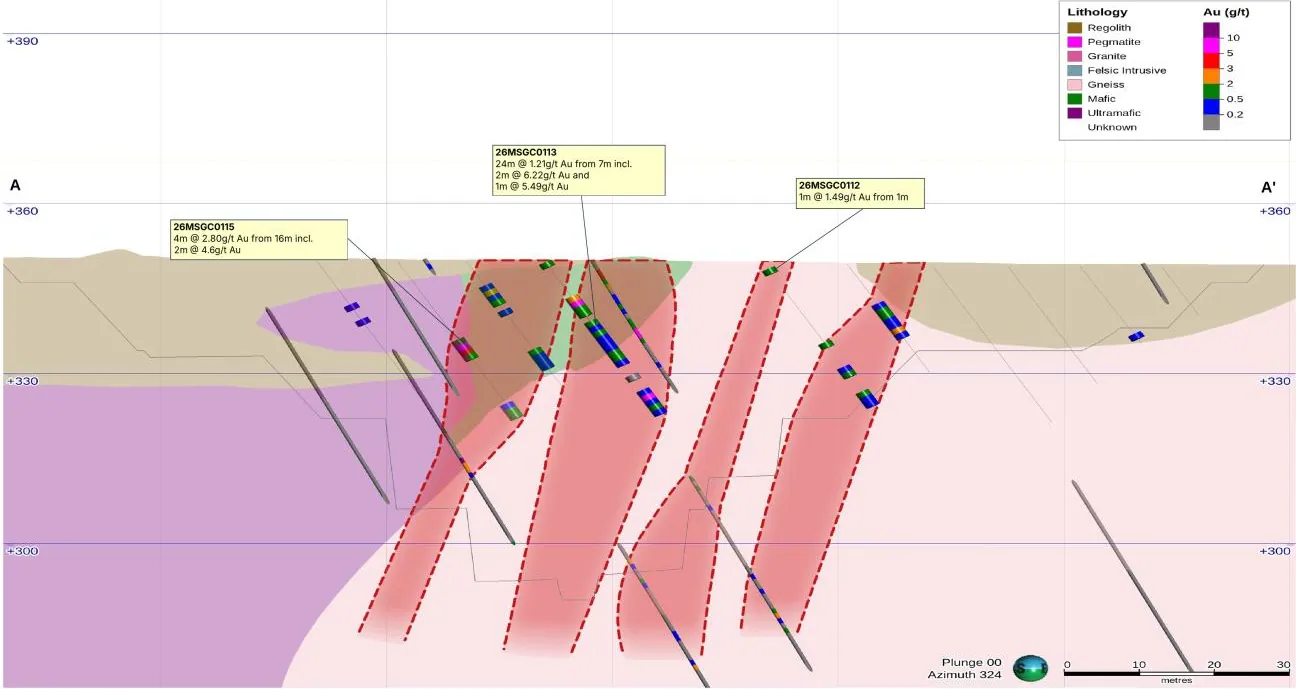
Other notable intercepts included 15 metres at 2.2 g/t Au from 2 metres, including 2 metres at 13.2 g/t Au, and 24 metres at 1.2 g/t Au from 7 metres. Nine holes returned intervals above 5 g/t Au, according to the company. The reported widths are downhole measurements rather than confirmed true widths.
The results arrive as the project moves from resource definition towards mining under the binding Andel mining agreement, which provided for Andel Resources to fund mining and processing at Murchison South. Reach says the grade control data will now feed into final modelling and short-term scheduling for the NW Pit.
Tighter drilling confirms continuity and refines ore boundaries
The program comprised 163 reverse-circulation holes for about 4,236 metres on a 10m x 10m grid covering the first five proposed mining benches. That is twice the nominal resolution of the earlier resource drilling, which used a grid of roughly 20m x 20m.
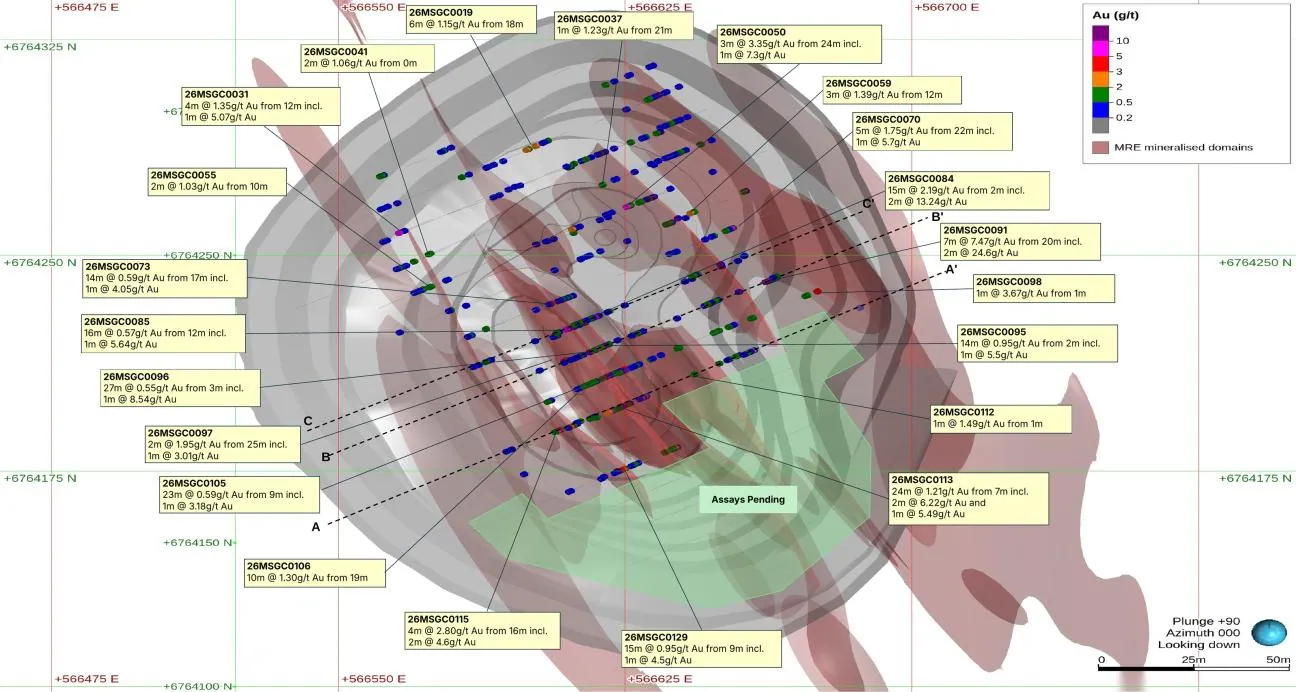
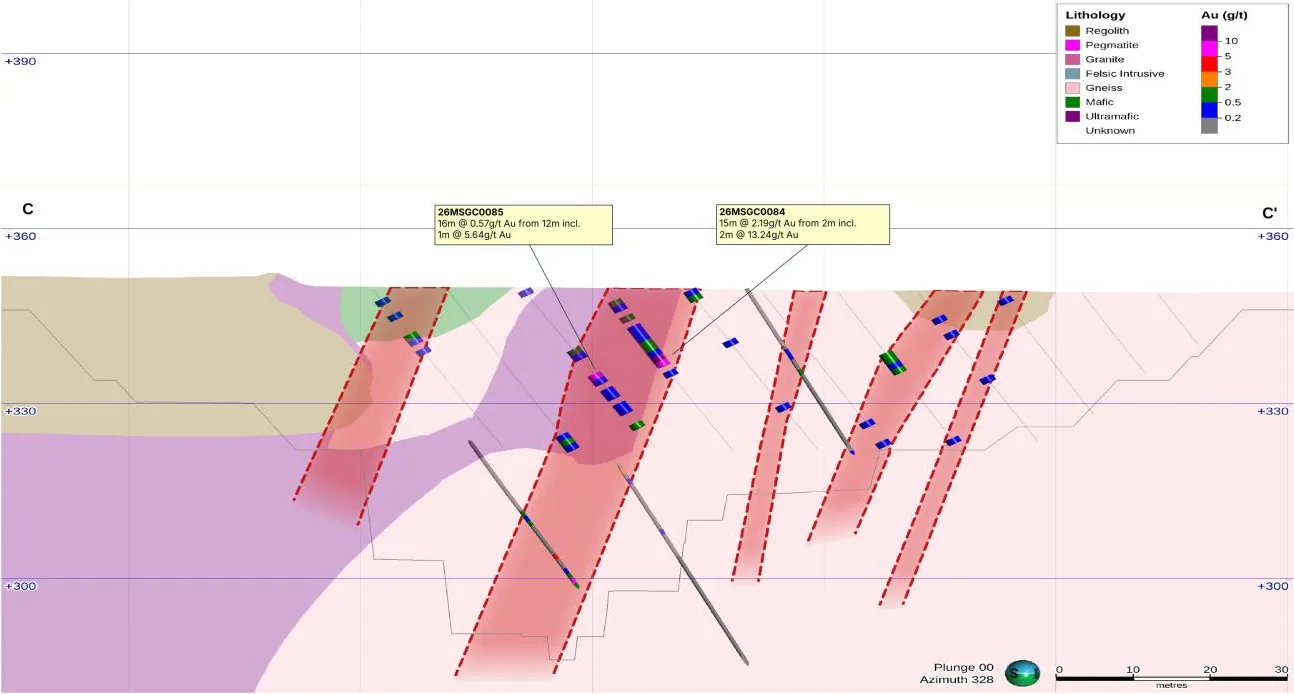
Reach said the closer spacing largely confirmed the geometry and continuity of the mineralised envelope, with gold appearing where the geological model predicted it. It also identified higher-grade zones and greater widths in areas previously modelled as low grade, including the strong result in hole 26MSGC0084 and the 24.6 g/t Au zone in hole 26MSGC0091.
The practical value is less glamorous than the headline grades but potentially important: the tighter grid is intended to define ore-waste contacts bench by bench. That should allow selective mining, with ore directed to processing and waste to the dump, although the announcement does not provide a revised mine plan, production forecast or economic estimate.
Remaining assays stand between drilling and mine scheduling
Assay results have been received for 123 of the 163 holes in the program. A further 40 holes remain outstanding, while 43 samples have been excluded pending re-assay after a certified reference standard failed; the company expects the remaining results in November.
The quality-control data provides some support for the released results, with 143 of 148 returned standards within two standard deviations of their certified values and all 149 returned blanks below 0.05 g/t Au. Reach also noted that the deposit has a nuggety, quartz-vein-hosted style of mineralisation, which can produce greater variation in duplicate and repeat assays at higher grades.
Reach says the updated grade control interpretation will be used by Andel and SMS Mining to finalise short-term scheduling ahead of first ore production, with mining expected to commence in 2027. The next meaningful test is whether the remaining assays and revised model convert these promising local zones into a measurable improvement in recoverable ore, dilution assumptions or the timing of the first mining benches.
Bottom Line?
The drilling has improved confidence in the first pit and revealed upside, but the investment case still depends on the remaining assays, the revised mine schedule and execution of mining in 2027.
Questions in the middle?
- Will the outstanding assays and re-assays confirm that the higher-grade zones are continuous enough to affect mine scheduling?
- Does the updated grade control model materially change expected ore recovery, dilution or pit economics?
- Can Andel and SMS Mining move from modelling and scheduling to first ore production on the stated 2027 timetable?
Sources
1-
Excellent Results Confirm High-Grade Gold in Open Pit (opens in a new tab)Verified company source. Reach Resources Limited · 27 Oct 2026 · reachresources.com.au