Cazaly takes control of Goongarrie as Hastings gold trend expands

Cazaly Resources has secured a 51% stake in the Goongarrie Gold Project a year ahead of schedule, while early Hastings drilling extended anomalous gold mineralisation along the Bardoc Tectonic Zone. The explorer is now testing another historical target at Gulls Blow as a new managing director begins a review of the wider portfolio.
- 51% Goongarrie interest achieved 12 months ahead of deadline
- Hastings drilling traced anomalous gold more than 400m south
- Gulls Blow RC drilling targets untested mineralisation beneath historic workings
- Abenab North survey prioritises Accra and Abenab for drilling
- $3.031m cash and 5.5 quarters of funding reported

 Add us as a preferred source on Google
Goongarrie stake reaches majority control early
Cazaly Resources Limited (ASX:CAZ) has moved to majority control of the Goongarrie Gold Project after meeting the second farm-in milestone with Brightstar Resources Limited (ASX:BTR) 12 months before the September 2027 deadline. The company now holds 51%, having completed the additional $1 million of expenditure required under Stage 2 through drilling, gravity work, modelling and geological interpretation.
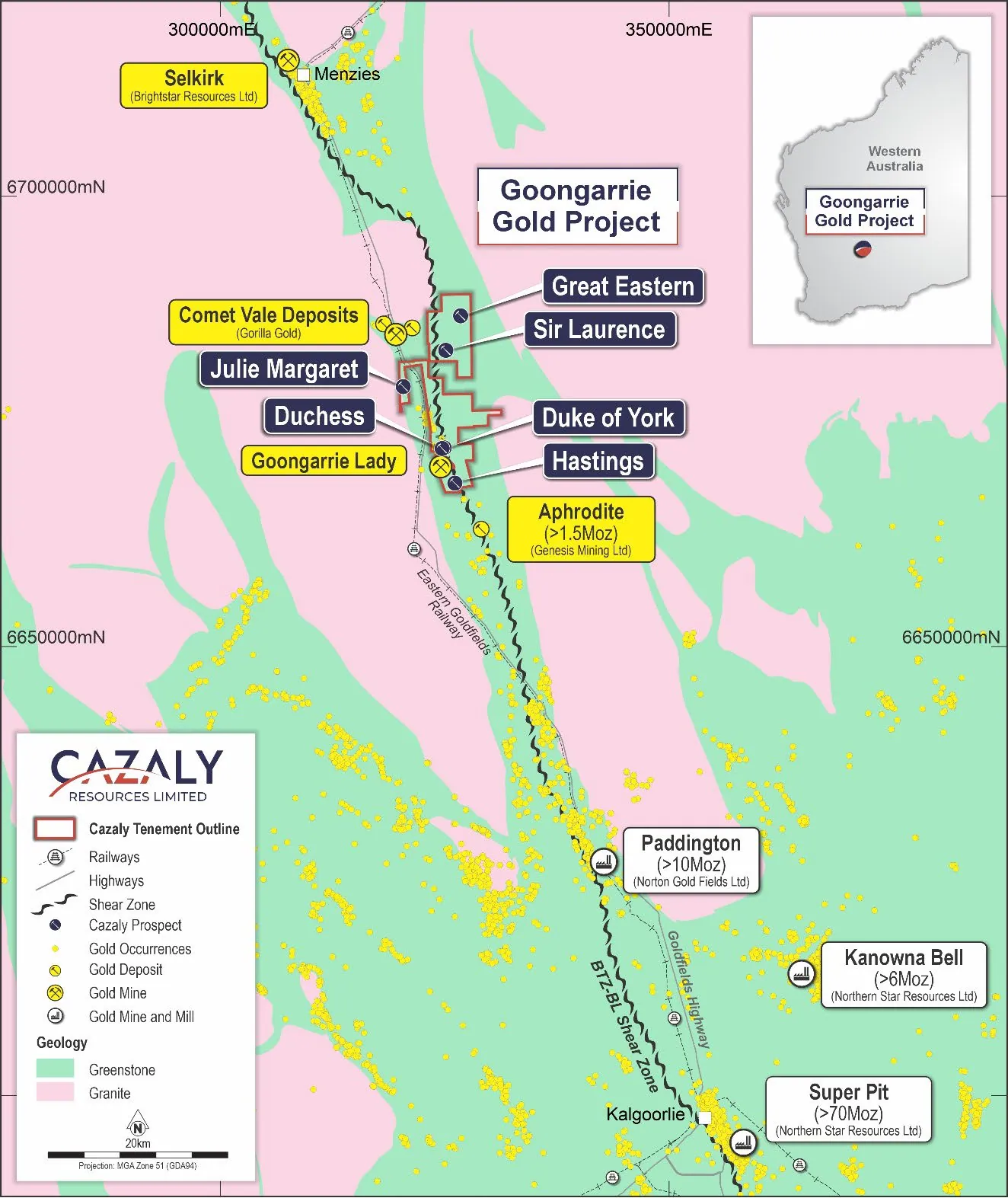
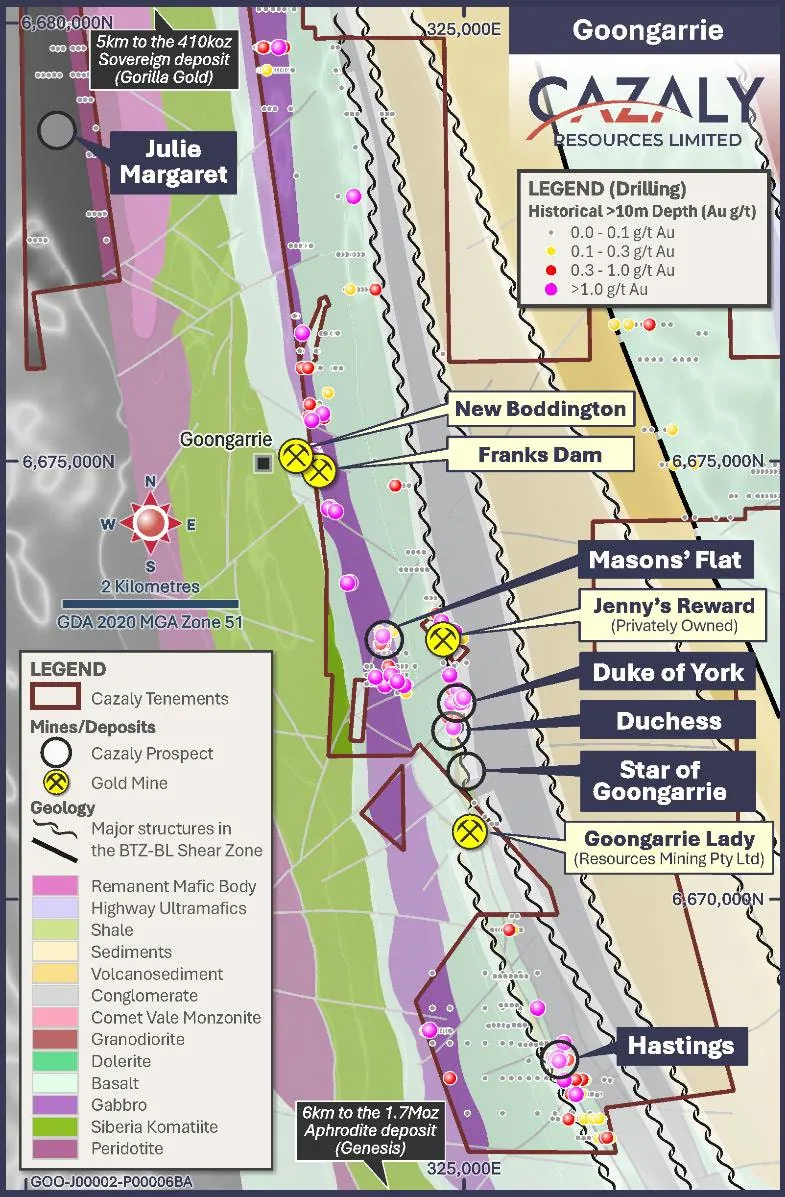
The earn-in still has a third step ahead: a further $1 million of expenditure by March 2029 would take Cazaly’s interest to 80%. Across Goongarrie, Cazaly has completed 5,156 metres of RC drilling and 13,828 metres of aircore drilling. That makes the project the clear centre of gravity in an exploration portfolio that management is now reviewing.
Hastings extends gold trend beneath shallow cover
The quarter’s most tangible exploration result came from Hastings, where 50 aircore holes covered 3,512 metres across 2.1 kilometres of the Bardoc Tectonic Zone. The programme confirmed and extended the historic Kingwest gold trend more than 400 metres south of a previous intercept of 38 metres at 3.1 grams per tonne gold.
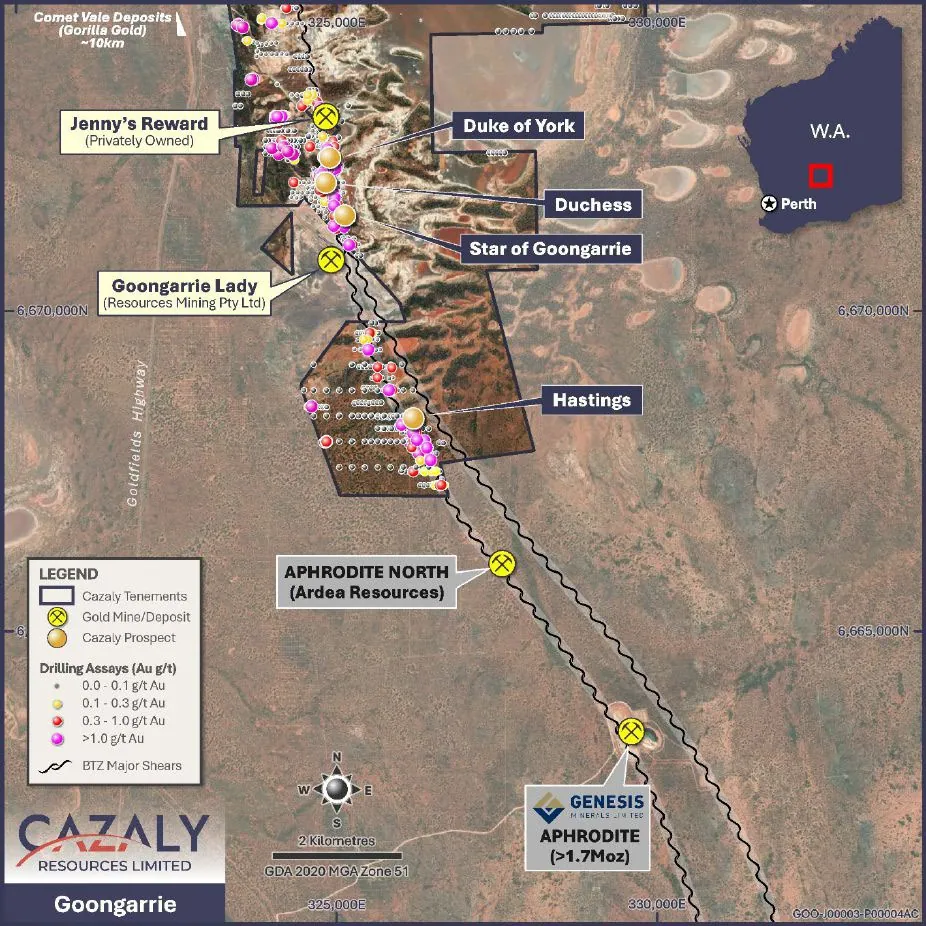
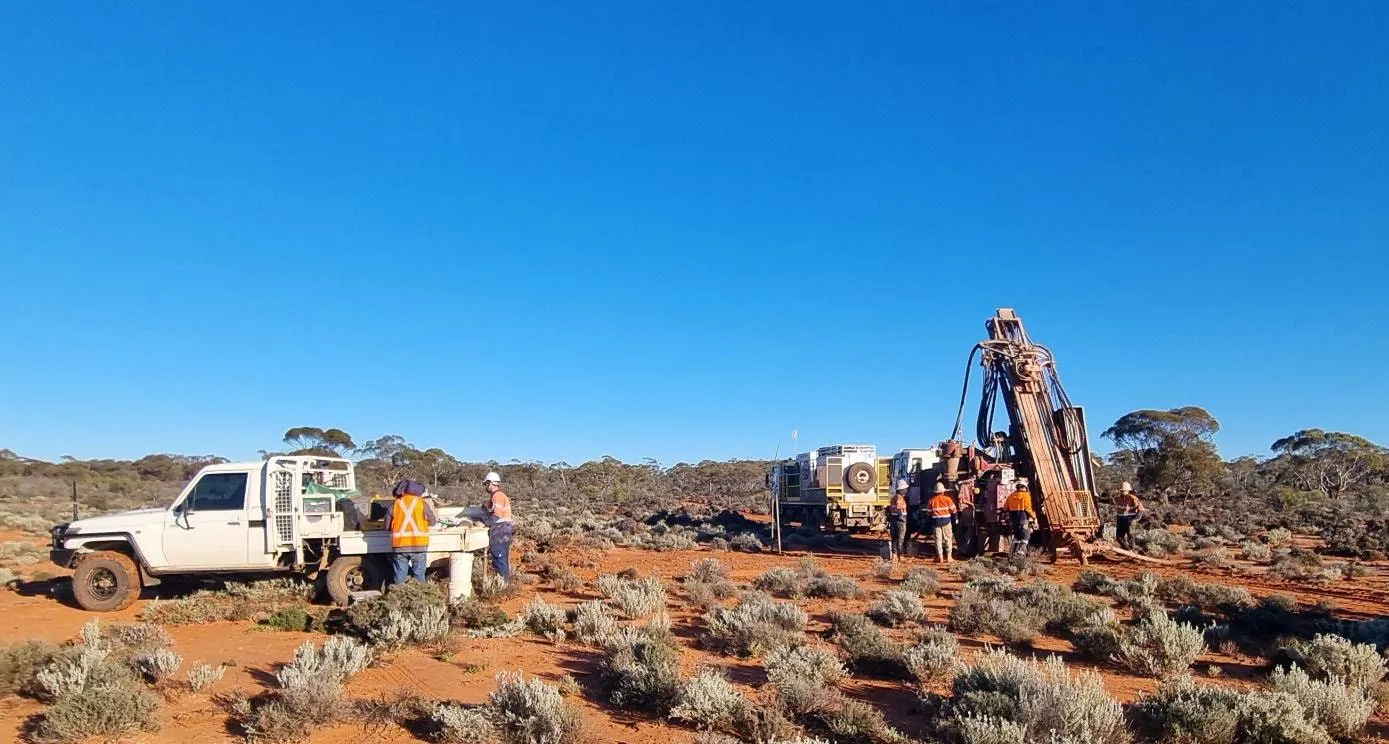
Among the new results was 7 metres at 1.2g/t gold from 58 metres in hole GGAC0353, alongside 1 metre at 2.7g/t from 58 metres and 1 metre at 1.8g/t from 35 metres in GGAC0350. The company had previously reported the Hastings gold extension, but the current report places those results within a wider campaign that was curtailed by heavy rain before the planned 2.6-kilometre strike was fully tested.
There is an important qualification to the numbers: the mineralisation intersected so far sits within the weathering profile above fresh rock, and the programme was first-pass aircore drilling. The results establish targets for follow-up work, but do not by themselves define a resource or demonstrate continuity at depth.
Gulls Blow drilling tests historical high-grade evidence
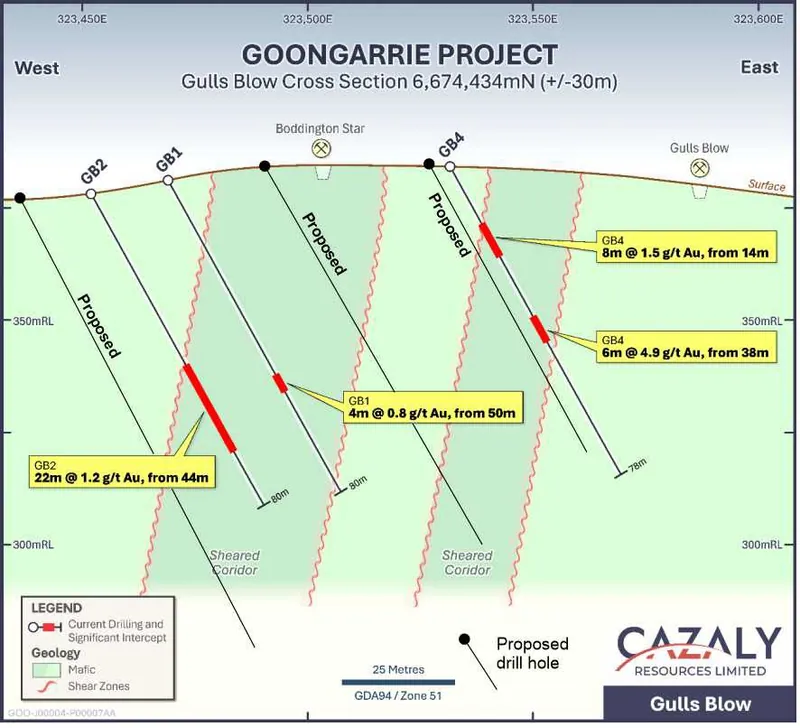
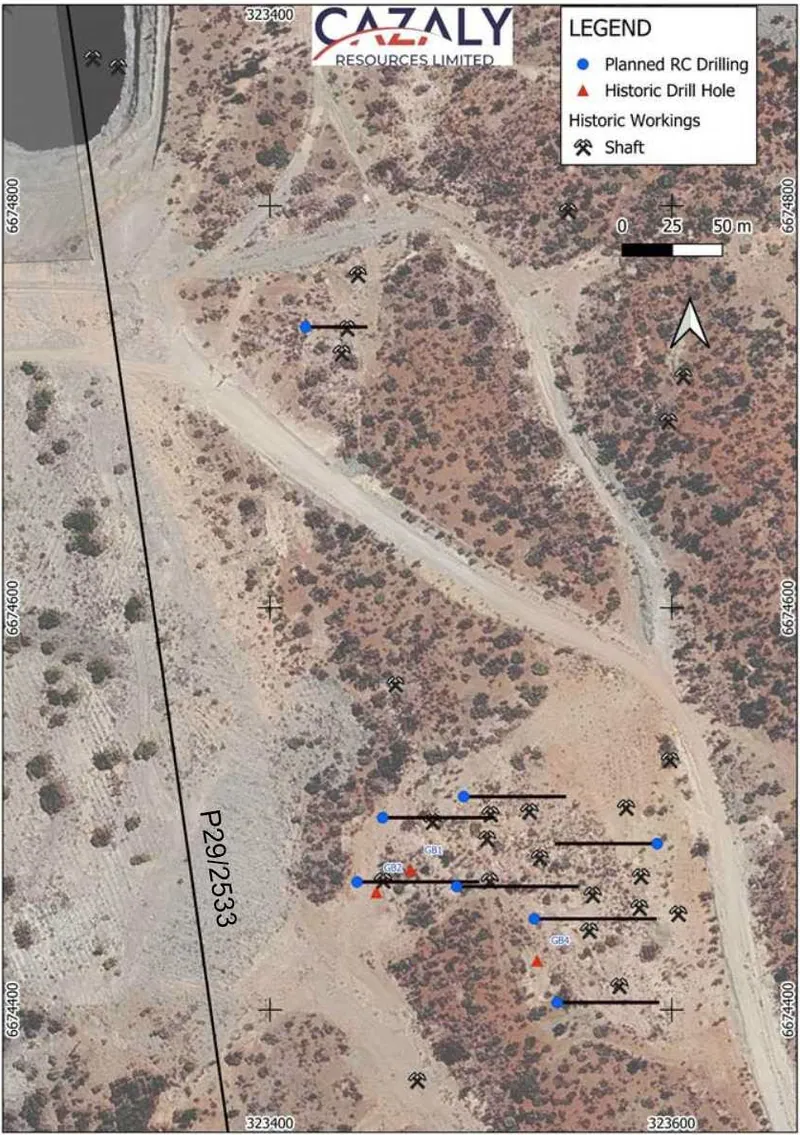
After the quarter, Cazaly began RC drilling at Gulls Blow, the first drilling there since the 1980s. The programme is designed to test beneath historical shafts and along strike from shallow intercepts in old holes drilled to roughly 70 metres vertically. Cazaly says the historical results have not been independently validated; the current drilling is intended to do that work while testing whether mineralisation continues below the old workings.
Namibia targets sharpen as copper strategy begins
At Abenab North in Namibia, a 196-line-kilometre drone magnetic survey confirmed discrete source bodies at the Accra and Abenab targets, making them the priority targets for maiden drilling. Cadix was downgraded after the new data indicated the historical anomaly may have been mis-plotted. Cazaly had previously outlined the Abenab magnetic targets, and now expects drilling at Accra and Abenab in early 2027, subject to access and exploration preparations.
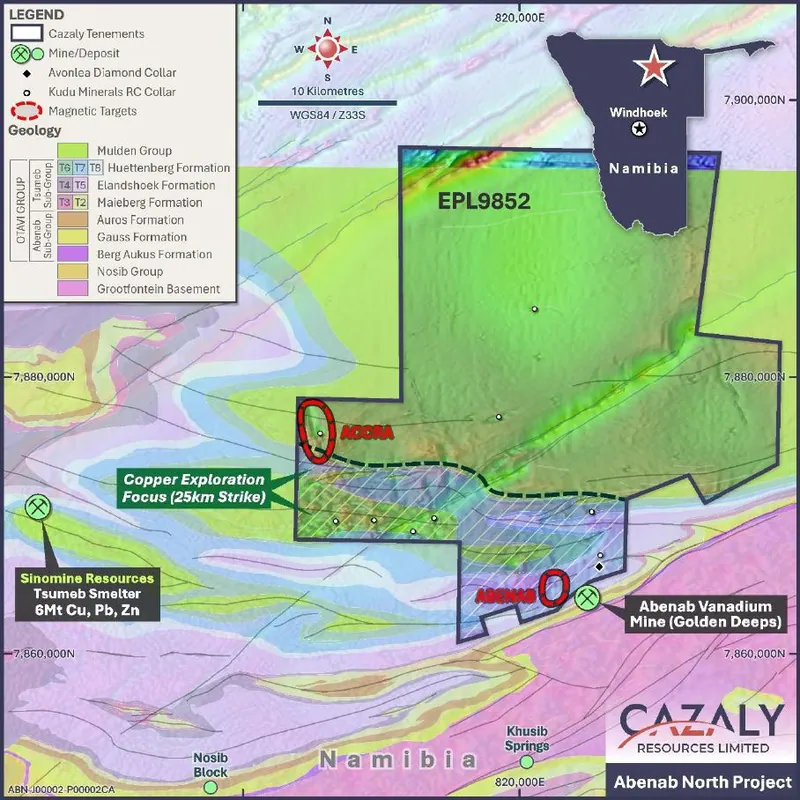
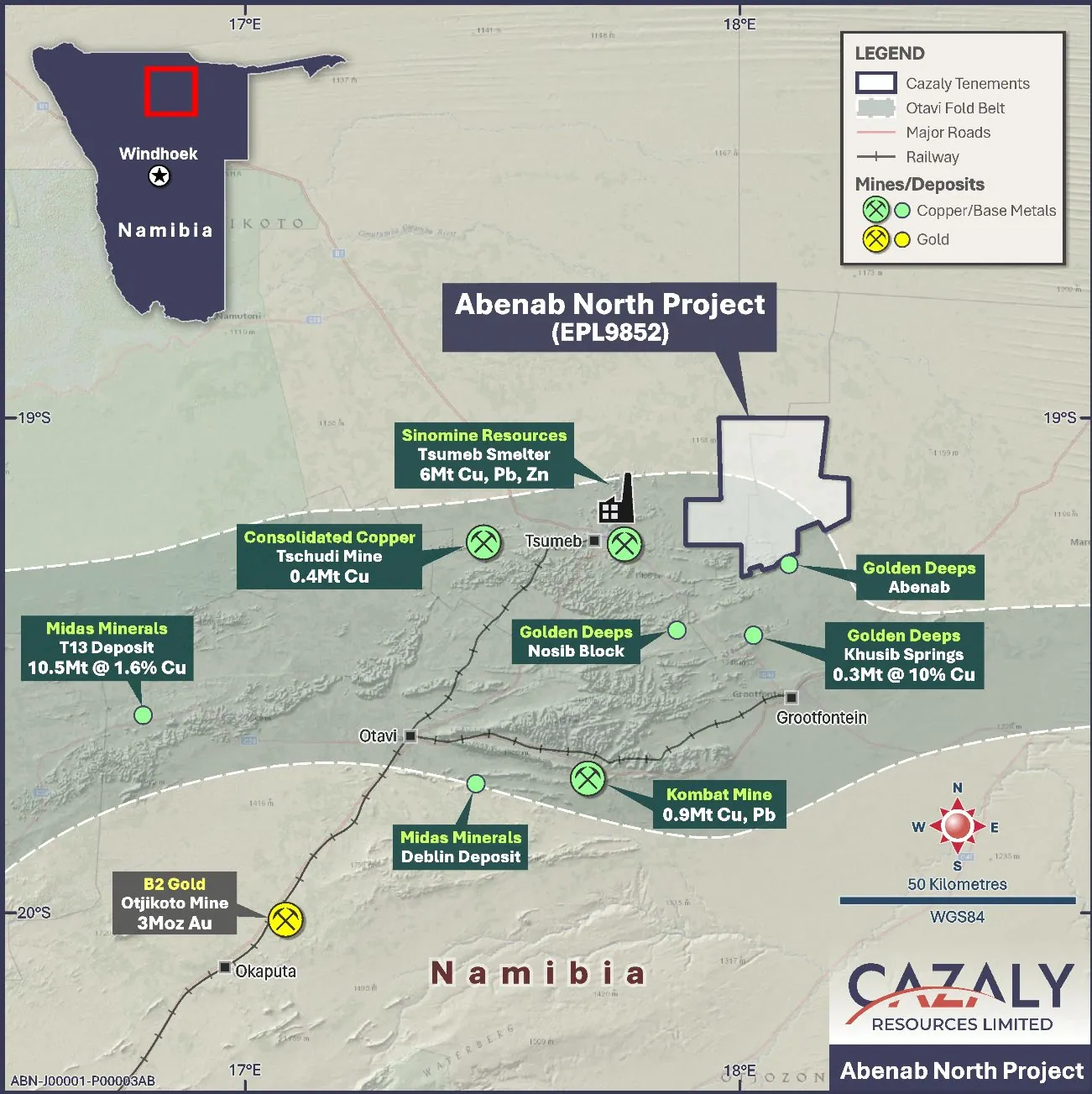
The company is also shifting the project towards Tsumeb-style copper exploration across the 790-square-kilometre licence. Planned work includes land access agreements, soil sampling, mapping and detailed geophysics, meaning the copper thesis remains at the target-generation stage rather than a defined discovery.
Portfolio review meets a limited cash runway
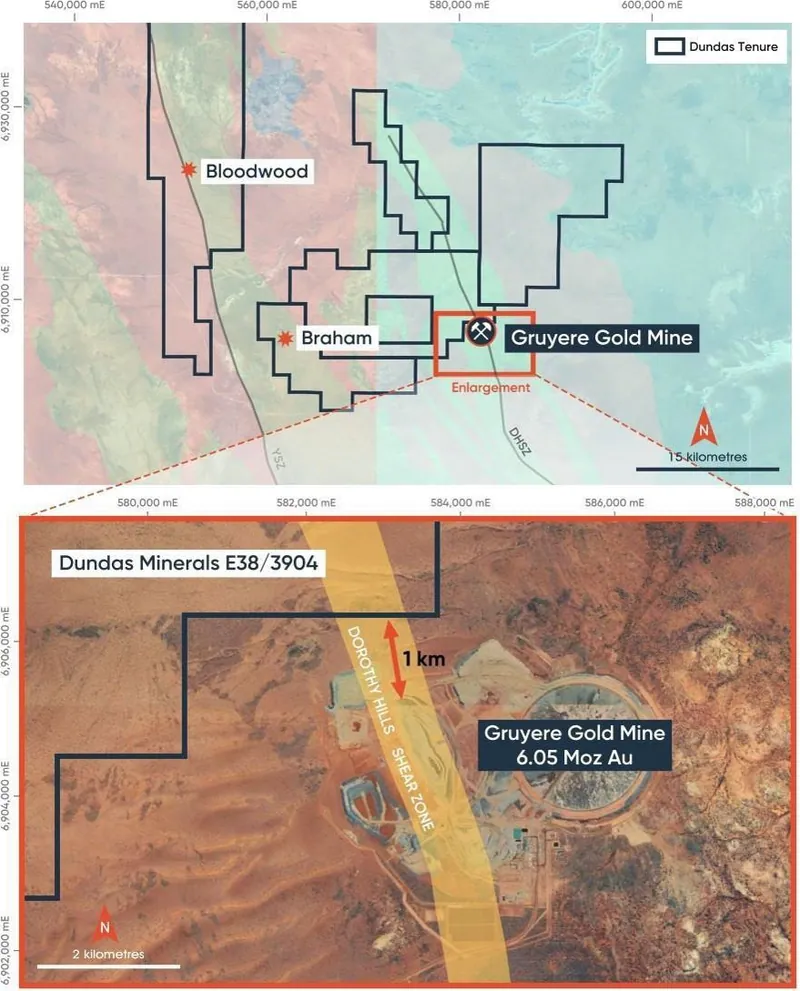
Cazaly completed the tenement acquisition component of its Romano joint venture with Dundas Minerals Ltd (ASX:DUN) for total consideration of $1.7 million in cash and Dundas shares. Dundas can earn 80% by spending $2 million on exploration over two years, while Cazaly retains a 20% free-carried interest through to a positive feasibility study.
The leadership change announced during the quarter is now in effect, with Adrian Byass succeeding Tara French as managing director from 8 October. The company says it will focus capital and technical resources on two or three core projects and seek partnerships, farm-outs or transactions for non-core assets. At 30 September, Cazaly held $3.031 million in cash and cash equivalents, or approximately $4.1 million including investments. Quarterly exploration spending was $547,000, and the Appendix 5B calculation showed 5.5 quarters of funding at the reported rate.
The review therefore arrives with several active exploration fronts but no declared decision on which assets will make the cut. Gulls Blow assays, the next Goongarrie drilling priorities, Abenab access and drilling, and Dundas’s Romano work will help determine whether Cazaly can narrow its portfolio without narrowing its growth options too sharply.
Get ASX:CAZ news the moment it breaks
 iPhone & iPad
 Android
Bottom Line?
Cazaly has more control of its leading gold project, but the next value test is whether follow-up drilling turns early targets into coherent mineralised systems before cash and management attention become the constraint.
Questions in the middle?
- Will Gulls Blow RC drilling confirm and extend the unverified historical gold intercepts beneath the old workings?
- Can Hastings mineralisation be traced into fresh rock and sustained through systematic follow-up drilling?
- Which two or three projects will survive the strategic review, and what value can Cazaly realise from the assets left outside that core group?
Sources
1-
Quarterly Activities and Cashflow Report (opens in a new tab)Verified company source. Cazaly Resources Limited · 28 Oct 2026 · investors.cazalyresources.com.au