Golden Deeps Finds More High Grades as Graceland Drilling Goes Deeper

Golden Deeps has reported high-grade polymetallic intersections at its Graceland prospect in Namibia, including 9.2% copper, 417g/t silver and 23.2% zinc. The explorer has begun deeper drilling across the Gossan 1 corridor, with A$3.548 million in cash providing an estimated 5.3 quarters of funding.
- High-grade copper, silver, zinc, lead, germanium and antimony assays from Graceland
- 8.20m at 3.5% CuEq from Gossan 12, including 2.12m at 6.2% CuEq
- Deeper drilling targets three IP sulphide anomalies across an 800m corridor
- A$513,000 spent on exploration during the quarter
- A$3.548 million cash balance and 5.3 quarters of estimated funding

 Add us as a preferred source on Google
Graceland drilling confirms high-grade mineralisation
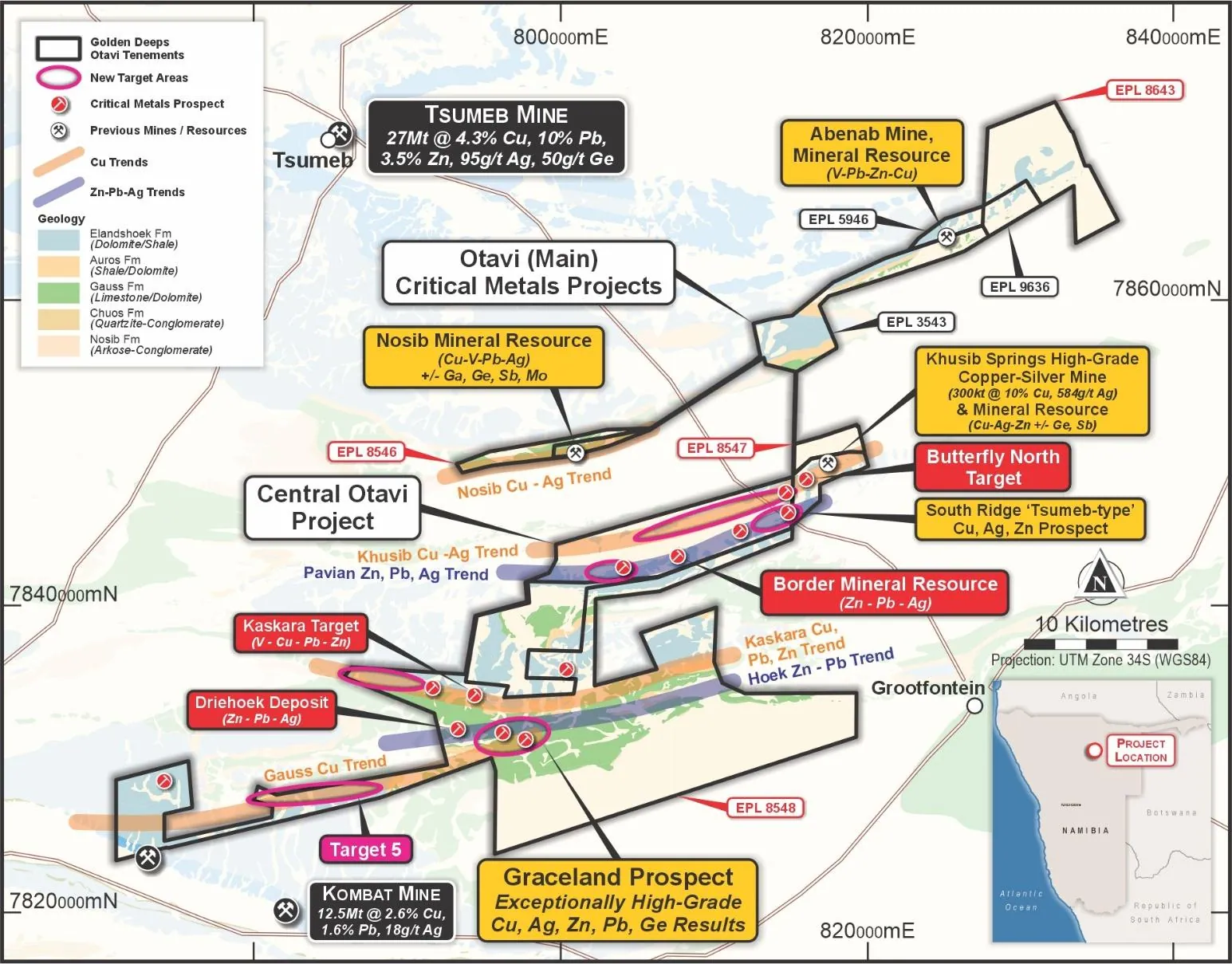
Golden Deeps Ltd (ASX:GED) has added another set of high-grade intersections to the exploration case for its Graceland prospect in Namibia, with new results confirming mineralised zones below the Gossan 1 and Gossan 1 East outcrops. The assays included up to 9.2% copper and 417g/t silver below Gossan 1 East, while drilling below Gossan 12 returned up to 23.2% zinc, 8.2% lead and 118g/t germanium.
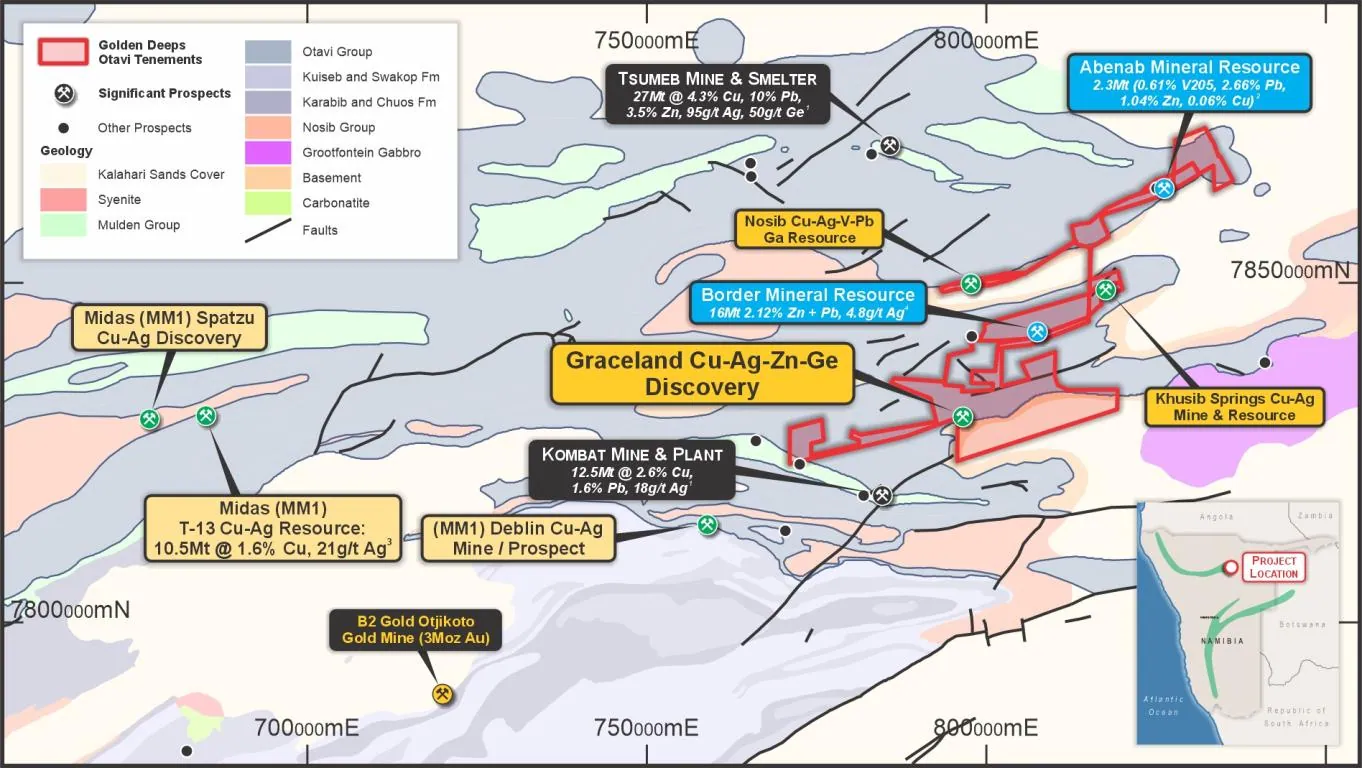
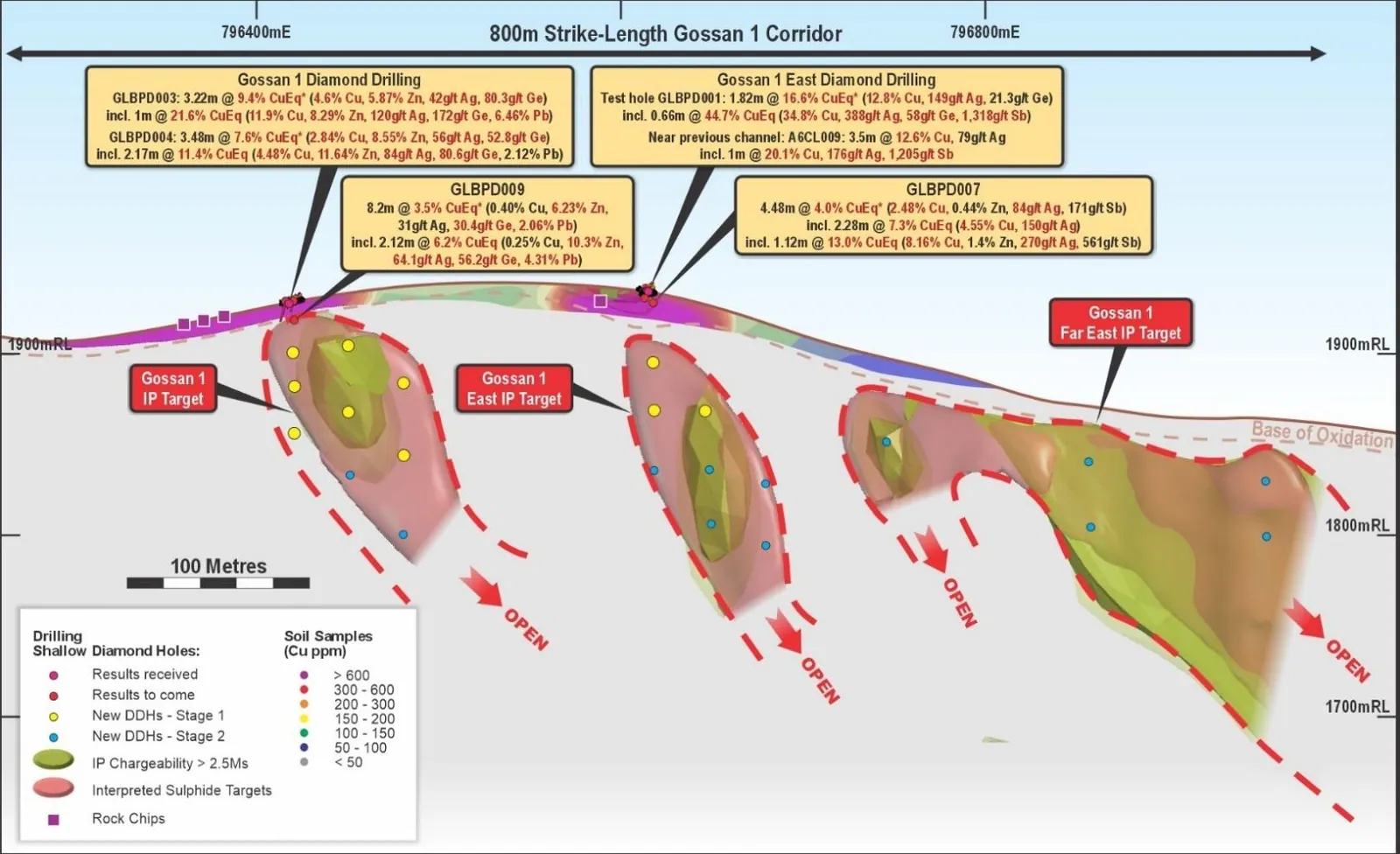
The strongest reported intersections included 8.20 metres at 3.5% copper equivalent, or CuEq, from eight metres in hole GLBPD009 at Gossan 12. That result included 2.12 metres at 6.2% CuEq. At Gossan 1 East, hole GLBPD007 returned 4.48 metres at 4.0% CuEq from 2.52 metres, including 1.12 metres at 13.0% CuEq, with the interval carrying 8.16% copper, 270g/t silver and 561g/t antimony.
Deeper drilling tests the Gossan 1 corridor
The results arrive as Golden Deeps moves from shallow confirmation drilling into a deeper campaign across the 800-metre-long Gossan 1 corridor. The program is initially designed to test down-plunge extensions of Gossan 1 and Gossan 1 East, along with three priority sulphide targets identified through induced polarisation surveys. The company expects to drill up to 10 initial diamond holes, with further work dependent on the Stage 1 results.
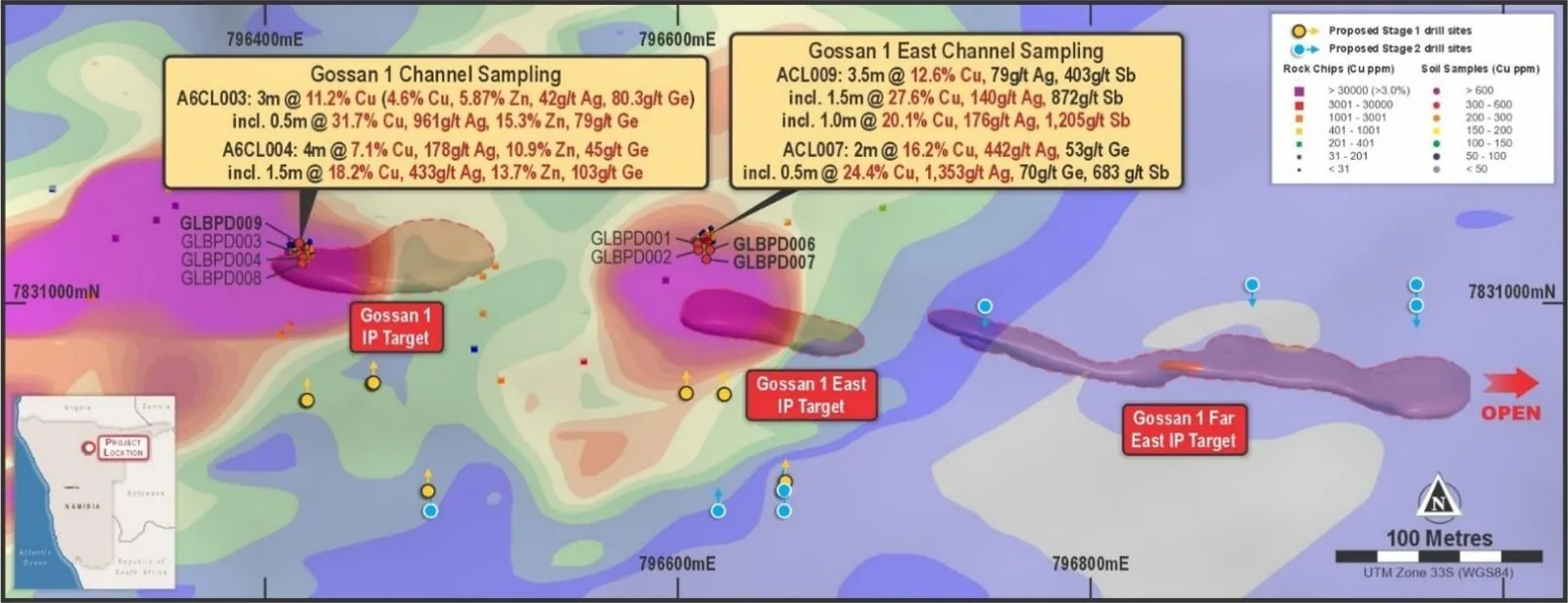
The program follows the August deeper drilling launch, which targeted three priority IP sulphide zones. Golden Deeps says later drilling may test targets below 100 metres depth, including Gossan 1 Far East, described in the report as the largest and strongest of the three IP anomalies identified to date. That target has no surface expression and remains open to the east and at depth.
Exploration spend remains concentrated in Namibia
Golden Deeps spent A$513,000 on exploration and evaluation during the September quarter, representing most of its A$670,000 net expenditure. Work outside Graceland continued at the South Ridge and Butterfly North prospects, where soil, rock-chip and channel sampling is feeding further targeting. At Butterfly North, the company is modelling an earlier IP survey along strike from the Khusib Springs high-grade copper-silver mine.
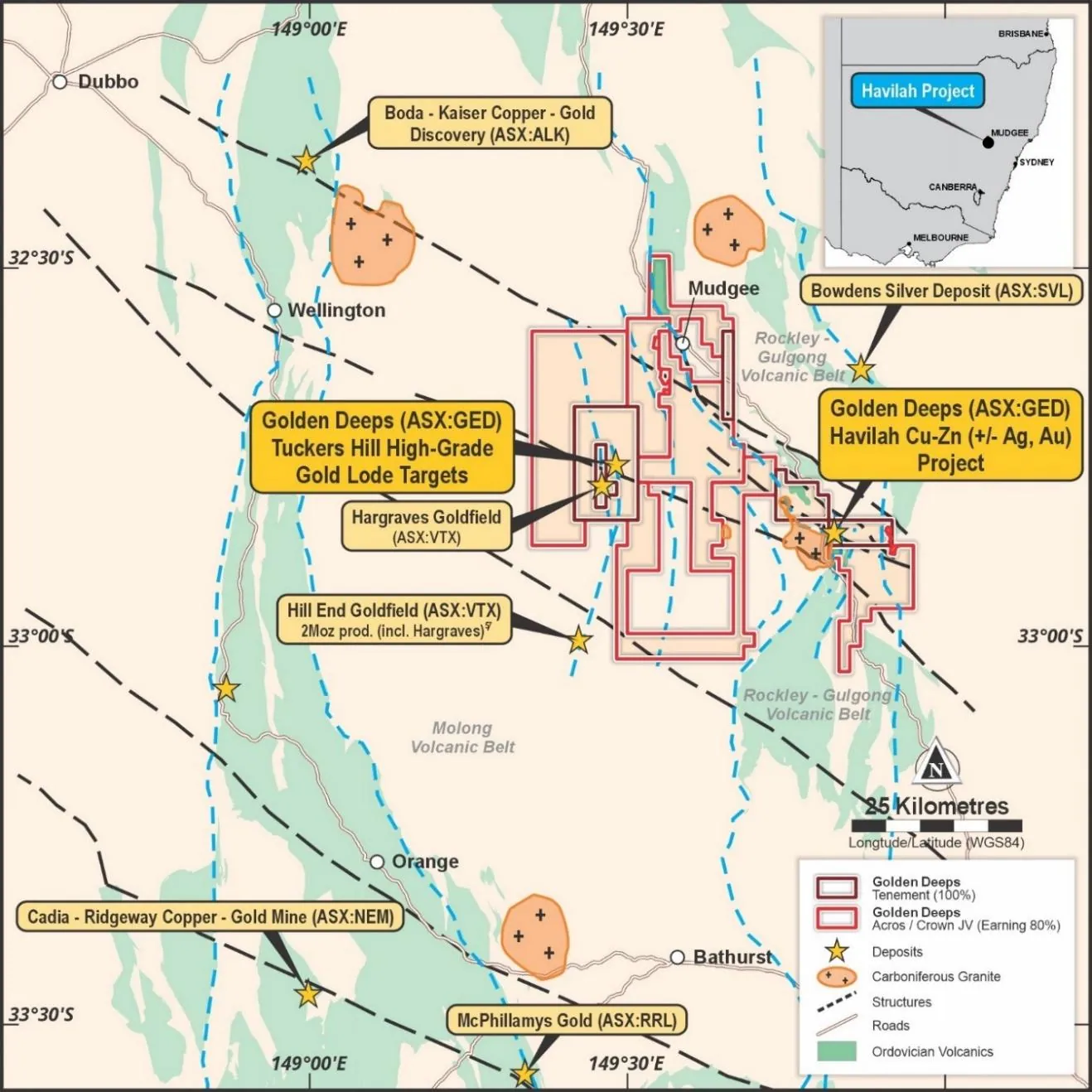
The wider portfolio remains active but less advanced. Golden Deeps is progressing uranium tenement applications south of the Langer Heinrich mine, reviewing its Havilah project before proposing further work or divestment, and assessing targets across its Acros and Crown joint venture interests in New South Wales. Its Professor and Waldman cobalt-silver projects in Ontario have been presented to Canadian companies for review and a possible sale transaction.
Cash runway reaches 5.3 quarters
Cash fell from A$4.218 million at 30 June to A$3.548 million at 30 September, with no financing proceeds recorded during the quarter. The company reported A$157,000 of operating cash outflow and A$513,000 of exploration spending, producing an estimated 5.3 quarters of funding at the reported expenditure rate. That provides room for the current drilling program, although the calculation is a point-in-time estimate rather than a commitment on future spending.
The grades are encouraging exploration results, not a mineral resource or an assessment of economic viability. Golden Deeps’ CuEq figures also rely on assumed recoveries, payability and commodity prices, including for germanium and antimony. The next decisive evidence will therefore come from the deeper holes and any follow-up work that can show whether the high-grade zones are sufficiently continuous and extensive to support a formal resource study.
Get ASX:GED news the moment it breaks
 iPhone & iPad
 Android
Bottom Line?
The immediate test is whether deeper drilling converts spectacular shallow intersections into a coherent, mineable-scale mineralised system before the exploration budget needs replenishing.
Questions in the middle?
- Will Stage 1 drilling confirm that the Gossan 1 and Gossan 1 East zones continue at depth?
- Can the blind Gossan 1 Far East IP anomaly deliver comparable copper and polymetallic grades?
- How much additional drilling and metallurgical work will be required before Graceland can support a mineral resource estimate?
Sources
1-
Quarterly Activities/Appendix 5B Cash Flow Report (opens in a new tab)Official market announcement. Golden Deeps Limited · 28 Oct 2026 · goldendeeps.com